
Quick Navigation
- Why Mandarin Dragonets Starve in Captivity
- Tank Maturity - The Non-Negotiable Starting Point
- Feeding a Mandarin Dragonet - What Actually Works
- Signs Your Mandarin Is in Trouble
- Tank Mates - Who Competes for Copepods
- Building a Complete Mandarin Feeding System
- Mandarin Dragonet Care - The Honest Summary
- FAQs
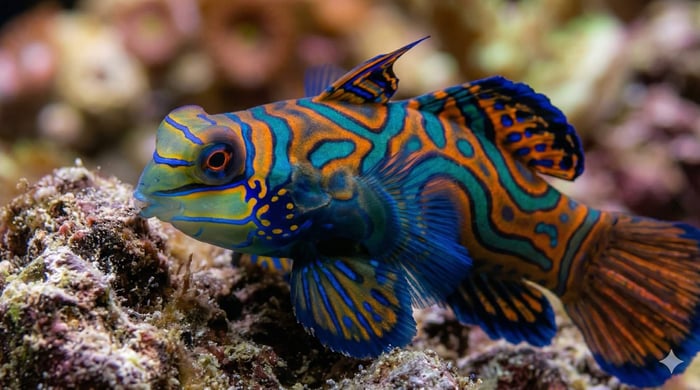
The mandarin dragonet is one of the most beautiful fish in the reef hobby and one of the most commonly lost. Not to disease. Not to aggression. To starvation. If you are reading this because you are thinking about getting a mandarin, or because you already have one and something feels wrong, you are in the right place. Proper mandarin dragonet care is not complicated once you understand the one thing that matters most: food.
I have been culturing live copepods professionally for over 18 years. In that time, the mandarin dragonet has consistently been the single most common reason reef keepers contact us. The story is almost always the same. Beautiful fish, perfect water, steady decline. The keeper has done everything right except solve the feeding problem. This guide is the honest version of mandarin dragonet care, covering what they actually need to eat, how to provide it, what a healthy mandarin looks like versus a struggling one, and how to build a system that keeps your fish alive for years rather than weeks.
For a condensed version of the feeding strategy with printable reference material, our free Keeping Mandarins Alive guide covers the essentials in one place.
Why Mandarin Dragonets Starve in Captivity
Mandarin dragonets are obligate live feeders. In the wild, they spend their entire day slowly patrolling rock surfaces, rubble beds and algae mats, picking off copepods, amphipods, tiny worms and other microfauna. They do not chase food through the water column. They do not respond to flakes, pellets or most frozen foods. They hunt by sight and movement, and what triggers them to strike is live, moving prey at the right size on the right surface.
This is why mandarin dragonet care is fundamentally different from caring for almost any other reef fish. You cannot feed a mandarin the way you feed a clownfish. The fish needs a constant, replenishing supply of live copepods available across the rockwork and substrate throughout the day. A single feeding event is not enough. A mandarin that hunts successfully for eight to twelve hours a day is a healthy mandarin. One that searches and finds nothing is a mandarin that is slowly starving, even if it looks fine today.
The reason so many mandarins die in captivity is not that the keepers are careless. It is that the feeding infrastructure was never put in place before the fish arrived. And once a mandarin begins losing condition, the window to fix the problem is short.
Reefphyto PodHide & Copepod Bundle

£36.84
£40.94
Live Copepods & PodHide Bundle You keep adding copepods to your tank and they disappear within days. Your mandarin is still hunting, your wrasses are still patrolling, and the population never seems to get ahead of the predation. You are… read more
Tank Maturity - The Non-Negotiable Starting Point
The single most important rule for mandarin dragonet care is that your tank must be mature before the fish goes in. A minimum of six months is the baseline. Nine to twelve months is better. The reason is simple: microfauna populations take time to establish. Even in a tank with excellent live rock, copepods, amphipods and the broader microbial food web need months to colonise surfaces, reproduce and build sustainable populations throughout the system.
A newly cycled tank might have perfect water parameters and look ready, but it lacks the invisible food web that a mandarin depends on. The live rock may be clean, but it is not yet alive in the way a mandarin needs it to be. Adding a mandarin to a tank that has been running for two or three months is one of the most common and most avoidable mistakes in the hobby.
Tank size also matters because it determines available copepod habitat. Tanks under 100 litres are very difficult to maintain adequate copepod density in, even with a refugium. Tanks of 150 to 300 litres give you a realistic chance of sustaining a single mandarin with proper copepod management. Tanks over 300 litres with an established refugium and regular live food additions provide the most comfortable environment for long-term mandarin dragonet care.
Feeding a Mandarin Dragonet - What Actually Works
There is only one reliable long-term feeding strategy for a mandarin dragonet: maintaining a self-sustaining copepod population in your tank, supported by a refugium and supplemented with regular live copepod additions. Everything else is either a short-term bridge or a gamble.
Establishing a Copepod Population
Before your mandarin arrives, your tank should already have a visible copepod population. You should be able to see tiny white or translucent specks moving on the glass at night when you shine a torch. If you cannot see copepods, your tank is not ready for a mandarin.
Start by seeding your tank with live copepods months before the mandarin arrives. Add them to your refugium and display tank at night when the fish are sleeping, so the copepods have time to find shelter and begin reproducing before predation pressure begins. Feed the population with live phytoplankton regularly to drive reproduction. A well-fed copepod population reproduces faster and produces nutritionally denser offspring, which directly benefits your mandarin.
Live Copepods
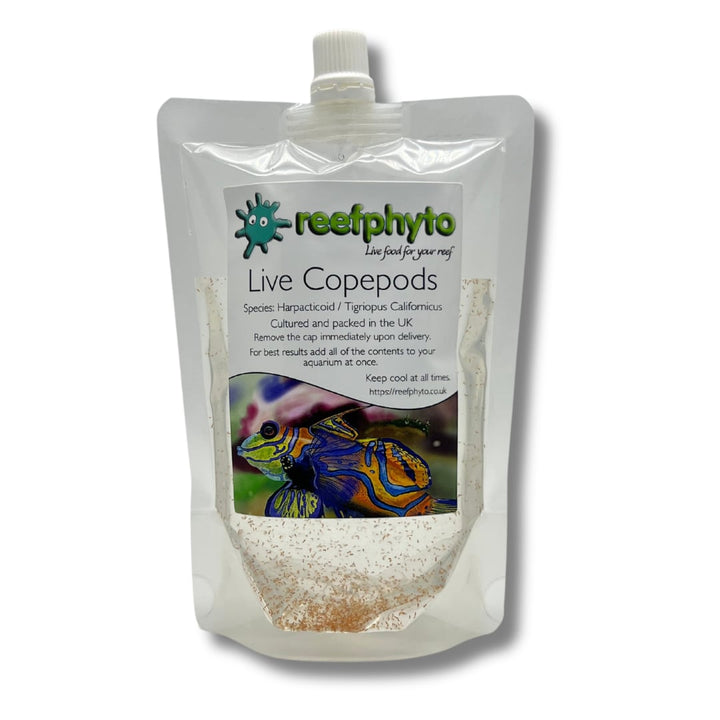
£11.99
Live Copepods UK: Tigriopus californicus, Cultured Fresh in Wales by Reefphyto Your reef looks right on paper. Clean water, stable parameters, good equipment. But something is still off. Your fish are pale, your mandarin is wasting, your corals are feeding… read more
The Refugium - Your Mandarin's Life Support System
A refugium is not optional for mandarin dragonet care. It is the single piece of equipment that most reliably determines whether a mandarin thrives or declines. The refugium provides a protected space where copepods can breed without being eaten, continuously seeding the display tank through the return pump.
If you do not have a refugium set up yet, our complete guide to setting up a refugium walks through the entire process step by step. For mandarin keepers specifically, the refugium should include chaetomorpha for nutrient export and copepod habitat, a layer of substrate for benthic pods, and ideally a PodHide or rubble structure to maximise copepod surface area and breeding sites.
In the display tank itself, adding a PodHide Nano in a low-flow area gives copepods a protected establishment zone right where the mandarin is hunting. This helps bridge the gap between what the refugium produces and what the mandarin consumes.
Regular Live Copepod Additions
Even with a productive refugium, most mandarin keepers need to supplement the copepod population regularly, especially in the first six months after adding the fish. A single mandarin can consume hundreds of copepods per day. In smaller tanks or tanks with other pod-eating species like wrasses or scooter blennies, the refugium alone often cannot keep pace with daily consumption.
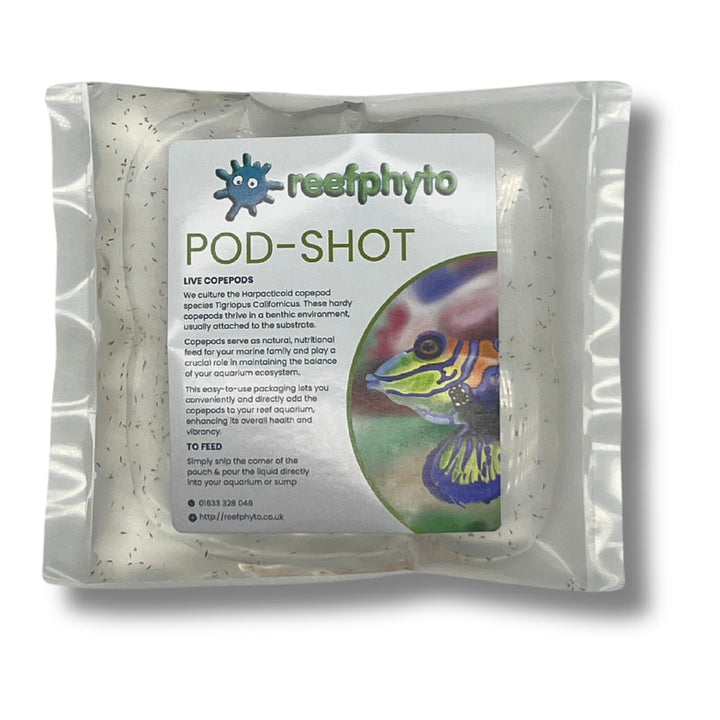
For regular top-ups, the Pod-Shot concentrated copepod pouch is designed for exactly this purpose. Pour it near the substrate or rockwork where the mandarin is actively patrolling and you will see an immediate hunting response. For mandarin keepers, two to three Pod-Shot additions per week alongside a running refugium typically maintains good copepod density in the display. In the early months, or in tanks without a refugium, daily additions may be necessary.
For keepers who want to eliminate the ongoing cost and delivery dependency entirely, culturing your own copepods at home is the most reliable long-term solution. Our Copepod Culture Kit provides everything you need to start, and our guide to culturing copepods at home covers the full process. For a mandarin dragonet that needs live prey every single day, a home culture removes the single biggest vulnerability in the system: gaps in supply.
Pod-Shot - Live Copepods
£5.99
Pod-Shot: Live Copepods The moment you added a mandarin to your tank, the feeding pressure on your copepod population changed. What was a healthy refugium culture a month ago is now visibly thinner, and your mandarin is spending more time… read more
Can Mandarins Eat Frozen or Prepared Food?
Some captive-bred mandarins have been trained to accept frozen mysis shrimp or prepared foods before sale. If you buy a captive-bred mandarin that is already eating frozen, this is a significant advantage and makes mandarin dragonet care considerably more manageable. However, even captive-bred mandarins that accept frozen food still benefit enormously from a live copepod population. Frozen food is a supplement to copepods, not a replacement for them.
Wild-caught mandarins almost never accept anything other than live food. If you have a wild-caught mandarin, live copepods are not a preference. They are the only viable food source. Do not assume a wild-caught mandarin will learn to eat frozen. Plan as though it will not.
Signs Your Mandarin Is in Trouble
A healthy mandarin has a rounded belly, active hunting behaviour throughout the day, smooth intact fins, and bright vivid colouration. It moves methodically across rock surfaces, pausing frequently to pick at the substrate. It should look purposeful, not frantic.
The warning signs of a mandarin in decline are subtle at first but become obvious once you know what to look for. A pinched or concave belly is the earliest and most important indicator. If the area just behind the head and above the belly appears sunken rather than rounded, the fish is losing condition. This can happen within days of copepod supply dropping below what the mandarin needs.
Other warning signs include reduced hunting activity (the fish sits in one spot rather than patrolling), faded colouration, clamped fins, rapid breathing, and the fish spending more time hiding rather than foraging. If you see any of these signs, the response needs to be immediate. Add live copepods to the tank now, not tomorrow, not next week. A Pod-Shot directed near the fish will give you an immediate indication of whether the mandarin is still hunting. If it responds to live copepods with visible feeding behaviour, you have caught the decline early enough to reverse it by increasing your copepod supply.
If the mandarin does not respond to live copepods, the fish may be too far gone. This is why prevention matters far more than treatment with mandarin dragonet care. The time to solve the feeding problem is before the fish shows signs of decline, not after.
Tank Mates - Who Competes for Copepods
One of the less discussed aspects of mandarin dragonet care is competition. Your mandarin is not the only animal in the tank eating copepods. Wrasses, scooter blennies, other dragonets, gobies and even some shrimp species all consume copepods to varying degrees. The more pod-eating species you have in the display, the harder your refugium has to work and the more frequently you need to supplement.
The most problematic tank mates for mandarins are other dragonets (which have identical dietary needs and will directly compete), six-line wrasses and similar small wrasses that are aggressive copepod predators, and any fish that is fast enough to outcompete the mandarin for food during feeding events.
Mandarins are slow, deliberate feeders. They do not chase food and they do not compete well with fast-moving tank mates. If you have a mandarin alongside multiple pod-eating fish, you need a correspondingly larger refugium and more frequent copepod additions to maintain adequate supply for all of them.
Good tank mates for mandarins include clownfish, cardinalfish, firefish, gobies (non-pod-eating species), blennies, tangs and most angelfish. These species do not directly compete for copepods and are typically peaceful enough to coexist without stressing the mandarin.
Complete Mandarin Keeper's Library - All Three Guides Bundle

£19.99
Complete Mandarin Keeper's Library: All Three Guides Bundle Three guides. One complete system. Everything between the moment you decide to keep a mandarin and the moment it reaches year seven. The Complete Mandarin Keeper's Library brings together all three guides… read more
Building a Complete Mandarin Feeding System
The most successful mandarin dragonet care setups treat feeding as a system rather than a single product. Here is how the pieces fit together.
Live phytoplankton feeds the copepod population in your refugium, driving reproduction and ensuring the copepods themselves are nutritionally loaded with EPA, DHA and essential fatty acids. This is the foundation layer. Without phytoplankton, copepod reproduction slows and the nutritional quality of the pods your mandarin eats drops. Our guide to how phytoplankton impacts your reef explains this connection in detail.
Live copepods seed and maintain the refugium population. Regular additions build the breeding colony that continuously feeds your mandarin through the return pump.
Pod-Shot concentrated copepod pouches bridge the gap between refugium output and mandarin consumption. Used two to three times per week, they keep copepod density in the display at a level that supports continuous hunting.
A PodHide in the refugium or display gives copepods the protected structure they need to establish and breed without being wiped out by predation.
For keepers who want complete independence, a Copepod Culture Kit running alongside the tank provides an on-demand live food supply that eliminates dependency on delivery schedules and ensures your mandarin never goes without.
For a printable quick-reference version of this feeding system, including dosing schedules and product recommendations, download our free Keeping Mandarins Alive guide.
Mandarin Dragonet Care - The Honest Summary
Mandarin dragonets are not difficult fish to keep. They are difficult fish to feed. Get the feeding right and everything else about mandarin dragonet care is straightforward. They are peaceful, reef-safe, disease-resistant (their thick mucus coat provides natural protection against parasites), and with proper nutrition they can live ten years or more in captivity.
The keepers who succeed with mandarins are the ones who treat copepod supply as infrastructure rather than an afterthought. They set up a refugium before the fish arrives. They seed copepods months in advance. They feed the copepod population with phytoplankton. They supplement with live additions when the refugium cannot keep pace. And they watch the fish, not just the water, for signs that the system is working.
Live copepods benefit your entire reef tank, not just the mandarin. The investment in a copepod system pays dividends across every animal in the display. The mandarin is simply the fish that makes the need most obvious and most urgent.
If you have questions about mandarin dragonet care, copepod supply for your specific setup, or which combination of products will give your mandarin the best chance, get in touch. I answer every message personally and I have been solving this exact problem for reef keepers for over 18 years.
Darren
Founder, Reefphyto Ltd - Wales, UK - Est. 2008