Quick Navigation
- What Phytoplankton Actually Is in a Reef Tank
- Why a Closed Reef Tank Runs Short of Plankton
- 1. Direct Coral Nutrition and Tissue Quality
- 2. Feeding and Sustaining the Copepod Population
- 3. Nitrate, Phosphate and Where Your Nutrients Actually Go
- 4. Zooxanthellae and Coral Colour
- 5. Biological Filtration and Microbial Diversity
- How Much Phytoplankton to Dose
- Choosing the Right Phytoplankton for Your Tank
- Phytoplankton Dosing and Your Refugium
- Storage and Shelf Life
- Common Phytoplankton Dosing Mistakes
- A Note from Darren
- FAQs
Phytoplankton dosing is the part of reef keeping that most people file under optional and never come back to. It sits behind water chemistry, lighting, flow and the visible feeding jobs, and because nothing dramatic happens the week you start, it is easy to conclude nothing is happening at all. That conclusion is wrong, and it is the most common reason reef keepers give up on it before it has had a chance to work.
I have been culturing live marine food in Wales since 2008, and in 18+ years of doing this I have had the same conversation several hundred times. Someone has a tank that tests perfectly and still looks flat. The corals are alive but not extended. The pods they added six weeks ago have gone. Nothing on the test kit explains it, because a test kit measures what is dissolved in the water, not what is living in it. That gap is what this guide is about.
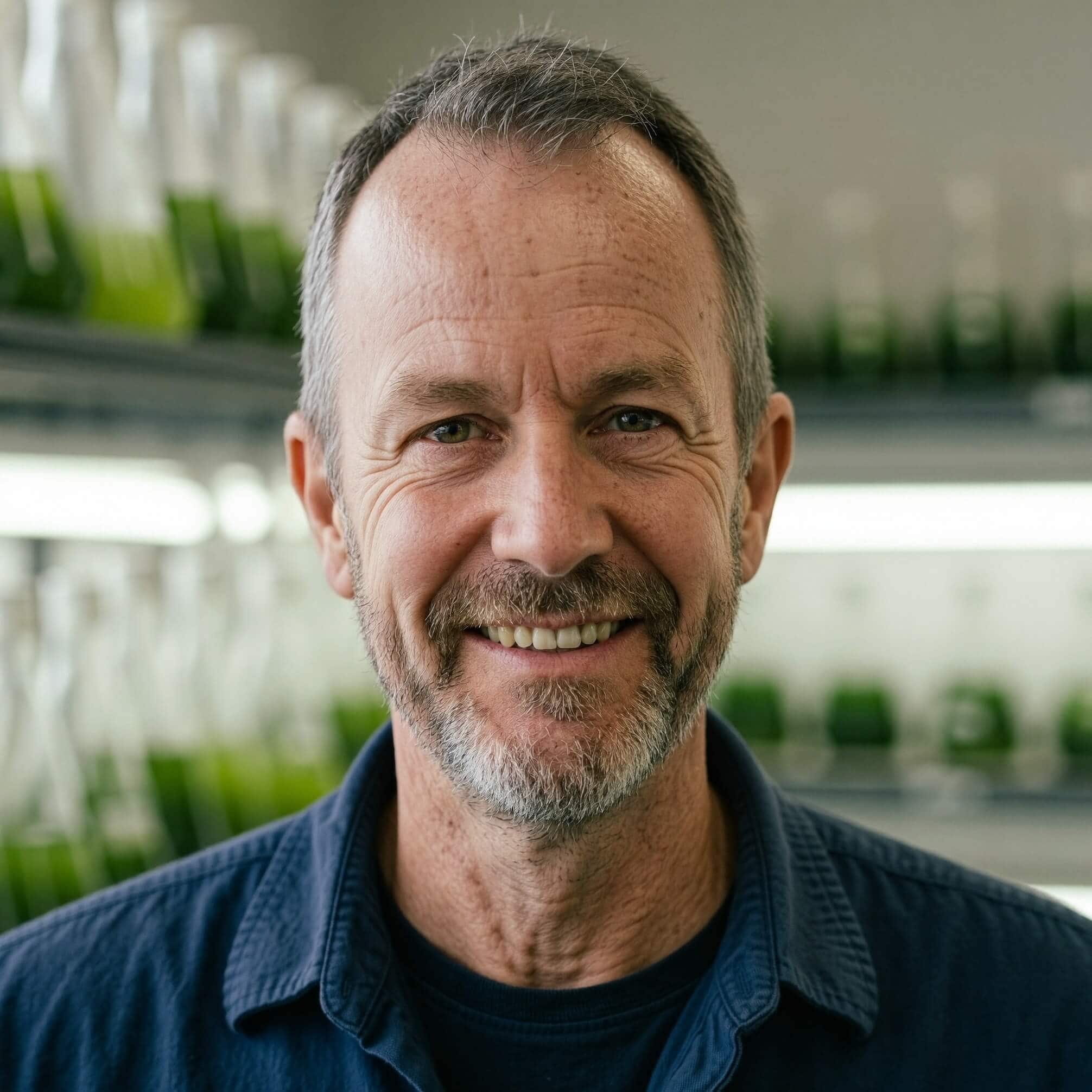
- Darren, Reefphyto
What Phytoplankton Actually Is in a Reef Tank
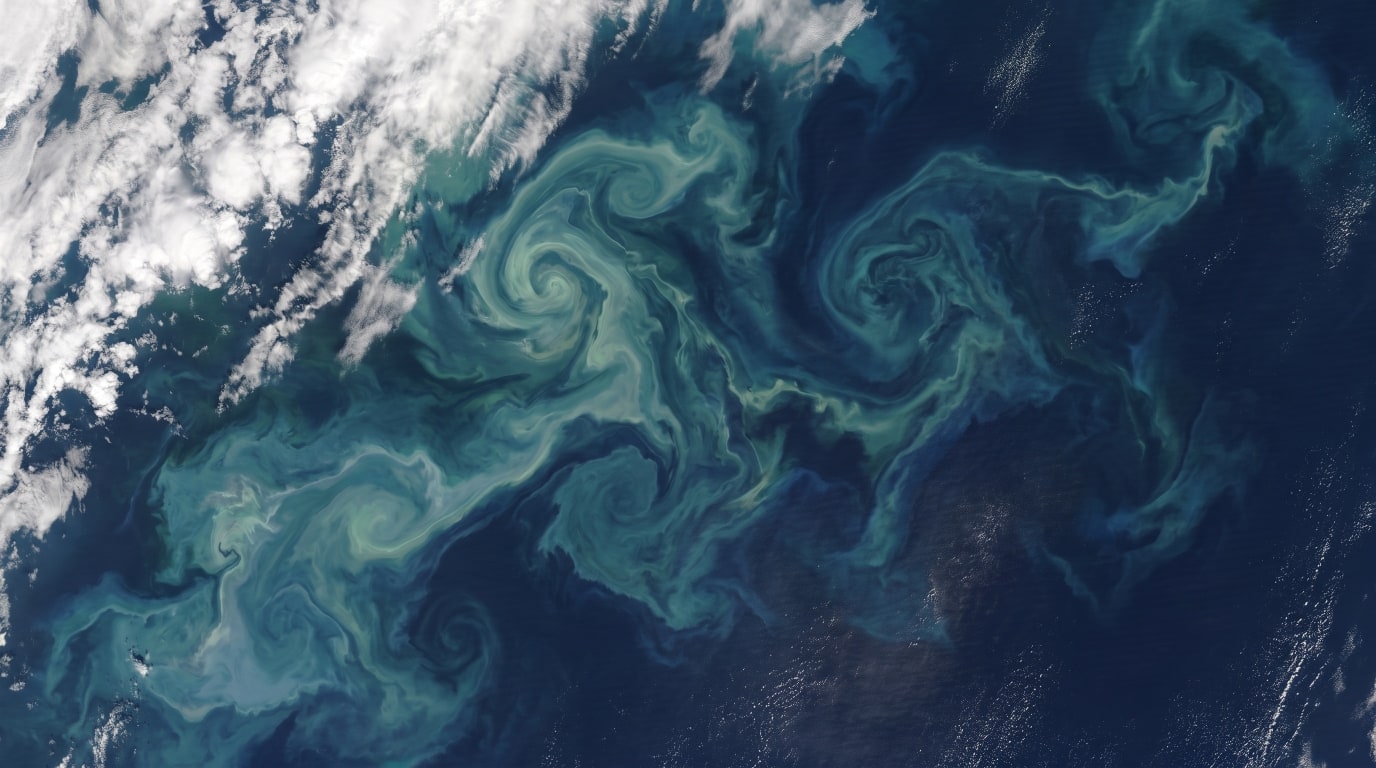
Phytoplankton are microscopic single celled algae that form the base of the marine food chain. On a natural reef they are present in the water column continuously, in concentrations that are hard to picture, and every other organism in that system depends on them either directly or through something that ate them first.
In a closed aquarium they are almost entirely absent unless you add them. Your skimmer removes them, your filtration removes them, your UV kills them, and nothing in the tank replaces them. The gap between the nutritional density of natural reef water and the water in a glass box in your living room is one of the genuine structural problems of this hobby, and phytoplankton dosing is the most direct way to narrow it.
Our 5 Species Phytoplankton blend is cultured fresh here in Wales and dispatched live rather than pasteurised. The blend approach matters more than people expect. Different species carry different fatty acid profiles, different cell sizes and different nutrient compositions, and the organisms in your tank do not all eat the same thing. Cell size alone rules species in or out for a given feeder. A single species product leaves gaps that a five species blend covers, which is why it stays our most popular option for general reef use.
Why a Closed Reef Tank Runs Short of Plankton
It helps to understand what you are actually replacing. On a reef, plankton arrives continuously on the current. Water that has passed over open ocean brings a constant resupply, so the filter feeders, the corals and the microfauna all draw from a stream that never switches off.
Your tank has no current from anywhere. Every scrap of organic material in it either came out of a bottle or a bag, or was produced inside the system by something that ate what came out of a bottle or a bag. When you run a skimmer, carbon and a reactor, you are deliberately and continuously stripping organics out. That is usually the right call for dissolved waste. The problem is that the same equipment does not distinguish between waste and food.
This is the honest framing for phytoplankton dosing. You are not supplementing a system that is nearly complete. You are restoring a layer that closed systems structurally cannot maintain on their own.
1. Direct Coral Nutrition and Tissue Quality
Corals are not passive. Many species, particularly soft corals, gorgonians, non photosynthetic corals and filter feeding invertebrates like clams and feather dusters, take phytoplankton directly through mucus trapping and tissue level uptake. For those animals the difference regular phytoplankton dosing makes shows up as better polyp extension, more consistent colour and visibly better tissue condition.
The nutritional contribution is specific rather than vague. Phytoplankton supplies essential fatty acids including EPA and DHA, amino acids, chlorophyll and carotenoids, and those carotenoids feed into the pigment compounds responsible for coral colouration. It also supplies dissolved organics that all coral tissue absorbs passively as a background food source regardless of species. Even SPS corals, which cannot actively capture phytoplankton cells at any useful rate, benefit from that dissolved organic contribution.
If coral nutrition is your main interest, it is worth reading my complete beginner's guide to coral feeding alongside this one, because phytoplankton is one part of a broader feeding picture and it is not the whole answer for every coral you might keep.
2. Feeding and Sustaining the Copepod Population
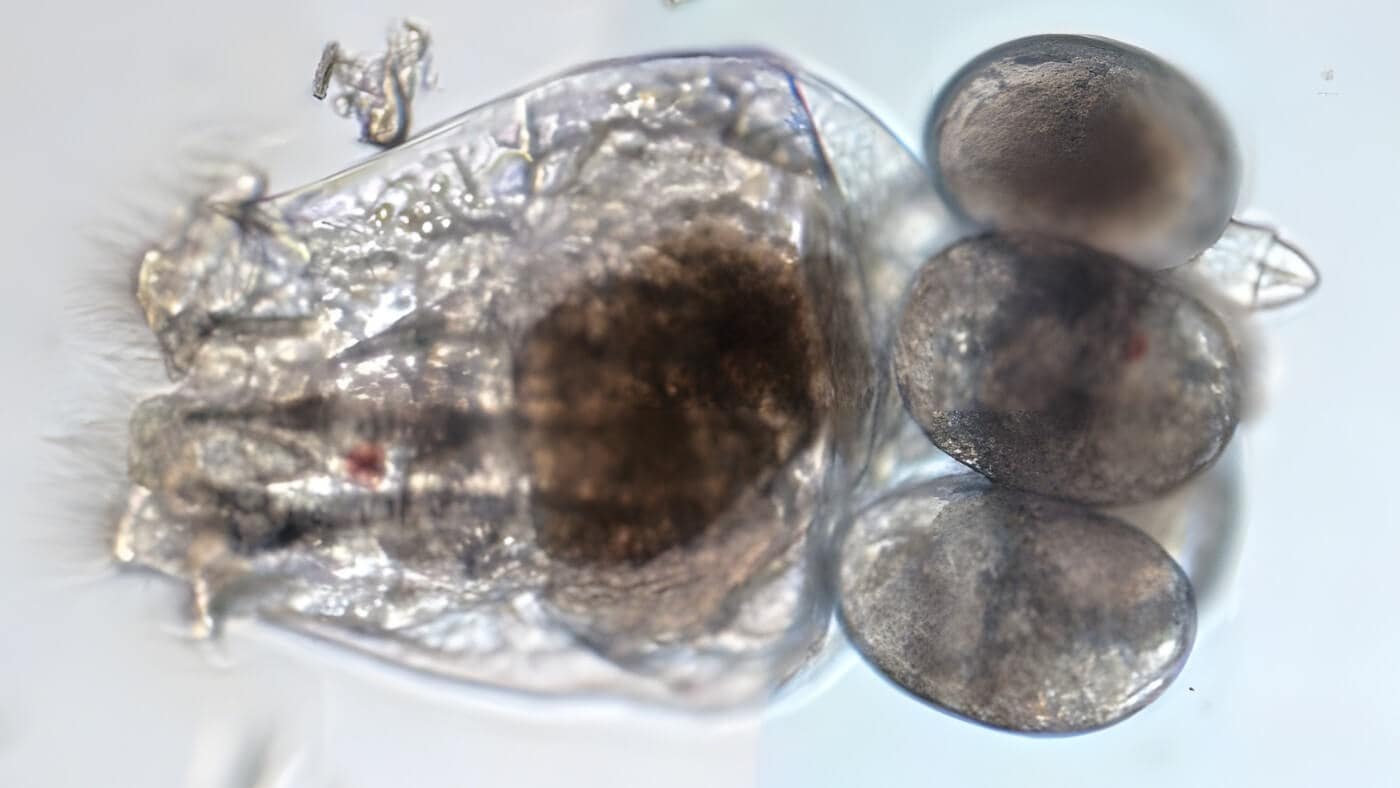
This is the one people underestimate most, because it is indirect and takes weeks to show. Phytoplankton is the primary food source for copepods, rotifers and the rest of the zooplankton layer. Feed phytoplankton regularly and you are feeding the organisms that feed your corals, your fish and your filter feeders.
This is where most copepod disappointment actually comes from. Somebody adds a bottle of Live Copepods, sees them for a fortnight, then sees nothing and concludes the pods were poor quality or the fish ate them all. Usually neither is true. The pods arrived into a tank with nothing for them to eat, bred once at most, and the population collapsed from starvation rather than predation. Adding pods without phytoplankton dosing is stocking a field and never letting the grass grow.
A tank receiving regular phytoplankton supports a higher and considerably more stable copepod population than one that does not. In a refugium the effect compounds, because the pods have somewhere to breed out of reach of your fish. Regular dosing feeds that culture directly, stretches the interval between manual reseeding, and increases the density of copepod nauplii drifting into the display. For anyone keeping mandarin dragonets, pipefish, scooter blennies or any other obligate live feeder, this indirect benefit matters at least as much as anything phytoplankton does for the corals.
The food web logic is not complicated. Phytoplankton feeds copepods. Copepods feed fish and corals. A tank on a phytoplankton dosing routine runs that chain continuously. A tank without it has no chain at all, just periodic top ups that keep dying out. If you want the detail on that side, I have written separately on why live copepods benefit your reef tank.
5 Species Phytoplankton

£6.99
5 Species Phytoplankton Blend: Build a Thriving Marine Ecosystem Your corals are open, your fish are healthy, and your parameters are clean. But something about the tank feels thin. The microfauna community never quite established. Your copepod population does not… read more
3. Nitrate, Phosphate and Where Your Nutrients Actually Go
Most reef keepers treat nitrate and phosphate as waste to be removed. Test, find the number too high, add a reactor or a resin or more carbon dosing, test again. It is a reasonable instinct and it works in the narrow sense that the number comes down. It also misses the more useful question, which is not how much nitrate you have but what is consuming it.
In a healthy reef, nitrate and phosphate are not waste. They are the bottom of a food chain that is supposed to be feeding something. Nitrogen and phosphorus get taken up by algae and bacteria, those get eaten by copepods and other microfauna, and that biomass gets eaten by your fish and corals. The nutrients end up inside the animals you are keeping. In a tank with no plankton layer, nothing is performing that first step, so nitrogen and phosphorus sit dissolved in the water with only two available destinations. Your skimmer, or nuisance algae.
Why Stripping Nutrients Is the Wrong Frame
The trouble with the removal approach is that it strips indiscriminately and it never addresses why the nutrients had nowhere to go. Reef keepers who go hard at nutrient export often arrive at the same place: nitrate and phosphate near zero, and corals that are pale, slow growing and closed up more often than they should be. Then the algae comes back anyway, because a system with no competition for nutrients gives any opportunist a clear run the moment levels tick up.
What Phytoplankton Dosing Changes
Regular phytoplankton dosing puts competition and a route upward into the system at the same time. The phytoplankton cells themselves take up nitrogen and phosphorus. They feed the bacterial populations that process waste, and they feed the copepods and rotifers that convert dissolved nutrients into living biomass. That biomass is then food. Instead of nutrients accumulating until they feed algae or get skimmed out, they move up the chain into the animals you actually want to feed.
This is also why phytoplankton dosing tends to help tanks at both ends of the nutrient scale, which sounds contradictory until you look at the mechanism. In a high nutrient tank it adds competition and an export route. In an ultra low nutrient tank it adds back a small, controlled organic input that starved corals and zooxanthellae need.
What It Will Not Do
I would rather be straight with you than oversell this. Phytoplankton dosing is not a phosphate remover and it is not a fix for an overstocked, overfed or under maintained tank. If you are feeding six cubes a day into a tank with no skimmer, no phytoplankton dosing regime is going to rescue that. It will not clear an established dinoflagellate or cyano outbreak on its own either, though it is a genuinely useful part of the biological diversity approach to both.
What it does reliably is change where nutrients end up over a period of weeks, and reduce the tendency of a tank to swing. Anyone expecting a nitrate reading to drop by Tuesday will be disappointed. Anyone who runs it for three months alongside sensible husbandry usually stops thinking about nitrate quite so much.
4. Zooxanthellae and Coral Colour
Zooxanthellae are the photosynthetic algae living inside coral tissue, and they are the main energy source for most of the corals people keep. They need trace nitrogen and phosphorus to photosynthesise efficiently. In ultra low nutrient systems where both are stripped to near zero, zooxanthellae populations decline inside the tissue and the coral pales. That is not a lighting fault, though it gets treated as one constantly. It is the coral's primary energy production system being starved of raw material.
Consistent phytoplankton dosing contributes a small, steady input of organic nitrogen and phosphorus at a level that supports zooxanthellae without pushing nitrate or phosphate into problem territory. This is not the same as overfeeding, and it is not an argument for letting nutrients climb. It is maintaining the low level of biological activity in the water column that a natural reef has as a baseline and a closed system loses within weeks of being set up.
The practical outcome is corals photosynthesising more efficiently, holding richer pigmentation, and growing at a better rate than corals under identical lighting in a nutritionally empty water column. If you have ever seen two tanks with the same lights and very different colour, this is often a large part of the difference.
5. Biological Filtration and Microbial Diversity
A reef tank is not just fish and coral in water. It is a microbial ecosystem where bacteria, protozoa and microalgae continuously process waste, cycle nutrients and hold the chemical stability that everything else depends on. Phytoplankton dosing supports that layer by supplying organic carbon that feeds the beneficial bacterial populations underpinning biological filtration.
This contribution is gradual and largely invisible, but it accumulates. A tank dosed consistently over months develops a richer and more stable microbial community than one running on mechanical and chemical filtration alone. In practice that means better processing through the nitrogen cycle and a water column that is better buffered against the sudden parameter swings that stress coral.
It is also a large part of what experienced reef keepers mean when they describe a tank as having matured, a quality of water and animal behaviour that is hard to pin on any single piece of equipment. A steady phytoplankton dosing habit is one of the things that quietly produces it.
How Much Phytoplankton to Dose
This is the question I get more than any other, and the answer depends on your volume and how heavily you are stocked. These are the rates we have confirmed over 18+ years for our 5 Species Phytoplankton, given as daily amounts.
| Stocking level | Daily dose | Typical tank |
|---|---|---|
| Light | 1ml per 27 litres | Lightly stocked, few filter feeders, mostly LPS or softies |
| Medium | 1ml per 18 litres | A normal mixed reef with a moderate fish load |
| Heavy | 1ml per 9 litres | Heavily stocked, many filter feeders, or a mandarin to support |
If you would rather not do the arithmetic, the phytoplankton dosing calculator takes your tank volume and stocking level and returns your exact rate along with the pack size that will actually last you. If you are not sure which of our phytoplankton products suits your setup, the phytoplankton finder is the quicker route in.
Reef Juice - Live Phytoplankton Blend

£9.99
Something has shifted in your tank. Brown film creeps across the sand bed in the mornings, corals look less extended than they should, and nothing in your water chemistry quite explains it. You have probably checked your nitrate and phosphate,… read more
How Often and When
Two to three additions per week is the right cadence for most reef setups, and that is what I would start anyone on. Daily dosing at the rates above is not necessary for a typical mixed reef and risks overshooting the system's ability to process the addition before it is exported. Weekly dosing is too infrequent to hold a useful food particle density in the water column, so you get the cost without much of the benefit.
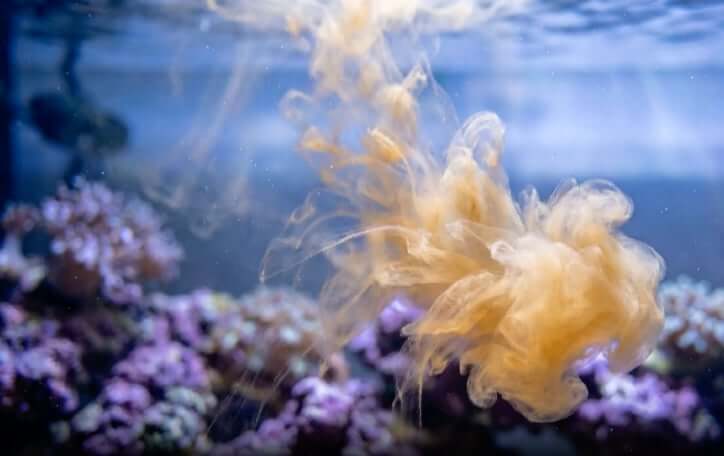
Dose into the sump or refugium rather than straight into the display, with the protein skimmer off or turned down for 60 minutes afterwards. That hour is the whole point. It gives corals, filter feeders and zooplankton maximum exposure to the food before your equipment removes it. Skipping it is the single most common reason people dose faithfully for months and see very little, because most of what they added went into the skimmer cup within minutes.
For a tank with no sump, dose into a low flow corner of the display and drop your wavemaker output for around 30 minutes. Lights off or dusk is a good time, since that is when most copepods are active and out in the open. A feeding syringe makes measuring small volumes considerably less messy than pouring from the bottle.
Knowing You Have It Right
Start at the lower end for your tank size and hold it for two weeks before adjusting anything. The signs your phytoplankton dosing is working are better polyp extension, more copepods visible on the glass with a torch after lights out, and parameters that are stable or improving.
The sign you have gone too far is water that stays faintly green or hazy for more than a day after dosing. That means the system is not processing the volume, so cut back to the previous amount and hold there. It is worth saying that a brief green tint for an hour or two after dosing is completely normal and is not overdosing.
Choosing the Right Phytoplankton for Your Tank
We culture several options and they are not interchangeable, so it is worth matching the product to what you are actually trying to do.
| Product | Best for | Notes |
|---|---|---|
| 5 Species Phytoplankton | General reef use, broadest coverage | Five species, 1 to 20 microns, the default recommendation |
| Nannochloropsis Mix | Copepod and rotifer culture, budget reef dosing | Dual species, small cell size |
| Reef Juice | Larger tanks wanting fewer, bigger doses | 5ml per 100L, one to two times weekly |
| Live Reef Flourish | Nano and small tanks | 1 to 4 drops per 80L daily |
| Reef Flourish Super Concentrate | Large systems, minimal volume added | 1 to 4 drops per 265L daily |
| Phyto Shot | Trying phytoplankton dosing without committing | Single pouch, no storage commitment |
If you would rather produce your own rather than reorder, the Phytoplankton Culture Kit gives you a continuous supply from a starter culture, which works out considerably cheaper on a larger system. It is a small ongoing commitment rather than a set and forget, and if a culture ever goes wrong the culture troubleshooting centre covers the usual causes.
Phytoplankton Dosing and Your Refugium
If you run a refugium, or have an empty sump section you have never got round to filling, this is where phytoplankton dosing pays back fastest. A refugium gives copepods somewhere to breed with no predation, and phytoplankton is what keeps that population climbing rather than merely surviving.
The sequence that works is to establish the refugium first, seed it with Live Copepods after lights out so your fish do not intercept them, then dose phytoplankton two or three times a week from that point on. Give it four to eight weeks and you should have pods breeding faster than your fish can remove them. Adding a PodHide gives them protected surface area to breed in, which matters more in a display or a bare sump section than it does in a well planted refugium. The full build is covered in my refugium setup guide.
For anyone breeding fish rather than keeping a display reef, the same principle applies with Live Rotifers in place of copepods, and phytoplankton both feeds the rotifers and green waters the larval tank. Culturing your own is usually the right answer at that scale, and my copepod culture guide covers the method that transfers across to rotifers.
Storage and Shelf Life
Live phytoplankton is alive, which is the entire point of it and also the reason it needs a little care. Keep it refrigerated, ideally between 4 and 10 degrees, and give the bottle a gentle shake before each dose because the cells settle. Do not freeze it.
Kept cold and shaken occasionally, our phytoplankton holds well for several weeks. You will know it has gone past its best when the colour dulls from a rich green to a grey or yellow tint, or it develops a genuinely bad smell rather than the mild marine one it normally has. If in doubt, ask me. I would far rather answer a question about a bottle than have someone dose something they are unsure about.
Buy a size you will realistically use inside a month or so. A larger bottle is better value per millilitre right up until half of it goes to waste, which is why the dosing calculator returns a pack size alongside the rate.
Common Phytoplankton Dosing Mistakes
The first is leaving the skimmer running. I have covered it above but it is worth repeating, because it is the difference between phytoplankton dosing working and appearing to do nothing at all.
The second is stopping too early. Three weeks is not a trial. The coral response can show inside a fortnight, but the copepod population effect takes six to eight weeks because you are waiting on several breeding cycles. Most people who tell me phytoplankton did nothing for them stopped at around week four.
The third is dosing far too much in the hope of speeding it up. It does not work that way, and all you achieve is a hazy tank and an unnecessary load on your filtration. The rates above are the rates.
The fourth is treating it as a substitute for feeding your fish. It is not fish food in any direct sense. It feeds the layer beneath your fish. Your fish still need feeding, and if you keep obligate live feeders they still need copepods or a Pod-Shot top up as well.
The fifth is inconsistency. Two doses every week without fail beats five doses one week and nothing for a fortnight. If remembering is the problem, the weekly feeding schedule builder will lay out a routine you can actually keep to.
A Note from Darren
Phytoplankton is the most underused live food in UK reef keeping, and I think the reason is structural rather than anything to do with the product. Its benefits accrue quietly and cumulatively rather than dramatically, which makes them easy to miss when they are working and easy to dismiss before they have had time to appear.
If you take one thing from this, make it the nutrient point. Your tank does not have a nitrate problem, it has a missing food chain. Phytoplankton dosing is how you put the bottom of that chain back, and almost everything else in this guide follows from that one idea.
If you have questions about phytoplankton dosing, get in touch. I answer every message personally, and I would rather help you get the routine right for your particular tank than sell you a bottle that turns out to be the wrong size.
Darren
Founder, Reefphyto Ltd - Wales, UK - Est. 2008