Rotifer Feed Concentrate: Microalgae for Rotifer Cultures
Running a rotifer culture for marine fish larvae, seahorses or filter feeders is one of the more demanding live food commitments in the reef hobby. When it works, when the culture is dense, the animals are active, and you have a reliable supply on demand, it changes what you can achieve with difficult species. When it does not, the failure usually traces back to one thing: the feed.
Rotifers are filter feeders. They consume whatever microalgae are present in the water column, and the nutritional quality of those algae flows directly into the nutritional quality of the rotifers your larvae or seahorses eat. A culture maintained on a low-quality or single-species algae diet produces rotifers that are alive but nutritionally thin. Fed to larvae, they sustain survival but do not support the growth rates and early development that a well-fed larval cohort shows. In a seahorse system, the same underfed rotifers produce slower condition improvement and less visible vitality in animals that depend on live prey.
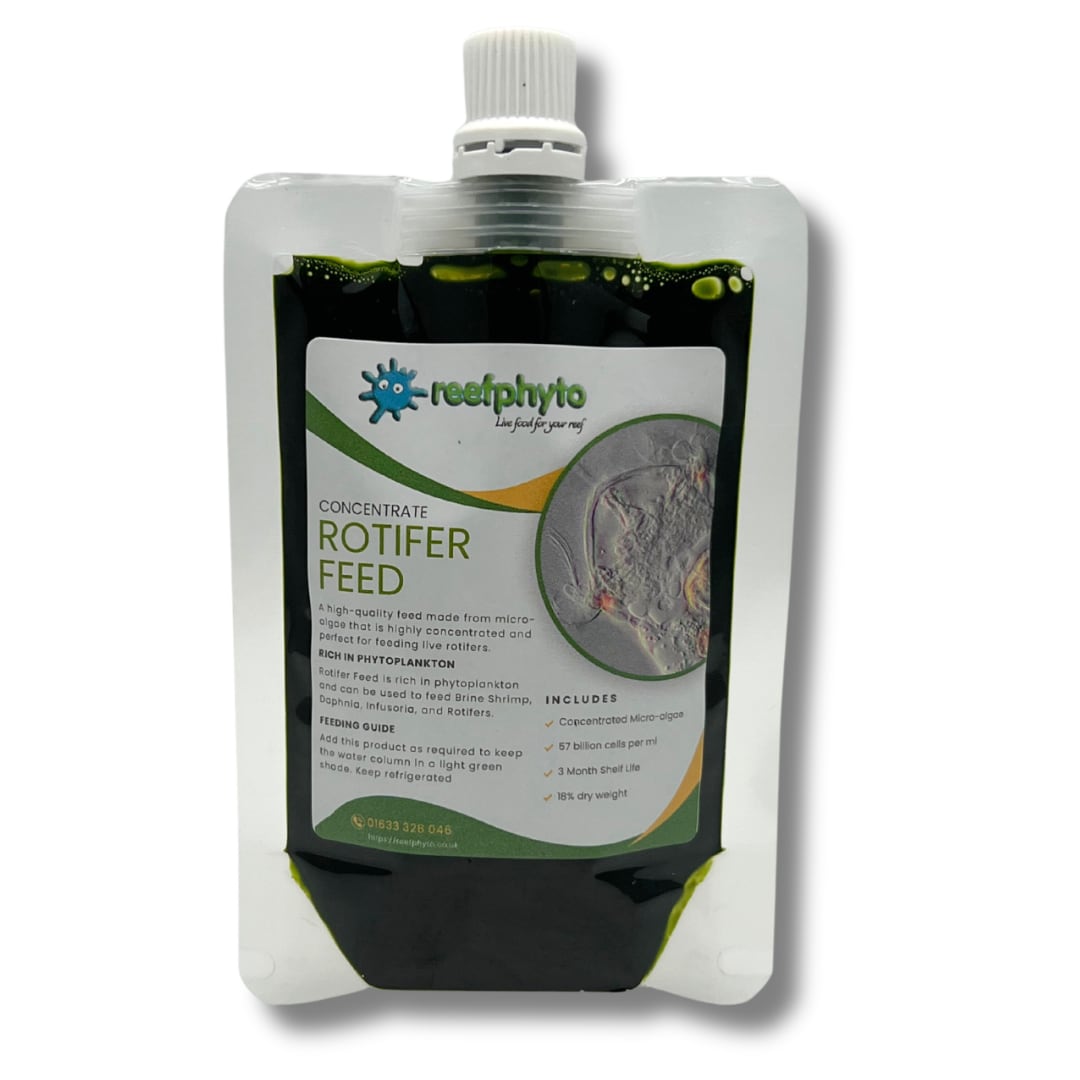
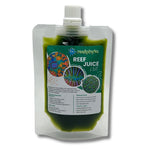
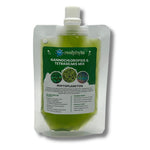
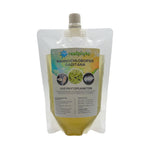
Reefphyto Rotifer Feed Concentrate is a two-species live microalgae blend of Nannochloropsis oculata and Tetraselmis suecica, formulated specifically for Brachionus plicatilis rotifer culture. Nannochloropsis provides the small 1 to 5 micron cell size that rotifers graze most efficiently, loaded with EPA for immune function and larval development. Tetraselmis contributes larger 8 to 12 micron cells rich in protein and lipids that drive reproductive output and culture density. To feed your culture, add enough daily to turn the water a light green colour. That visible tint is your guide to the right algae concentration for active rotifer grazing and reproduction. The blend is small-batch cultured in the UK and refrigerated throughout for genuine cell viability on delivery.
A rotifer culture on the right feed looks and behaves differently. Population density climbs steadily. Gravid females are visible throughout the culture. When you concentrate a sample in your rotifer sieve, the animals are active and dense, ready to deliver a meaningful feeding event to larvae or filter feeders rather than a sparse introduction that barely registers.
Reefphyto has been culturing Brachionus plicatilis at our Welsh facility since 2008. The Rotifer Feed Concentrate is the same blend used in our own production rotifer cultures, made available in 30ml, 50ml and 100ml sizes. If you have questions about your rotifer culture or larval feeding programme, Darren responds personally to every enquiry.
Give your rotifer culture the feed that makes the difference between a culture that survives and one that thrives.
If your rotifer culture needs a consistent daily feed to maintain density and nutritional quality, Rotifer Feed Concentrate is the right decision.
Rotifer Feed Concentrate: Live Microalgae for Brachionus plicatilis Cultures
The productivity of a rotifer culture, how dense it runs, how reliably it reproduces, and how nutritionally complete the animals are when you harvest them, is determined by the quality of what you feed it. Reefphyto Rotifer Feed Concentrate is a two-species live microalgae blend of Nannochloropsis oculata and Tetraselmis suecica, formulated specifically for Brachionus plicatilis culture. It provides the particle size range and fatty acid profile that produces genuinely nutritious rotifers for marine fish larvae, seahorses, and filter-feeding invertebrates.
Why Rotifer Feed Quality Determines Larval Rearing Success
Brachionus plicatilis rotifers are the first live food most marine fish larvae encounter. They are small enough for larvae to capture from day one, present in sufficient density to ensure regular feeding encounters, and digestible enough for an undeveloped digestive system to process. But they are only as nutritious as the microalgae they have been fed.
In larval rearing, the difference between a well-nourished rotifer cohort and a nutritionally depleted one is measurable in larval survival rates and development speed from the first week. Larvae fed enriched, dense rotifers grow faster, have better swim bladder inflation, and show higher survival through the critical early settlement stage. These outcomes trace back directly to the quality of the feed the rotifers consumed.
For seahorse keepers and marine breeders, the same principle applies at every life stage. Rotifers maintained on a quality two-species microalgae diet accumulate EPA and essential lipids in their tissues. Those nutrients transfer to whatever eats them. The rotifer is the nutritional vehicle and the feed determines what it carries.
What Reefphyto Rotifer Feed Concentrate Contains
The blend uses two complementary microalgae species selected to cover the particle size range and nutritional requirements of Brachionus plicatilis at all life stages.
Nannochloropsis oculata
Nannochloropsis is a 1 to 5 micron EPA-rich microalgae and the workhorse species for rotifer culture worldwide. Its small cell size sits precisely within the optimal grazing range for Brachionus plicatilis at all life stages, from newly hatched juveniles through to reproducing adults. EPA is the omega-3 fatty acid most directly associated with immune function and larval survival in marine fish, and it accumulates in rotifer tissues when Nannochloropsis forms a consistent part of the diet. Cultures maintained on a Nannochloropsis-inclusive diet consistently produce rotifers with higher EPA levels than those fed on larger-celled species alone.
Tetraselmis suecica
Tetraselmis is a larger green flagellate at 8 to 12 microns, providing protein, lipids and additional energy that supports reproductive output in adult rotifers. While Nannochloropsis covers the feeding requirements of early-stage rotifers and delivers EPA, Tetraselmis drives the culture productivity side of the equation. Cultures fed on a blend including Tetraselmis show higher rates of egg production and faster population growth than those maintained on Nannochloropsis alone. The combination of the two species produces a culture that is both nutritionally complete and reproductively productive.
How to Feed Your Rotifer Culture
Add Rotifer Feed Concentrate to your culture vessel daily. The practical dosing guide is simple: add enough to turn the culture water a light green colour. That tint tells you the algae concentration is at the level needed for active rotifer grazing and reproduction. A culture running clear has been underfed and population growth will slow. A culture that has turned very dark green has been overfed, so reduce the dose to avoid the water quality issues that follow as uneaten algae die off.
Maintain gentle aeration to keep algae distributed evenly through the water column. Monitor population density regularly. A productive culture should show visible rotifer activity throughout the vessel, with gravid females present in any concentrated sample. Store Rotifer Feed Concentrate refrigerated and use within three months of delivery.
Rotifer Feed Concentrate vs Copepod Feed
Reefphyto Copepod Feed is a separate product formulated for Tigriopus californicus copepod cultures. Where the Rotifer Feed Concentrate uses a focused two-species blend of Nannochloropsis and Tetraselmis matched to the particle size and nutritional requirements of Brachionus plicatilis, the Copepod Feed uses a four-species blend that additionally includes Isochrysis galbana and Thalassiosira weissflogii to meet the broader feeding biology of Tigriopus californicus across nauplii and adult stages. Using the correct feed for each culture type consistently produces better population density and nutritional quality than using a single product across both.
Using Rotifer Feed Alongside the Rotifer Culture Kit
The Rotifer Feed Concentrate is the ongoing supply product for reef keepers who have established a home rotifer culture using the Reefphyto Rotifer Culture Kit. Once the initial feed supply included with the kit is used, Rotifer Feed Concentrate ordered separately continues the same feeding programme. For a productive culture running at moderate volume, the 30ml size provides several weeks of daily feeding. The 50ml and 100ml sizes suit higher-volume cultures or breeders running multiple parallel vessels who want to minimise reorder frequency.
Enriching Rotifers Before Feeding
For marine fish breeders who enrich rotifers with HUFA supplements before feeding to larvae, Rotifer Feed Concentrate supports the gut-loading phase that precedes enrichment. Rotifers concentrated in a Rotifer Sieve Net and transferred to a clean enrichment vessel will continue grazing on any residual algae present. Adding a small dose of Rotifer Feed Concentrate to the enrichment vessel in the hours before harvest maintains algae availability during this phase and ensures rotifers arrive at the feeding point with full guts.
Frequently Asked Questions
How do I know if I am feeding the right amount?
Add Rotifer Feed Concentrate until the culture water turns a light green colour. That visible tint indicates sufficient algae concentration for active rotifer grazing. Clear water means underfed. Very dark green means overfed, so reduce the dose to maintain water quality.
How long does Rotifer Feed Concentrate stay fresh?
Store refrigerated and use within three months of delivery for peak cell viability. Keep sealed between uses and away from temperature extremes. Do not freeze.
Can I use Rotifer Feed Concentrate to feed a copepod culture?
It will sustain a copepod culture but is not optimised for it. The two-species blend is matched to the particle size and nutritional requirements of Brachionus plicatilis. For the best results from a Tigriopus californicus culture, use the Copepod Feed, which includes Isochrysis and Thalassiosira alongside Nannochloropsis and Tetraselmis.
Is this the same feed used at the Reefphyto facility?
Yes. Rotifer Feed Concentrate is the same microalgae blend Darren uses to maintain production rotifer cultures at the Reefphyto Wales facility. It is available in 30ml, 50ml and 100ml sizes to suit home cultures at different volumes.
Can I use this product to enrich brine shrimp nauplii?
Rotifer Feed Concentrate can be used as a microalgae supplement during Artemia nauplii enrichment, though dedicated HUFA enrichment products provide a more targeted fatty acid profile for this purpose. For rotifer gut-loading specifically, the concentrate provides a reliable algae substrate in the hours before harvest.
Complete Your Rotifer Culture System
Rotifer Feed Concentrate works as part of a complete home rotifer system. The Rotifer Culture Kit provides the live Brachionus plicatilis starter culture and setup guidance to establish your population. Rotifer Feed Concentrate keeps it productive and nutritionally complete long-term. The Rotifer Sieve Net allows you to concentrate and deliver rotifers precisely to your larval rearing tank or seahorse system. For breeders also running a copepod culture, Copepod Feed provides the parallel feeding supply for your Tigriopus californicus population.

 Roll over image to zoom in



 Darren Wordley
18 years culturing live phytoplankton in Wales
Darren Wordley
18 years culturing live phytoplankton in Wales
 Cultured in Wales, shipped live.