Copepod Feed: Microalgae Blend for Copepod Cultures
A copepod culture is only as good as what you feed it. You can start with a strong founding population of Tigriopus californicus, set up the right vessel, get the aeration dialled in and still watch the culture decline within weeks if the food source is not right. The feed is where most home cultures quietly fail.
The problem is that copepods are not generalist feeders. They thrive on a diet of mixed microalgae that mirrors the planktonic soup they graze in the wild, with different species at different particle sizes, each contributing different fatty acids, proteins and lipids to the nutritional profile they pass up the food chain. A single-species feed, or one that arrives partially dead, produces a culture that sustains rather than grows. The copepods survive but do not reproduce at the rate needed to support a mandarin, a refugium, or a breeding programme.
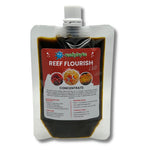
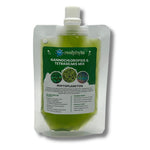
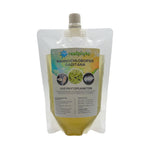
Reefphyto Copepod Feed is a four-species live microalgae blend of Isochrysis galbana, Tetraselmis suecica, Nannochloropsis oculata and Thalassiosira weissflogii, formulated specifically for Tigriopus californicus culture. The blend covers a particle size range of 1 to 20 microns as a high-density live culture, spanning the feeding range of both nauplii and adults. To feed your culture, add enough daily to turn the water a light green colour. That visible tint tells you the algae concentration is where it needs to be for active grazing. The blend is small-batch cultured in the UK and refrigerated throughout, so cell viability on arrival is genuine rather than nominal.
When the feed is right, the difference in a copepod culture is visible within days. Nauplii survival improves, reproduction accelerates, and the population density builds toward the level needed to sustain regular harvesting into your tank or refugium, with copepods that are nutritionally dense with EPA, DHA and astaxanthin from a diet they were designed to eat.
Reefphyto has been culturing Tigriopus californicus at our Welsh facility since 2008. The Copepod Feed is the same blend Darren uses in production, made available in sizes from 30ml through to 500ml to suit home cultures at any scale. If you have questions about feeding rates or culture management, contact us directly and Darren will respond personally.
If your copepod culture is thinning out and needs reliable live microalgae to sustain population growth, Copepod Feed is the right decision.
Copepod Feed: Live Microalgae Blend for Tigriopus californicus Cultures
The health and productivity of a copepod culture is determined almost entirely by two things: the quality of the founding population and the quality of what you feed it every day. A healthy founding population is something we can provide. What happens after that depends on the feed. Reefphyto Copepod Feed is a four-species live microalgae blend formulated specifically to sustain, grow and enrich Tigriopus californicus cultures from nauplii through to breeding adults.
Why Copepod Feed Composition Matters
Tigriopus californicus is a harpacticoid copepod that grazes on microalgae, bacteria and detritus in the wild. In a home culture vessel, microalgae must be provided deliberately and consistently. There is no natural substrate or planktonic input to supplement it. The nutritional profile of the microalgae you feed your culture directly determines the nutritional profile of the copepods you harvest. Copepods that are well-fed on a diverse, fatty acid-rich diet accumulate EPA, DHA and natural astaxanthin in their tissues. Those are the compounds that make live copepods genuinely valuable as a reef food source, and they come from the feed, not from the copepods themselves.
A single-species algae feed produces a nutritionally narrower copepod. A multi-species blend that covers the full particle size range and fatty acid spectrum produces copepods that are nutritionally complete, closer to the wild prey your mandarin, pipefish or wrasse evolved to hunt.
What Reefphyto Copepod Feed Contains
The blend combines four complementary microalgae species, each selected for a specific contribution to copepod nutrition and culture productivity.
Isochrysis galbana: 30%
Isochrysis is a small brown microalgae with one of the highest DHA profiles of any commonly cultured species. DHA is the omega-3 fatty acid most critical for neurological development and survival in marine fish larvae, and it accumulates in copepod tissues when Isochrysis forms a significant part of the diet. At 30% of the blend, it provides the DHA foundation that makes copepods genuinely valuable as a live food source.
Tetraselmis suecica: 30%
Tetraselmis is a larger green flagellate at 8 to 12 microns, the right size for adult copepods to graze efficiently. It is rich in protein and lipids and contributes to the growth and reproductive rate of the culture. Adult Tigriopus californicus feeding on Tetraselmis show consistently higher reproductive output than those fed on small-celled diets alone.
Nannochloropsis oculata: 20%
Nannochloropsis is a 1 to 5 micron EPA-rich algae, sized specifically for copepod nauplii in the early feeding stages. Nauplii that encounter appropriately sized prey immediately after hatching have significantly higher survival rates. The Nannochloropsis fraction in the blend addresses this directly, supporting the nauplii stage through to first moult and beyond.
Thalassiosira weissflogii: 20%
Thalassiosira is a diatom at 5 to 20 microns that provides silica, additional lipids and enrichment value. Diatoms form a natural and significant part of the microalgae community that Tigriopus californicus grazes in its wild intertidal habitat. Their inclusion in the blend produces a more complete dietary profile that mirrors natural feeding more closely than algae-only formulations.
The blend is supplied as a high-density live culture across a particle size range of 1 to 20 microns.
How to Feed Your Copepod Culture
Add Copepod Feed daily to your culture vessel. The practical guide to getting the dose right is straightforward: add enough to turn the water a light green colour. That visible tint indicates the algae concentration is sufficient for active copepod grazing. A culture that runs clear has been underfed. A culture that turns very dark green has been overfed, which can lead to water quality issues as uneaten algae die off. The light green colour is the target.
Maintain gentle aeration throughout to keep algae distributed evenly through the water column and prevent stratification. Monitor culture density and water clarity regularly. Store the feed refrigerated and use within three months of delivery to maintain cell viability.
How Much Copepod Feed Do You Need?
The right size depends on your culture volume. The 30ml bottle suits a small starter culture in a 4-litre vessel and paired with the Reefphyto Copepod Culture Kit it provides enough feed to establish your culture through the critical early weeks. The 50ml and 100ml sizes suit established home cultures running at moderate volume. The 250ml and 500ml sizes are appropriate for larger culture vessels, multiple parallel cultures, or reef keepers who want a supply on hand to minimise the frequency of reordering.
Copepod Feed vs Rotifer Feed Concentrate
Reefphyto produces a separate Rotifer Feed Concentrate for Brachionus plicatilis rotifer cultures. Both are four-species microalgae blends supplied as high-density live cultures, but the species ratios differ to reflect the different feeding biology of copepods and rotifers. The Copepod Feed carries a higher proportion of Tetraselmis to support adult copepod grazing and reproduction. The Rotifer Feed Concentrate carries a higher proportion of Nannochloropsis to support the smaller particle size requirements of rotifers. Using the correct feed for each culture type produces meaningfully better results than using a single product across both.
Using Copepod Feed Alongside the Copepod Culture Kit
The Copepod Feed is the natural ongoing supply product for reef keepers who have established a home culture using the Reefphyto Copepod Culture Kit. The 30ml bottle included in the kit provides enough to get your culture running in the early weeks. Once that is used, Copepod Feed ordered separately continues the same feeding programme through to a fully productive culture and beyond. For an established culture producing regular harvests, a 100ml pouch typically provides several weeks of daily feeding depending on culture volume.
Frequently Asked Questions
How do I know if I am feeding the right amount?
Add enough Copepod Feed daily to turn the culture water a light green colour. That visible tint indicates sufficient algae concentration for active grazing. If the water runs clear, the culture is underfed. If it turns very dark green, reduce the dose slightly to avoid water quality issues from uneaten algae.
How long does Copepod Feed stay fresh after delivery?
Stored refrigerated, Copepod Feed maintains cell viability for up to three months from delivery. Keep it sealed between uses and away from temperature extremes. Do not freeze.
Can I use Copepod Feed for a rotifer culture?
Copepod Feed will sustain a rotifer culture but is not optimised for it. The Rotifer Feed Concentrate has a higher Nannochloropsis proportion that better suits the smaller particle size requirements of Brachionus plicatilis. For the best results from each culture, use the feed formulated for that organism.
Is this the same feed used in Reefphyto's production facility?
Yes. The Copepod Feed is the same microalgae blend Darren uses to feed Tigriopus californicus cultures at production scale in the Reefphyto Wales facility. It is made available in sizes from 30ml to 500ml to suit home cultures at any volume.
Can I use this feed to enrich live copepods before adding them to the tank?
Yes. Adding a small dose of Copepod Feed to your copepod culture or holding vessel in the hours before harvesting tops up the algae available to copepods and supports gut-loading, ensuring the animals you add to your tank are at peak nutritional value when your fish encounter them.
Complete Your Copepod Culture System
Copepod Feed works as part of a complete home copepod culture system. The Copepod Culture Kit provides the live starter culture, culture vessel, and step-by-step guide to establish your population. Copepod Feed keeps it productive long-term. For reef keepers also running a rotifer culture, Rotifer Feed Concentrate provides the parallel feeding supply for your Brachionus plicatilis population.

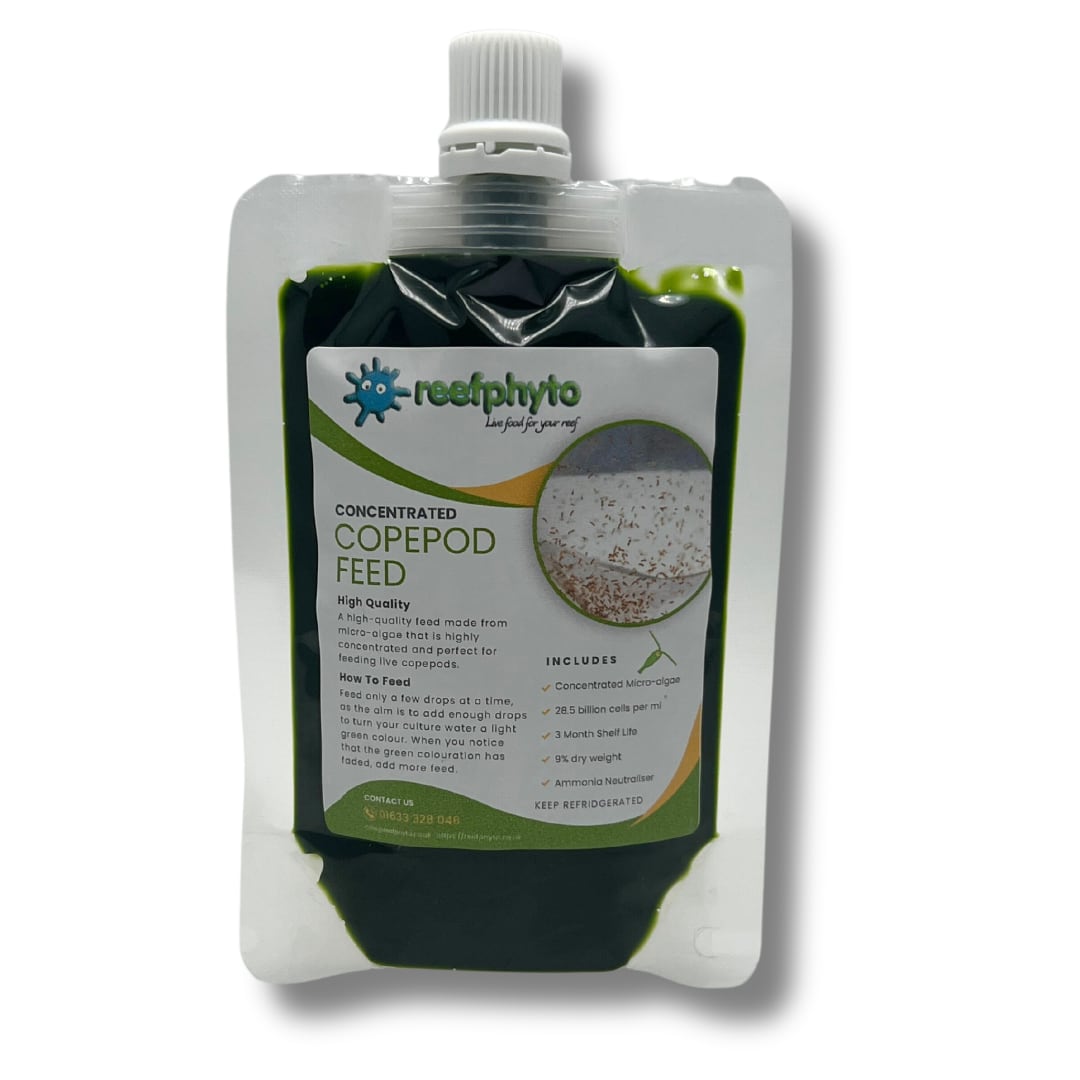
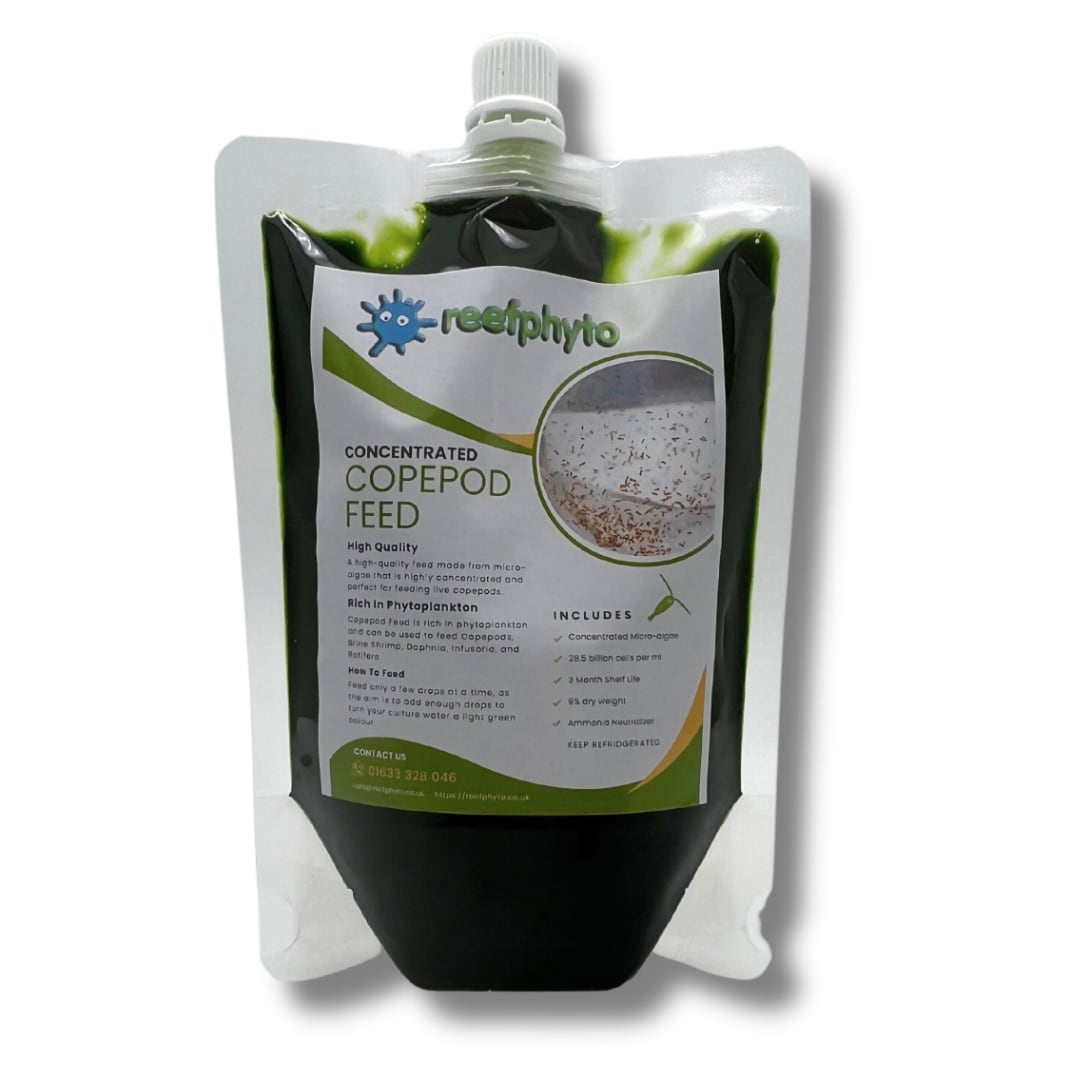
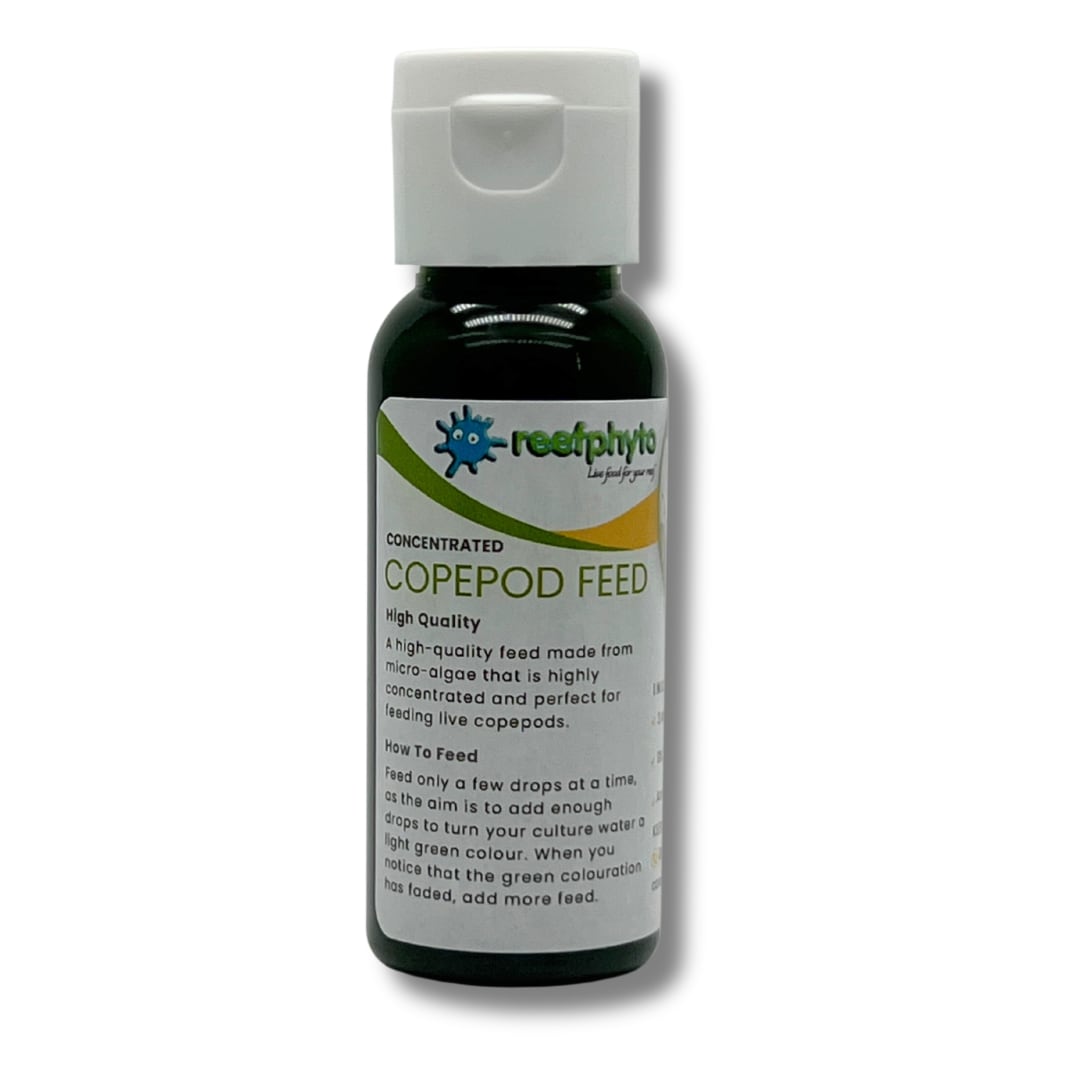 Roll over image to zoom in



 Darren Wordley
18 years culturing live phytoplankton in Wales
Darren Wordley
18 years culturing live phytoplankton in Wales
 Cultured in Wales, shipped live.