Reefphyto Rotifer Culture Kit: Your Easy Solution to Cultivate Live Rotifers
The clownfish spawned again. The eggs developed normally and the larvae hatched on schedule. And then, on day two, the rotifers ran out. The bought-in bottle was thinner than expected and what remained was not enough to sustain the hatch through the critical first ten days. It is not the first time. Each spawn cycle produces the same bottleneck: the larvae are ready before the food supply reliably is.
Running a marine fish breeding programme on bought-in rotifers means the success of each hatch depends on delivery timing, bottle density, and the shelf life of what arrives. A culture running on your shelf removes that dependency entirely. The rotifers are there when the larvae need them, at the density you need, harvested fresh rather than declining in a bottle. That reliability is what the difference between a successful hatch and a failed one often comes down to.
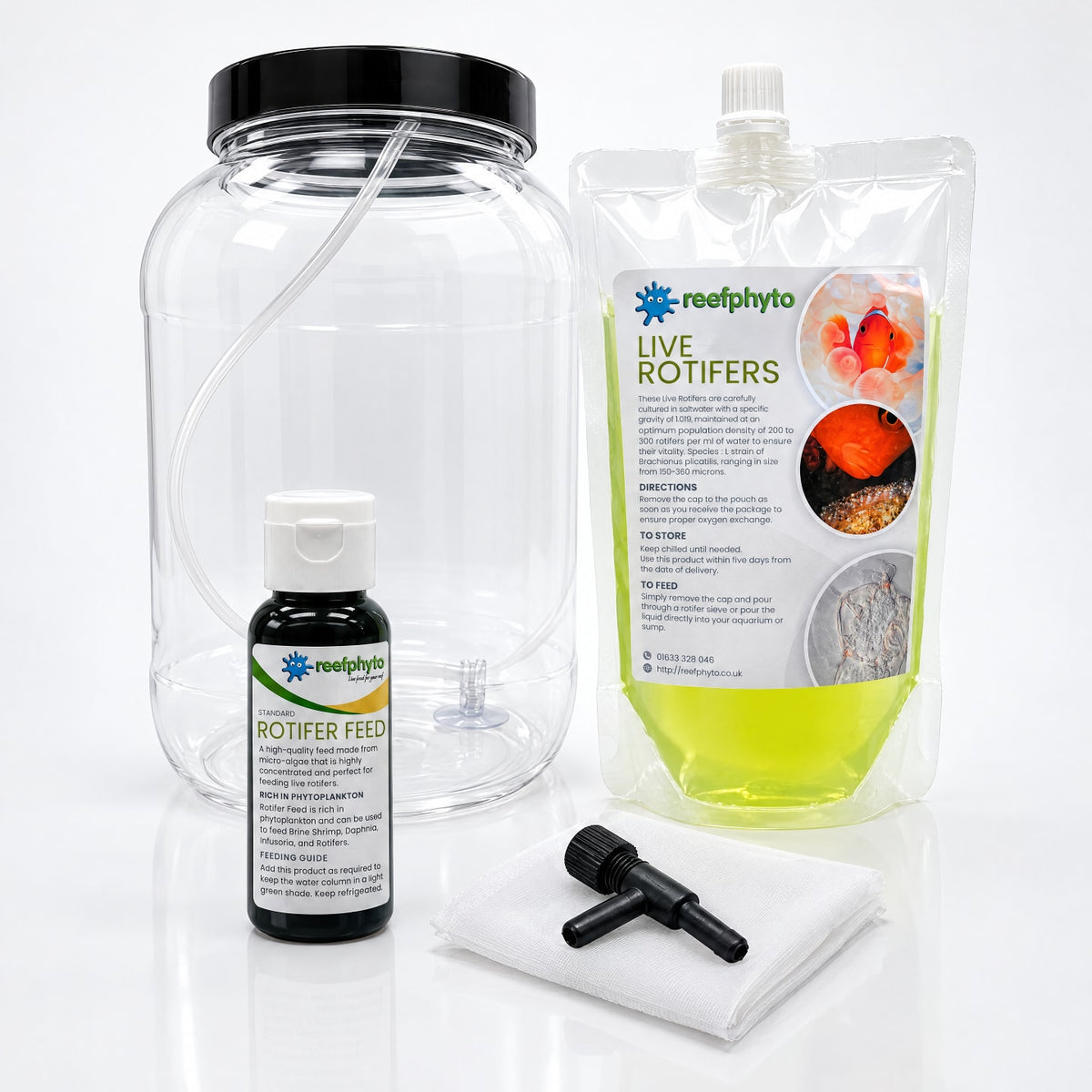
The Reefphyto Rotifer Culture Kit contains everything needed to establish a productive Brachionus plicatilis culture from a standing start. The 4 litre kit includes a 500ml live rotifer starter culture and 30ml of Rotifer Feed, with culture container, airline tubing, adjustable air control valve, and filter mesh. The 10 litre and 20 litre kits scale up with a 1 litre live starter culture and 50ml of feed, using appropriately sized vessels for higher-volume production. All three sizes include access to the step-by-step rotifer culture guide and are available with or without an optional air pump. Add prepared saltwater, introduce the starter culture, begin feeding, maintain aeration, and the culture is producing harvestable rotifers within 7 to 14 days. Rotifers and copepods are cultured in separate Reefphyto facilities to minimise cross-contamination.
Reefphyto has been culturing and supplying live Brachionus plicatilis to marine fish breeders across the UK since 2008. If you want guidance on culture sizing for your specific breeding programme, enrichment timing, or building a complete larval nutrition chain, contact us directly. Darren responds personally.
Start the culture before the next spawn. Not after.
What's Inside?
4 Litre Kit: 500ml live rotifer starter culture, 30ml Rotifer Feed Concentrate, 4L culture container, airline tubing, air control valve, filter mesh.
10 Litre and 20 Litre Kits: 1 litre live rotifer starter culture, 50ml Rotifer Feed Concentrate, scaled culture container, airline tubing, air control valve, filter mesh.
All Kits Include: Step-by-step rotifer culture guide. Optional air pump available.
If you need a rotifer sieve, we have them available on our website.
Why a Home Rotifer Culture Changes Everything
There is a fundamental difference between keeping rotifers available and having rotifers available. Keeping them available means ordering ahead, monitoring what arrives, checking density and viability, and hoping the timing aligns with when the larvae actually need feeding. Having them available means the culture vessel is sitting on your shelf, aerating steadily, producing rotifers continuously regardless of what the post brings or when the fish decide to spawn.
Marine fish larvae are not on a schedule that accommodates supply chain uncertainty. Most broadcast-spawning species produce larvae that require first-feed live rotifers within 24 to 48 hours of hatching. The window between hatching and the point where starvation becomes irreversible is short, and the feeding density required during the first ten days is higher than a single bought-in bottle can reliably sustain across multiple larval cohorts.
Breeders who have run both approaches consistently report the same conclusion: a home rotifer culture, once established, removes the variable that causes the most preventable larval losses. Not water quality. Not disease. Not genetics. Rotifer supply.
What Each Kit Contains
All three kits are built around the same core components, scaled to the vessel size.
The 4 litre kit includes a 500ml live Brachionus plicatilis starter culture from Reefphyto's own production stock, 30ml of Rotifer Feed Concentrate, a 4-litre clear culture container, airline tubing, an adjustable air control valve, and a filter mesh for harvesting. The 10 litre and 20 litre kits include a 1-litre live starter culture, 50ml of Rotifer Feed Concentrate, and appropriately scaled containers with the same accessories.
All kits include access to the step-by-step rotifer culture guide, which covers setup, daily feeding, monitoring culture density and health, harvesting technique, water change schedule, and troubleshooting the most common culture problems.
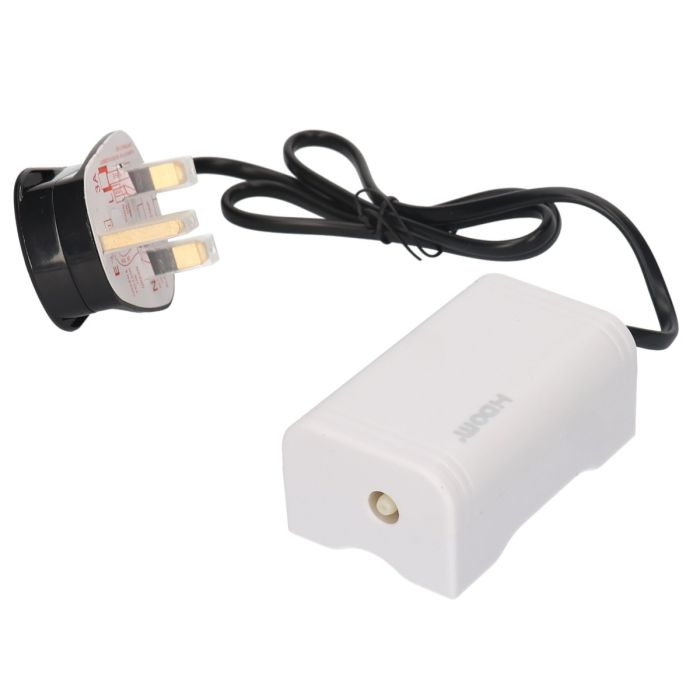
An optional air pump is available for all kit sizes. If you already have an air pump running other culture vessels, the pump-free kit provides everything else. If this is a first culture setup with no existing pump infrastructure, the pump-included option provides a complete, ready-to-run package without requiring additional purchases.
Please note that the air pump supplied may differ in model and appearance from the one shown in the images. It does exactly the same job.
Setting Up and Running the Culture
Clean the culture container thoroughly before first use, rinse with fresh water, and fill with prepared saltwater at a specific gravity of 1.019 to 1.021. Brachionus plicatilis cultures best at a lower salinity than your reef tank, and this range is optimal for reproduction. Add the starter culture and the initial feed dose. Set up aeration with the airline reaching the base of the vessel and the air valve adjusted to produce gentle, consistent bubbling rather than vigorous turbulence.
The culture will be visibly active within 24 to 48 hours of setup. Population density increases progressively over the first 7 to 14 days as the rotifers reproduce and the culture reaches a density appropriate for first harvesting. Brachionus plicatilis reproduces through parthenogenesis under good conditions, with females producing eggs continuously. A well-fed culture at room temperature between 22 and 26 degrees Celsius can double its population within 24 hours at peak reproductive rate.
Our complete rotifer culture guide walks you through every stage in detail, from initial setup through to harvesting, maintenance, and holiday care.
Begin harvesting by removing a portion of the culture through the filter mesh, which separates the rotifers from the culture water. The harvest volume should not exceed 25 to 30 percent of the total culture volume in a single harvest to avoid destabilising the population. Replace the harvested volume with fresh prepared saltwater and an appropriate dose of Rotifer Feed to replenish the food supply.
Quality and Biosecurity
Reefphyto cultures rotifers and copepods in separate facilities. Maintaining physical separation between rotifer and copepod production eliminates the most common pathway for cross-contamination and ensures the starter cultures supplied in these kits are clean, species-verified Brachionus plicatilis L-strain cultures.
Occasional natural microfauna, including small numbers of copepods, may be present in any live rotifer culture product. This is a normal characteristic of live biological material, is harmless to your culture, and does not affect culture performance or the suitability of the product for larval feeding applications.
Frequently Asked Questions
Which kit size should I choose?
The 4 litre kit suits hobbyist breeders, keepers trialling rotifer culture for the first time, and anyone running small larval cohorts from a single spawning pair. The 10 litre kit suits established breeders with regular spawning programmes and larger larval numbers. The 20 litre kit suits serious or commercial-scale breeders managing multiple species, high larval volumes, or programmes where rotifer supply is a critical production input. If you are unsure, contact us with details of your breeding programme and Darren will advise the right size.
Do I need a heater?
No heater is required in most normal indoor environments where the ambient temperature stays between 18 and 28 degrees Celsius. Brachionus plicatilis reproduces across this range, with the optimum around 22 to 26 degrees. In cooler rooms or unheated outbuildings where temperatures drop below 18 degrees in winter, a small aquarium heater can stabilise the culture temperature and maintain reproductive rate.
How do I harvest the rotifers?
Pour a portion of the culture through the filter mesh included in the kit. The mesh retains the rotifers while the culture water passes through. Rinse the retained rotifers briefly with clean saltwater to remove accumulated waste before feeding to larvae or corals, or transferring to an enrichment vessel for the pre-feed gut-loading step.
What happens if the culture crashes?
Culture crashes in Brachionus plicatilis are almost always caused by one of four factors: inadequate or inconsistent feeding, insufficient aeration, water quality deterioration from infrequent water changes, or temperature shock. Our culture troubleshooting centre covers how to identify and fix each of these. If a crash occurs, a replacement live starter culture is available from Reefphyto separately to restart the programme without purchasing the full kit again. If you cannot identify the cause, contact Darren directly. He is happy to troubleshoot culture issues personally.
Can I run multiple cultures from one kit?
Once the initial culture is established and producing consistently, a portion of the culture can be used to inoculate a second vessel, effectively creating a second culture without purchasing an additional starter. This is how most serious breeders build up to the 10 or 20 litre production volume they eventually need: starting with one kit and expanding from it once the technique is established.
Complete Your Larval Nutrition System
The Rotifer Culture Kit pairs naturally with our rotifer feed for ongoing culture nutrition, our rotifer and artemia enrichment for pre-feed gut-loading, and our live phytoplankton as an alternative or supplementary feed source. For breeders who also need copepods as the larvae grow and require larger prey, our copepod culture kit sets up a parallel home copepod supply using the same approach. Our standalone live rotifers and Roti-Shot are available for rapid restocking when your home culture needs supplementing.
Reefphyto: Live Rotifer Production from Wales Since 2008
Reefphyto has been culturing live Brachionus plicatilis and supplying rotifer culture kits to marine fish breeders and reef keepers across the UK since 2008. The starter cultures in these kits come from the same production stock we use in our own facility. If you have questions about culture setup, kit sizing, enrichment timing, or building a complete larval nutrition programme, contact us directly. Darren responds personally to every enquiry.




 Roll over image to zoom in



 Darren Wordley
18 years culturing live phytoplankton in Wales
Darren Wordley
18 years culturing live phytoplankton in Wales
 Cultured in Wales, shipped live.