
Quick Navigation
Understanding why live copepods benefit your reef tank could be the missing piece you have been looking for. You have done everything right, your water parameters are dialled in, your equipment is running perfectly, and you genuinely care about every animal in your tank. But something still is not clicking. Your corals are not fully extended. Your fish are pale. Your mandarin is wasting.
In 18 years of culturing live marine food here in Wales, I have seen this pattern more times than I can count. And in most cases, the answer is the same: it is not your water. It is what you are feeding.
Live copepods are the cornerstone of the natural marine diet. They are what your fish evolved to hunt, what your corals evolved to consume, and what most reef tanks have never had access to in genuinely live form. This post explains exactly why live copepods benefit your reef tank, what they actually do inside the water column, and how to introduce them in a way that makes a real difference.
What Are Live Copepods?
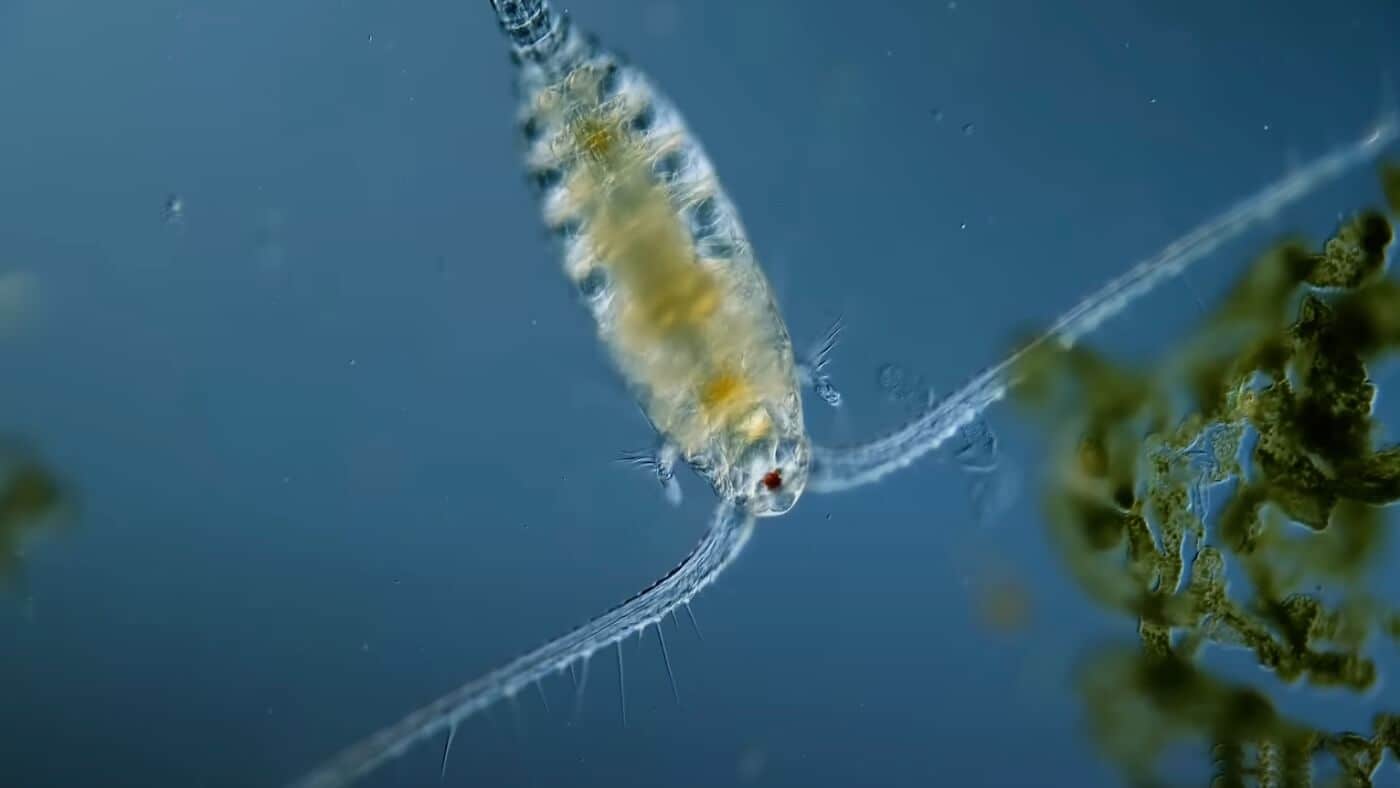
Copepods are tiny crustaceans found in virtually every marine environment on Earth. Ranging from 0.5 to 3 millimetres depending on species, they are the foundation of the ocean's food chain. Everything above them, from small reef fish to filter-feeding corals, depends on them either directly or indirectly.
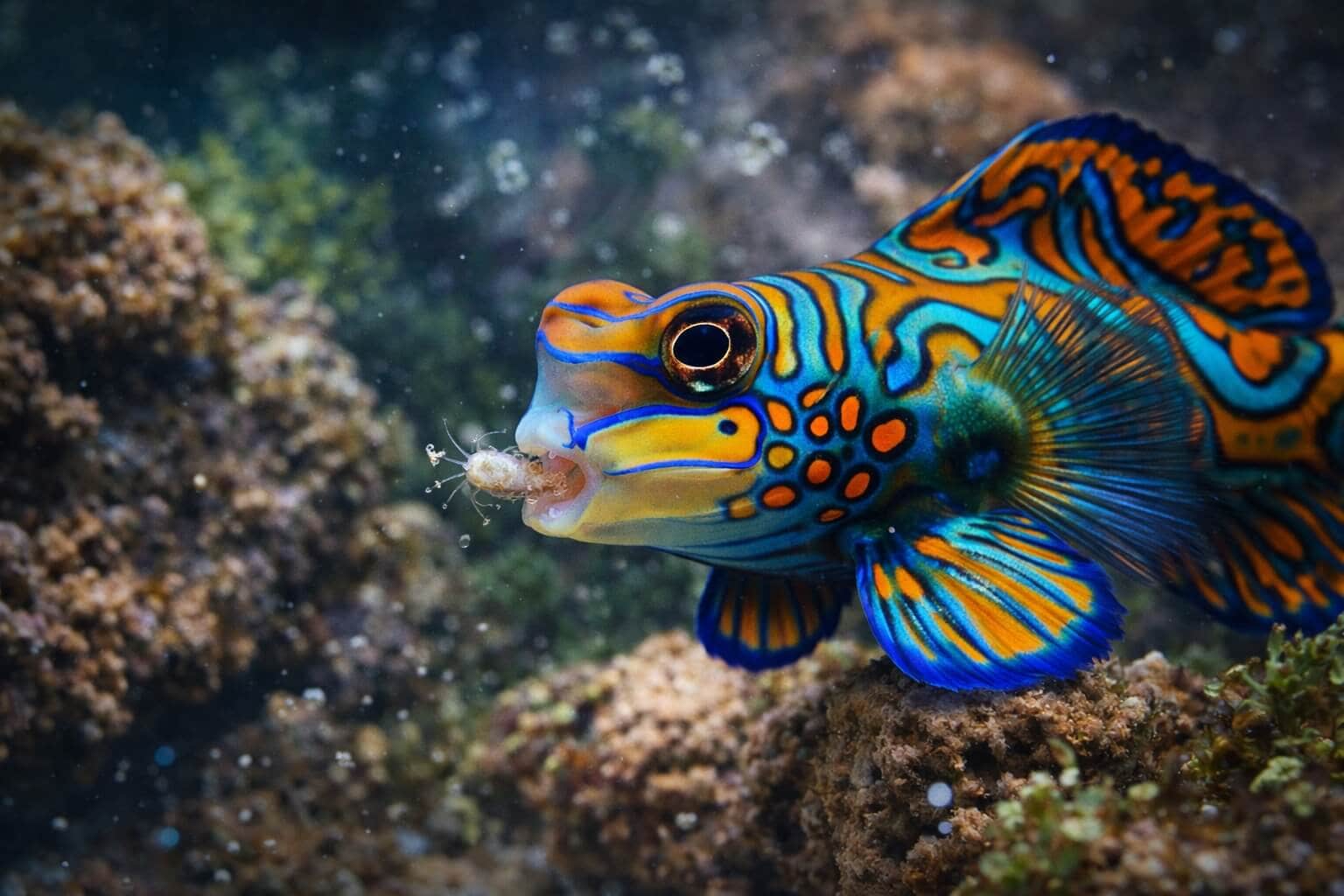
In the wild, a mandarin dragonet will consume hundreds of copepods per hour. Pipefish and seahorses hunt them continuously throughout the day. Even corals and feather dusters capture them as they drift through the water column. They are not a supplement. They are the diet.
What makes live copepods irreplaceable is what they carry: EPA, DHA, astaxanthin, and other carotenoids that dried and frozen foods simply cannot replicate. These nutrients degrade rapidly after death. The only way your fish and corals receive them in a biologically useful form is through genuinely live prey.
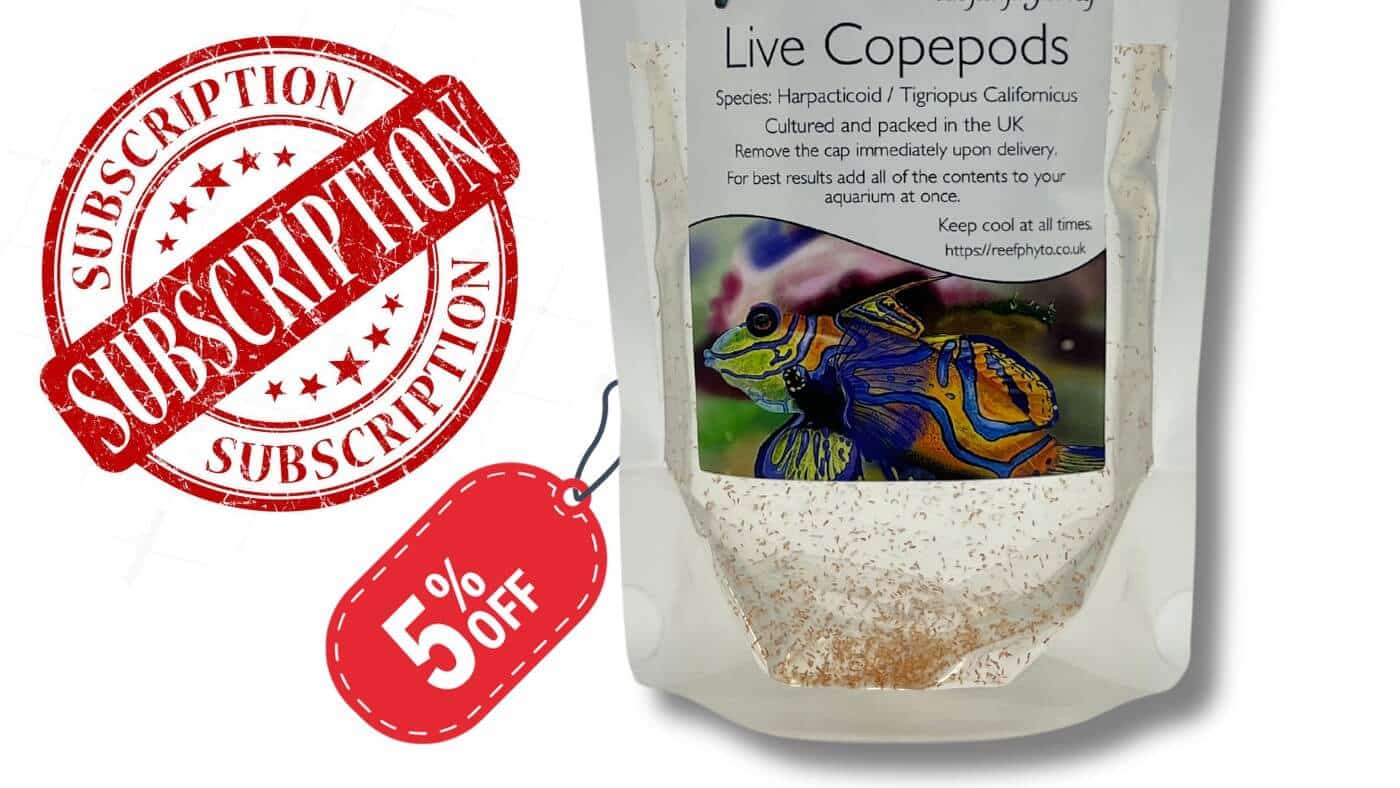
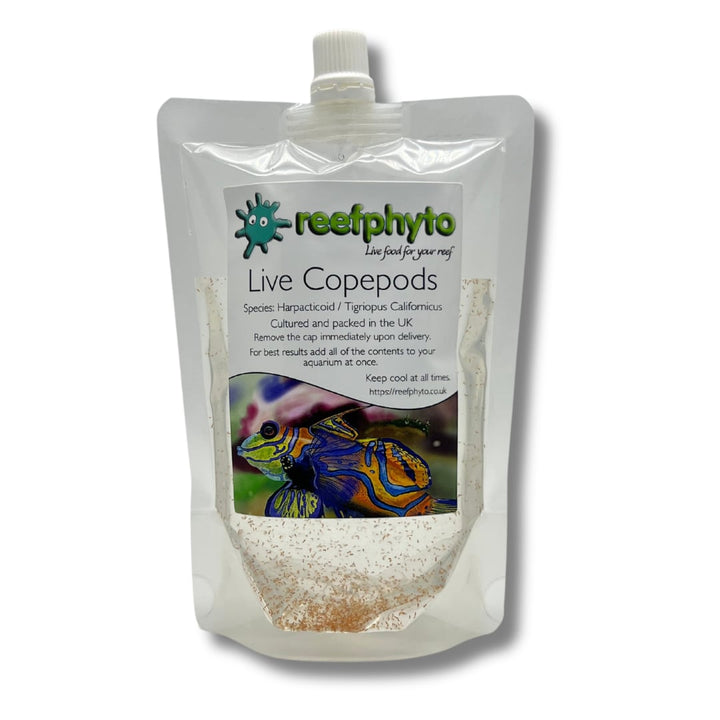
Live Copepods
£11.99
Live Copepods UK: Tigriopus californicus, Cultured Fresh in Wales by Reefphyto Your reef looks right on paper. Clean water, stable parameters, good equipment. But something is still off. Your fish are pale, your mandarin is wasting, your corals are feeding… read more
Coral Health and Growth
Nutrient-Rich Fuel for Corals
Corals are not passive filter feeders. They are hunters. While zooxanthellae provide energy through photosynthesis, corals actively capture zooplankton to fuel tissue growth, calcification, and reproduction. Without live prey in the water column, they are running on a fraction of what they need.
The omega-3 fatty acids and lipids in live copepods support tissue repair and skeletal extension in both SPS and LPS corals. If your Acropora frags are growing slowly, or your Euphyllia is not extending the way it should, nutrition is very often the missing variable. This is one of the most consistent reasons why live copepods benefit your reef tank in ways that no dried or frozen alternative can replicate.
Enhanced Colour Vibrancy
The natural pigmentation in marine corals is directly influenced by diet. Astaxanthin, the same carotenoid that gives wild salmon and flamingos their colour, is found in high concentrations in copepods. In captivity, without a live food source, corals and fish gradually lose the colour intensity you see in wild specimens or healthy, well-fed tanks.
Introducing a regular live copepod supplement is one of the most reliable ways to improve colour across your entire tank, in both fish and corals, over a period of weeks rather than months.
Stronger Immune Systems
Copepods provide antioxidants and lipids that support immune function in both fish and corals. In tanks where live copepods are part of the regular feeding regime, corals show greater resilience to bleaching events and temperature fluctuations. Fish recover faster from minor injuries. The whole system is more robust.
This is not surprising when you consider that these animals evolved alongside copepods as a constant food source. Removing them from the diet is removing a fundamental pillar of health.
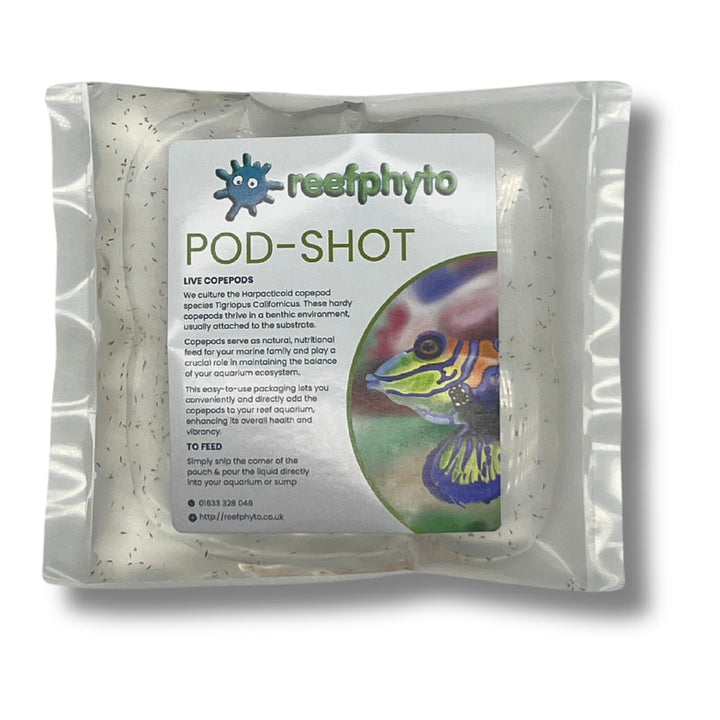
Pod-Shot - Live Copepods
£5.99
Pod-Shot: Live Copepods The moment you added a mandarin to your tank, the feeding pressure on your copepod population changed. What was a healthy refugium culture a month ago is now visibly thinner, and your mandarin is spending more time… read more
Supporting the Entire Reef Ecosystem
A Feast for Fish and Inverts
The benefits of live copepods extend well beyond corals. Mandarin dragonets, seahorses, pipefish, small wrasses, and blennies all depend on live prey. For obligate live feeders like mandarins, copepods are not optional. They are the only reliable long-term feeding solution.
Invertebrates benefit too. Feather duster worms, tube worms, and filter-feeding bivalves all capture copepods from the water column. A well-stocked refugium running a self-sustaining copepod population becomes a continuous nutritional resource for the entire tank, around the clock, with no manual intervention.
Boosting Biodiversity
When you introduce live copepods, you are not just adding food. You are seeding a living system. Copepods in an established refugium reproduce and sustain themselves, supporting microbial communities, detritivores, and a more complex, stable ecosystem overall. Over time, a tank with a healthy copepod population starts to behave more like a real piece of ocean.
The Difference Live Copepods Actually Make
I want to be honest with you about what to expect, because overclaiming does not help anyone.
In tanks with finicky or declining fish, particularly mandarins, pipefish, and seahorses, the difference a well-established copepod population makes is dramatic and usually visible within days. Fish that have been reluctant feeders begin actively hunting. Their condition improves. Their colour follows.
For corals, the change is more gradual. Improved polyp extension typically shows within one to two weeks. Colour improvement in SPS corals develops over four to six weeks of consistent live feeding. It is not instant, but it is consistent and real.
The key is establishing a refugium population that self-sustains, so your fish have access to live prey continuously, not just for 24 hours after a manual addition. That is what separates a supplemental feeding from a genuine feeding system and it is the core reason why live copepods benefit your reef tank in the long term.
Live Zooplankton

£13.99
Live Zooplankton You've added a new coral and watched it stay closed for weeks. Your SPS aren't extending the way they should. Your fish are present and your water is clean, but the tank feels static, like something essential is… read more
The Science Behind Why Copepods Work
The nutritional case for live copepods is well-established in marine aquaculture. Fatty acids like EPA and DHA are critical for neurological function, immune response, and reproductive success in marine fish. Astaxanthin is a potent antioxidant with documented effects on pigmentation, immune function, and stress resistance.
Frozen and dried alternatives do contain these nutrients, but they degrade after the food dies and continue to degrade through freezing and drying processes. Live copepods deliver these nutrients in their most biologically available form, because the food is alive and active at the point of consumption.
This is not a niche hobby theory. It is why professional aquaculture facilities, public aquariums, and marine fish breeding programmes all use live copepods as a core component of their feeding regimes. We have been supplying them from our facility in Wales since 2008.
FAQ: Your Live Copepod Questions Answered
Are live copepods safe for all corals?
Yes. Both SPS corals like Acropora and LPS corals like Euphyllia benefit from live copepod feeding. If anything, the risk is underfeeding rather than overfeeding. Corals evolved to consume zooplankton and will actively capture copepods from the water column given the opportunity.
How do I store live copepods?
Live copepods should be introduced to your tank or refugium as soon as possible after arrival. They are at peak nutritional value when alive and active. If you need to hold them briefly, keep them in the original packaging in a cool location away from direct light and aerate gently. Do not refrigerate.
Will copepods overwhelm my tank?
No. In a tank with fish and corals, copepod populations are naturally regulated by predation. In a refugium they will establish a self-sustaining colony over time, which is exactly what you want. The number of copepods that make it into the main display will be governed by what your livestock consumes.
Can I use copepods alongside other foods?
Absolutely, and I would encourage it. Live copepods work best as part of a complete feeding system. Paired with live phytoplankton, which feeds the copepods and your filter feeders simultaneously, and rotifers for smaller-mouthed species, you start to recreate the natural food web your tank was always missing.
Ready to Give Your Reef What It Is Actually Missing?
If your fish are struggling, your corals are not extending, or you have lost animals you should not have lost, nutrition is almost always worth looking at before anything else. I have seen it transform tanks that had been frustrating their keepers for years.
We culture Tigriopus californicus here in Wales and dispatch live, packed for maximum transit viability. If you are not sure which product suits your setup, drop me a message directly at care@reefphyto.co.uk or call 01267 611533. I read and answer every one.
Order live copepods today and feed your reef the way nature intended.