
Quick Navigation
You've done your research. You know your mandarin dragonet needs live copepods to survive. You've ordered a culture, it's arrived active and healthy, and now you're standing over your tank with one question you can't seem to find a straight answer to: how many copepods do I actually need to add?
It's a question I get asked every week. The reason there's no single number plastered across every forum isn't because it's complicated - it's because the right quantity depends on a few things specific to your tank. Once you understand those, the decision becomes straightforward.
I'm Darren. I've been culturing and shipping live marine food from our facility in Wales since 2008. Here's exactly what I tell customers when they ask.
Why Getting the Quantity Right Actually Matters
Too few and you've made a token gesture. A small handful of pods dropped into a tank with an active mandarin or leopard wrasse will be consumed within hours, leaving nothing to establish a population. You'll wonder why nothing changed.
The goal isn't just to feed your fish today. It's to seed a self-sustaining population in your refugium that keeps feeding your fish every single day - including the days you're not watching. That takes a meaningful starting number, the right introduction point, and patience while the colony builds.
Recommended Quantities by Tank Size
As a starting point, here's what I recommend based on tank volume. These figures assume you're introducing directly into a refugium with live rock and macroalgae for the culture to colonise.
| Tank Size | Volume (Litres) | Recommended Starting Dose | Top-Up Frequency |
|---|---|---|---|
| Nano Reef | 40 to 110 litres | 100 to 250 ml | Monthly |
| Standard Reef | 190 to 570 litres | 250 to 500 ml | Monthly |
| Large Reef | 570 litres + | 1,000 ml or more | Fortnightly to monthly |
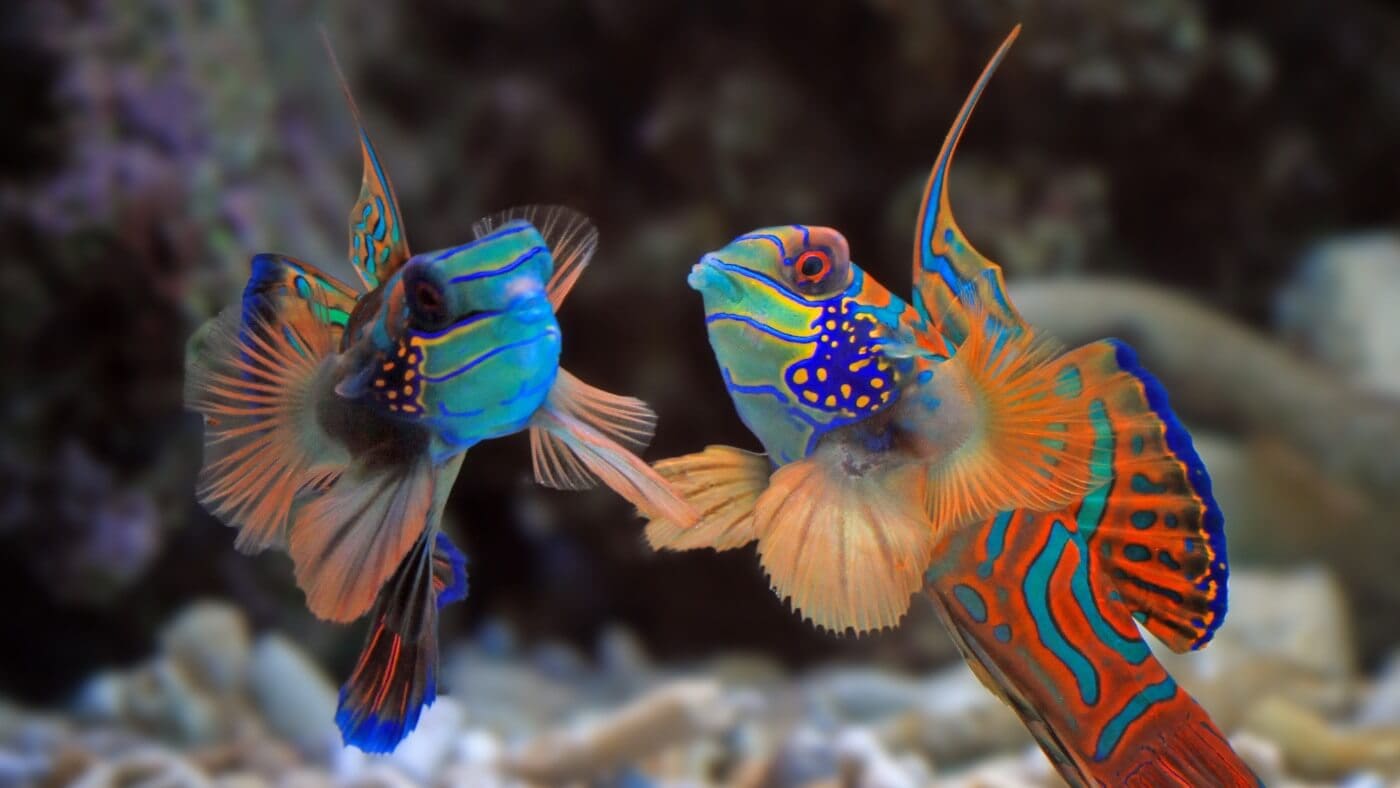
If you keep voracious live feeders like a mandarin dragonet or a leopard wrasse, always add more than you think you need. These fish hunt continuously throughout the day. In the wild, a mandarin consumes hundreds of pods per hour. A refugium needs a genuinely healthy population to keep pace with that kind of predation pressure.
Initial Seeding vs. Ongoing Top-Ups
There are two distinct reasons to add live marine food to your tank, and they call for slightly different approaches.
When you're establishing a new refugium or introducing pods for the first time, seed generously. Add the full recommended dose directly into your refugium or sump, not the display tank. Turn the return pump off for 30 to 60 minutes if you can, to let them distribute naturally rather than getting pulled straight into filtration. Keep refugium lighting low for the first few hours - these small crustaceans are photophobic and will find cover more quickly in lower light.
Once a population is established - usually after six to eight weeks of regular feeding and stable conditions - ongoing top-ups are about maintenance rather than seeding. Most keepers with an established refugium find a monthly addition of half the original dose is enough to keep numbers healthy. If your predator load is high, top up fortnightly.
Live Copepods
£11.99
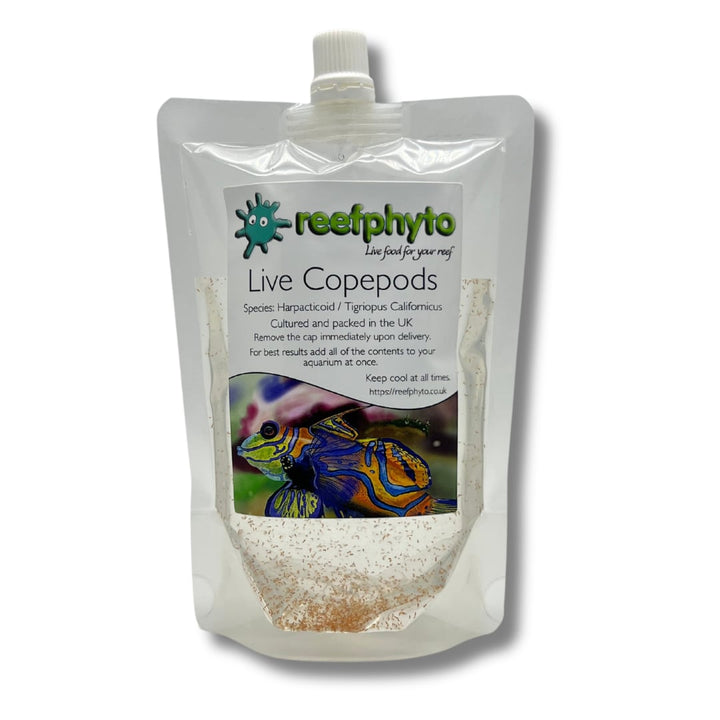
Live Copepods UK: Tigriopus californicus, Cultured Fresh in Wales by Reefphyto Your reef looks right on paper. Clean water, stable parameters, good equipment. But something is still off. Your fish are pale, your mandarin is wasting, your corals are feeding… read more
Signs Your Population Needs Topping Up
Your tank will tell you when numbers are dropping. Watch for your mandarin or wrasse spending longer searching and covering more of the tank - they're hunting harder because prey is thinner on the ground. You may also notice them becoming more active earlier in the morning, when pod activity is naturally highest and competition is lower.
If you have a refugium with a light, check it an hour after lights out. A healthy population should be visibly active - small moving specks across the rock and substrate. If you're struggling to spot any, it's time to top up.
Does Phytoplankton Affect How Many I Need?
Yes - and it's worth understanding why. Live pods feed primarily on phytoplankton. A refugium without a phytoplankton food source will see its population decline over time regardless of how many you introduce, because there's nothing to sustain reproduction fast enough to keep pace with predation.
If you're dosing regularly and finding the population never seems to build, adding live phytoplankton is very often the missing piece. It feeds the pods, which feed your fish - the complete bottom-up food chain your reef was built on. I'd recommend dosing phytoplankton two to three times per week alongside your pod additions for the best results.
You can read more about this relationship in our guide to how phytoplankton impacts your reef.
Zooplankton Multipack
£23.72
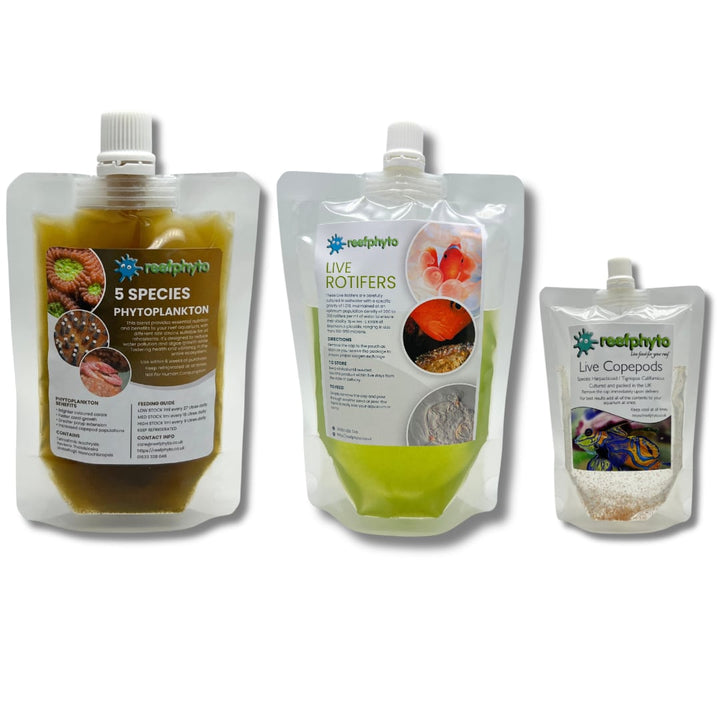
Zooplankton Multipack: Live Copepods, Rotifers and Phytoplankton You have been buying live food one pouch at a time. Copepods this week, rotifers the next, phytoplankton when you remember. But your reef does not feed in rotation. Every level of the… read more
Ready to Get Started?
Getting the quantity right is the first step. The second is making sure your refugium gives them somewhere to thrive once they arrive. If you want to build a genuinely self-sustaining live food system in your tank, our complete guide to successfully culturing copepods is the place to start.
Questions about your specific tank? Drop us a message directly. I read everything personally and I'm always happy to give you a straight answer based on what you're actually keeping.
Darren
Reefphyto Ltd, Wales
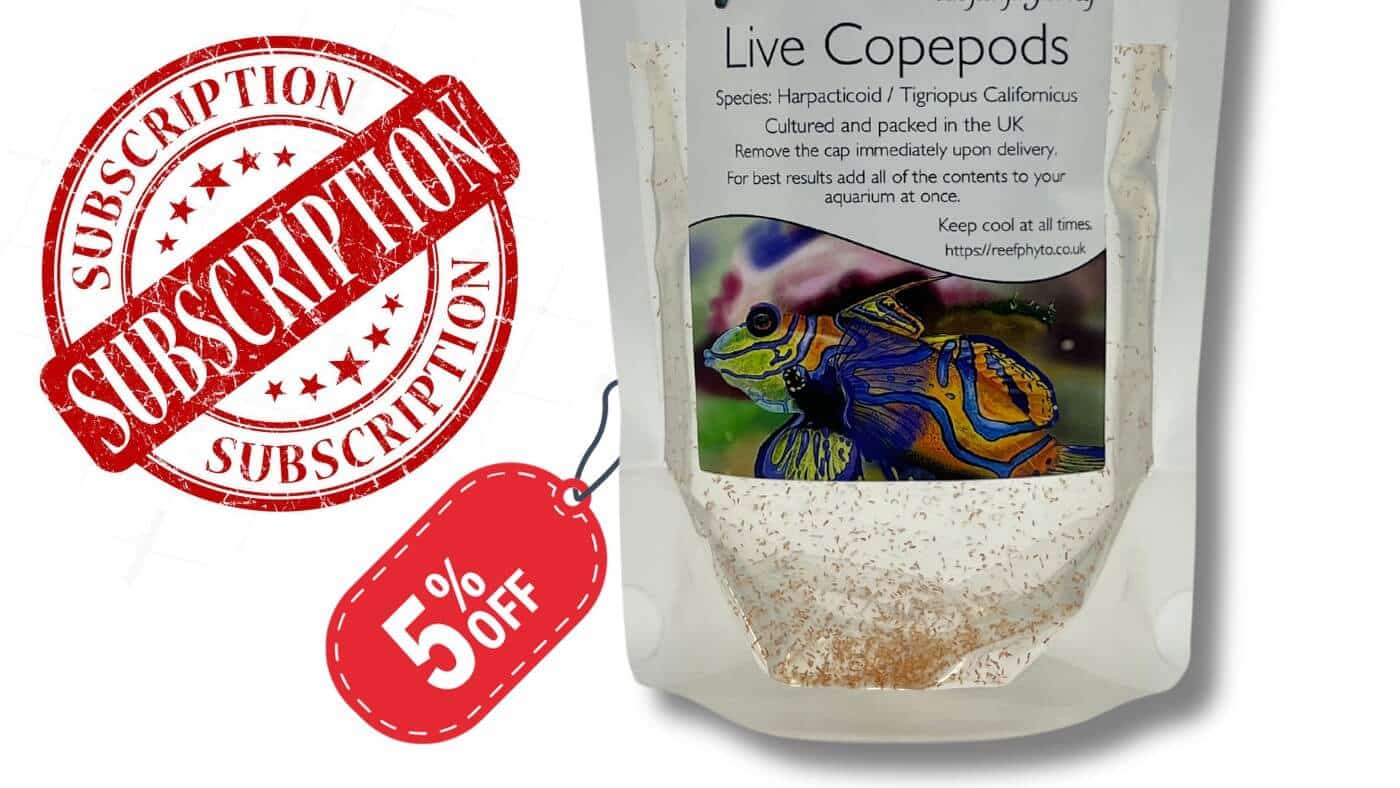
Shop Live Copepods | Shop Live Phytoplankton | Copepod Subscription - Save 5%
FAQs
How many live copepods do I need for a mandarin dragonet?
A mandarin needs access to a continuous, self-sustaining supply rather than a fixed daily amount. In a tank of 300 litres or more with a well-stocked refugium, live rock, macroalgae, and regular phytoplankton dosing, a single mandarin can be sustained long-term. Start with at least 500 ml in a standard system and top up monthly. Without a refugium, keeping a mandarin alive on live food alone is extremely difficult - get the refugium established first. Our guide to the mandarin dragonet diet goes into this in much more detail.
Can I add too many copepods?
Not really. Any excess that isn't immediately consumed will find cover in your live rock and refugium and join the standing population. Unlike chemical additives, there's no upper limit where adding more causes harm. The only downside to being generous is cost.
Should I add copepods to the display tank or the refugium?
The refugium every time, if you have one. The display tank exposes live pods immediately to predation, skimmer intake, and pump turbulence. The refugium gives them shelter and time to reproduce before they migrate naturally into the display. If you don't have a refugium, add to the sump with the return pump off for an hour, or directly to the display after lights out when fish are less active.
How often should I add copepods to my reef tank?
For a new setup, monthly additions for the first three to four months gives the population the best chance of establishing. After that, most keepers find quarterly or bi-monthly top-ups are enough to maintain healthy numbers - unless they're keeping dedicated live feeders like mandarins or pipefish, in which case monthly is a wise minimum.
What size copepods are best for reef fish?
For most reef fish, Tigriopus californicus harpacticoid pods are ideal. They're 1 to 3 mm in size, highly nutritious, and well suited to both refugium colonisation and direct fish feeding. If you're feeding fish larvae or very small invertebrates, rotifers are a better fit - at 1 to 3 mm, harpacticoids are too large for most fry to consume.
Why is my refugium copepod population not growing?
The most common reason is a lack of phytoplankton. Without a food source, the population can't reproduce fast enough to outpace predation. Add live phytoplankton two to three times per week and you should see the population begin to grow within a few weeks. Also check that your refugium has adequate shelter - live rock rubble and macroalgae like chaeto give the culture somewhere to hide and breed.
Do I need a refugium to keep live pods in my tank?
A refugium makes it significantly easier, but it isn't strictly essential. Without one, live food will be consumed quickly by fish and filtration - so regular top-ups become more important, and building a self-sustaining population is much harder. If you're serious about keeping live feeders like mandarins or pipefish long-term, a refugium is the most effective investment you can make.