
Description
Something has shifted in your tank. Brown film creeps across the sand bed in the mornings, corals look less extended than they should, and nothing in your water chemistry quite explains it.
You have probably checked your nitrate and phosphate, dialled in your flow, maybe already done a water change or two. The real issue though is almost always the water column itself, nutritionally sparse with too little biological diversity to push back. Leave it long enough and the dinoflagellates win.
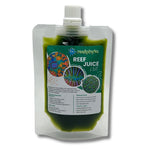
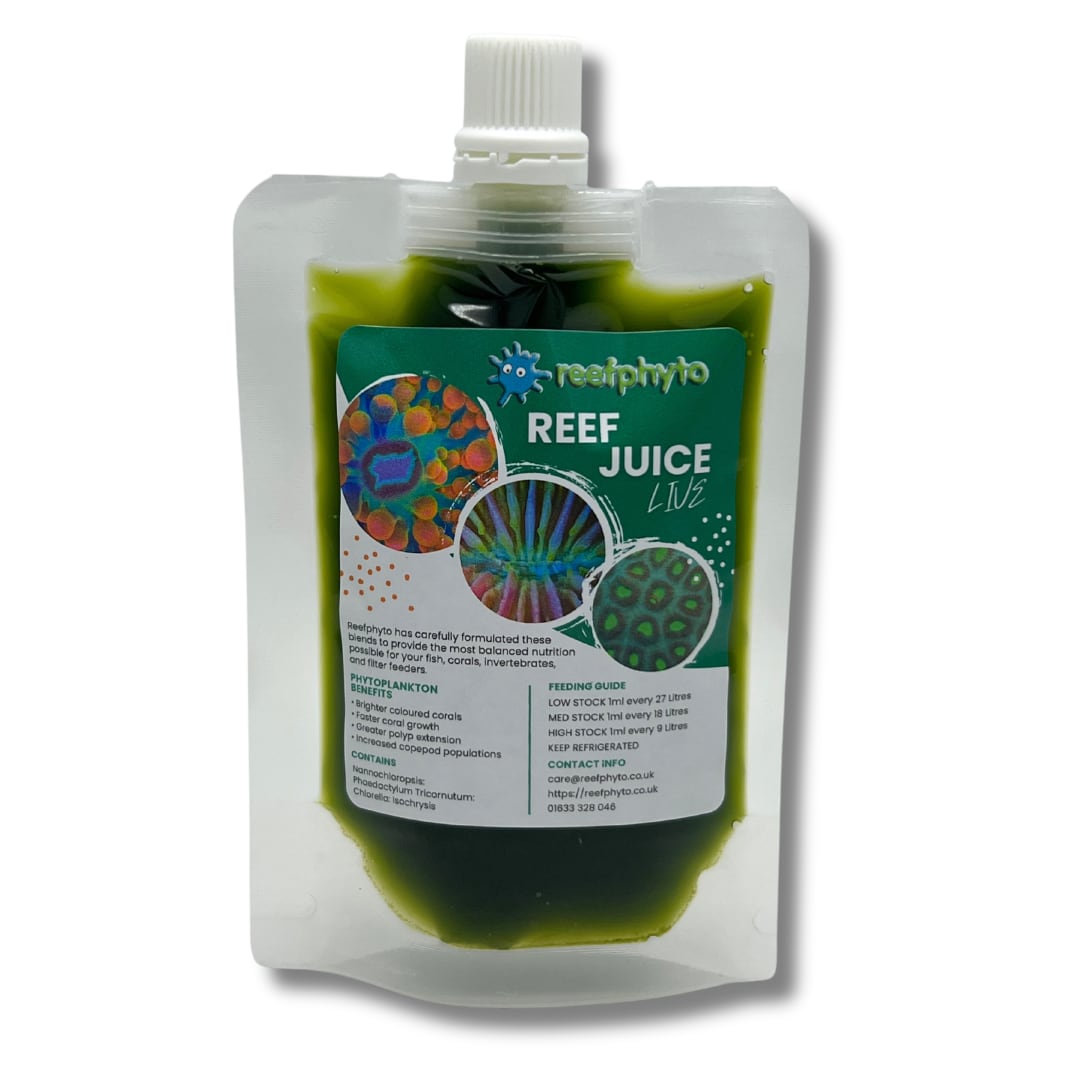
Reef Juice is a live phytoplankton blend of Nannochloropsis, Phaeodactylum, Chlorella, and Isochrysis, cultured fresh in Wales. Dose daily at 1ml per 27 litres for lightly stocked tanks, 1ml per 18 litres for medium stocked tanks, and 1ml per 9 litres for heavily stocked tanks, straight into a high-flow area with your skimmer, UV, and ozone off for 30 to 60 minutes.
Within weeks the balance shifts. The film retreats, copepod numbers climb, corals hold their extension, and the water column feels alive in a way it did not before.
Reefphyto has cultured live marine food in Wales since 2008, with 18+ years of hands-on reef experience behind every batch. If you are fighting dinoflagellates or just want a tighter feeding routine, message me and I will help you sort it.
Hit reply, tell me what your tank is doing, and I will point you to the right rate.
Reef Juice Live Phytoplankton Blend - Dinoflagellate Control and Reef Nutrition
Something has changed in your tank. The water has a brownish tint in the mornings. A thin film is spreading across the sand bed and up the rockwork. Your corals are less extended than they were. You are running good flow, you have checked your nutrients, and you cannot identify a clear cause. What you are likely looking at is a dinoflagellate bloom, and the reason it has taken hold is almost always the same: a water column too low in biological diversity to compete with it.
Dinoflagellates thrive in nutrient-depleted, biologically sparse conditions. A reef tank without a consistent live phytoplankton input is exactly that environment. Without competing microalgae consuming available nutrients and without a healthy microfauna population applying biological pressure, dinoflagellates encounter very little resistance. They fill the gap the rest of the ecosystem has left empty.
Reef Juice is a four-species live phytoplankton blend of Nannochloropsis, Phaeodactylum tricornutum, Chlorella, and Isochrysis, cultured fresh in Wales and dosed daily at 1ml per 27 litres for lightly stocked tanks, 1ml per 18 litres for medium stocked tanks, and 1ml per 9 litres for heavily stocked tanks, into a high-flow area of the tank with UV and ozone off for 30 to 60 minutes after dosing. Each species contributes a different particle size and fatty acid profile, feeding fine filter feeders and corals while simultaneously seeding the water column with beneficial microalgae that compete directly with dinoflagellates for dissolved nutrients. Use within three months of delivery, stored refrigerated.
Within weeks of consistent dosing, keepers dealing with dinoflagellate pressure begin to see the biological balance in their tank shift. The film retreats. Copepod numbers increase as their food source becomes reliably available. Corals extend more fully and hold it. The water column feels alive in a way it did not before. Reef Juice is not a chemical treatment and it is not a magic fix, but as part of a sound husbandry approach it addresses the biological root of the problem rather than its symptoms.
Not sure how much to dose for your tank size? Our live food dosing calculator works it out for you. Enter your total water volume, select your product, and get the exact daily dose in seconds. No guesswork, no searching through instructions.
Reefphyto has been culturing live phytoplankton in Wales since 2008, with 18+ years of hands-on marine aquaculture experience behind every batch. Every bottle of Reef Juice is produced fresh and dispatched at peak cell density. If you are dealing with a dinoflagellate outbreak and want advice on combining Reef Juice with the rest of your approach, contact us directly. I have worked with this problem across dozens of reef systems and respond personally.
If you are dealing with dinoflagellates or want a targeted four-species phytoplankton blend for reef nutrition, Reef Juice is the right decision.
The Problem Reef Juice Is Designed to Solve
Most reef keepers encounter dinoflagellates at some point. The brown or rust-coloured film that spreads across the sand bed in the morning, retreats slightly under the lights, and returns the following day. The coating on rockwork that healthy tanks do not seem to get. The corals that are slightly less extended than they should be, the fish that seem mildly unsettled, the general sense that something in the tank's biology is off without a clear water chemistry explanation.
Dinoflagellates are a symptom of a biological imbalance rather than a cause. They occupy the space that a more diverse, more populated water column would otherwise fill. In a reef tank with low planktonic diversity, low microfauna density, and a water column that is nutritionally sparse, dinoflagellates encounter little competition for dissolved nutrients and little biological pressure from the organisms that would naturally graze them or outcompete them. They establish, and once established they are resistant to the standard interventions of water changes and nutrient adjustment alone.
The approach that works is biological. Increase the diversity and density of the competing life in the water column, restore the microfauna populations that apply grazing pressure, and give the tank the nutritional inputs at the base of the food chain that allow a more complex, more resilient biology to develop. Reef Juice is designed as the phytoplankton component of that approach. For the full husbandry picture, the How to Feed a Reef Tank guide walks through where phytoplankton, copepods, and targeted feeding fit alongside each other.
The Four Species and What They Contribute
Reef Juice contains four live microalgae species, each chosen for a specific nutritional and biological role within the reef ecosystem.
Nannochloropsis
At 2 to 5 microns, Nannochloropsis is the finest species in the blend and one of the most nutritionally significant phytoplankton species in marine aquaculture. Its high EPA content makes it a direct nutritional input for fine filter feeders, sponges, tunicates, and the smallest coral polyps, and it is the primary food source that sustains copepod and rotifer populations in the water column. It also absorbs dissolved inorganic nutrients including nitrate and phosphate as it photosynthesises, contributing to natural nutrient export alongside its feeding role.
Phaeodactylum tricornutum
Phaeodactylum is a diatom with a distinctive elongated cell form and a fatty acid profile rich in EPA. It is one of the most studied marine microalgae species in aquaculture research and is particularly valued for its fucoxanthin content, a carotenoid pigment with antioxidant properties that benefits the animals that consume it. As a diatom, it occupies a different ecological niche from the other species in the blend, competing for dissolved silica as well as nitrogen and phosphorus, broadening the nutrient uptake profile of the blend.
Chlorella
Chlorella is a freshwater-origin green microalgae widely used in both marine and freshwater aquaculture for its dense protein and amino acid content. In a marine reef context it contributes additional nutritional diversity to the blend and provides a food source for a broad range of filter feeding organisms. Its cell wall composition differs from the other species in the blend, offering a different digestibility profile that benefits the full range of filter feeders in a mixed system.
Isochrysis galbana
Isochrysis carries the highest DHA content of any species in the blend. DHA is the omega-3 fatty acid most critical for neurological development and visual function in marine fish and invertebrates. In a reef system, it enriches every filter feeder and zooplankton organism that consumes it, improving the nutritional density delivered to fish and corals at every level above it in the food chain. It is particularly beneficial for keepers of fish species with high DHA requirements and for systems with active larval rearing or juvenile fish programmes.
How Reef Juice Helps Address Dinoflagellate Outbreaks
It is important to be clear about what Reef Juice does and does not do in the context of a dinoflagellate problem. It is not a chemical treatment. It does not directly kill dinoflagellates. What it does is address the biological conditions that allowed dinoflagellates to establish in the first place.
Regular dosing of live phytoplankton introduces competing microalgae that consume the same dissolved nutrients dinoflagellates depend on. As beneficial phytoplankton cells increase in the water column, copepod populations respond by growing, and those copepods apply direct grazing pressure on dinoflagellates and the microbial biofilms associated with them. The water column becomes biologically denser and more diverse, which is inherently less hospitable to dinoflagellate dominance than the sparse, nutrient-available environment they thrive in.
Reef keepers who have successfully resolved dinoflagellate outbreaks consistently report that the biological approach, combining consistent phytoplankton dosing with strong nutrient export, appropriate flow, and time, produces more durable results than nutrient manipulation or blackout treatments alone. Reef Juice provides the phytoplankton component of that strategy. Pairing it with a seeded copepod population, either through direct addition of Live Copepods or by establishing a refugium with a PodHide, multiplies the biological pressure on the outbreak.
Used as part of a broader husbandry approach that includes good mechanical filtration, consistent nutrient export through skimming and regular water changes, appropriate flow across all surfaces, and where necessary targeted manual removal of dinoflagellate films, Reef Juice addresses the root biological cause rather than its surface symptoms.
How to Dose Reef Juice
Reef Juice is dosed daily, and the amount you add scales with how heavily your tank is stocked. A sparsely stocked softie-dominated system has a very different nutrient demand from a densely stocked SPS and fish-heavy reef, and the dose is adjusted accordingly. Use the three tiers below to match your stocking level.
Light stock: 1ml per 27 litres daily. Suitable for sparsely stocked reefs, soft-coral-dominated systems, and fish-light tanks. This is also the right starting point if you are introducing Reef Juice to a tank for the first time and want to gauge how quickly the system consumes it.
Medium stock: 1ml per 18 litres daily. Suitable for a typical mixed reef with a balanced fish load, a mix of soft, LPS, and SPS corals, and moderate filter feeder populations. This is the rate most established reef keepers will settle at.
Heavy stock: 1ml per 9 litres daily. Suitable for densely stocked SPS-focused systems, heavily stocked mixed reefs with high fish bioload, and tanks actively pushing against a dinoflagellate outbreak where maximum biological competition is wanted. This is also the rate to use for systems with large filter feeder populations, clam-heavy setups, and intensive coral-growing aquaculture programmes.
Dose into a high-flow area of your sump or display tank. Turn off your protein skimmer, UV steriliser, and ozone equipment for 30 to 60 minutes after dosing to allow the live cells to circulate and be consumed before removal. Resume normal operation after this period.
For systems actively dealing with a dinoflagellate problem, dosing consistently every day without interruption gives the competing phytoplankton the best opportunity to establish a presence in the water column. Inconsistent dosing reduces the biological pressure on the dinoflagellate population and slows the recovery process.
If you are unsure which tier matches your setup, start at light stock and observe how quickly the water clears after dosing. If the slight green tint from dosing disappears within an hour or two, the tank is comfortably consuming what you are adding and you can move up to medium stock. If the water holds the tint longer, stay at light stock. The Reefphyto dosing calculator also works out your exact daily ml for any tank volume at each stocking tier, and the weekly feeding schedule builder helps you slot Reef Juice into the rest of your feeding routine.
Store refrigerated and use within three months of delivery. Shake gently before each use to redistribute settled cells.
Reef Juice Versus the Five-Species Phytoplankton Range
Reefphyto's phytoplankton range includes several products that overlap in application but differ in composition and purpose. Understanding where Reef Juice sits helps you choose correctly.
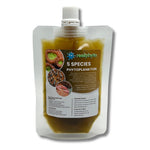
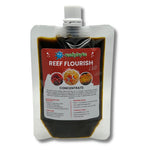
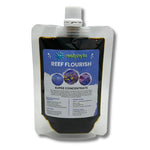
Reef Juice contains four species including Phaeodactylum tricornutum and Chlorella, which do not appear in the five-species blend. The inclusion of Phaeodactylum in particular gives Reef Juice a specific advantage in dinoflagellate competition scenarios due to its diatom-based nutrient competition profile. The five-species blend, available as 5 Species Phytoplankton, Live Reef Flourish, and Reef Flourish Super Concentrate, covers a broader coral and filter feeder feeding range with Tetraselmis, Pavlova, and Thalassiosira weissflogii providing additional coverage for larger particle feeders and delicate soft corals.
For keepers whose primary concern is broad-spectrum reef nutrition without a specific dinoflagellate issue, the five-species range is the more comprehensive choice. For keepers dealing with dinoflagellates or wanting to maximise biological diversity and nutrient competition in the water column, Reef Juice provides a composition specifically suited to that goal. Many keepers run both, alternating or combining them, to access the full species range across their dosing programme. Not sure which phytoplankton suits your reef? Our Phytoplankton Finder walks you through four quick questions and recommends the right product for your setup.
Frequently Asked Questions
How long before I see results against dinoflagellates?
The biological approach to dinoflagellate management takes weeks rather than days. Most keepers begin to see a reduction in film density and spread after two to four weeks of consistent daily dosing, combined with good nutrient export and flow. The timeline varies depending on the severity of the outbreak, the existing microfauna population, and how consistently the rest of the husbandry approach is maintained. Patience and consistency are the two most important factors.
Can I use this alongside my copepod programme?
Yes, and this is one of the most beneficial combinations. Regular Reef Juice dosing provides the phytoplankton input that sustains copepod populations in the refugium and display tank. A healthy copepod population in turn applies biological grazing pressure on dinoflagellates. The two approaches reinforce each other directly. Setting up a dedicated refugium section alongside your Reef Juice dosing is one of the most effective long-term moves you can make for a reef fighting dinoflagellates.
Is this suitable for culturing copepods or rotifers?
Reef Juice is not designed as a culture feed. For running a dedicated copepod or rotifer culture programme that requires a single-species algae with a consistent, known nutritional profile, Nannochloropsis gaditana or the Nannochloropsis Starter Culture is the appropriate choice. Copepod Feed is the dry culture-feeding alternative. Reef Juice is designed as a reef tank daily feed rather than a culture maintenance product.
Will it affect my water clarity?
A slight green tint may be visible in the water column immediately after dosing. This should clear within one to two hours in most systems as the cells are consumed or processed. If clarity does not return within a few hours, you are dosing more than the tank can handle at its current stocking level. Drop back a tier. If you are dosing at heavy stock, move to medium. If you are at medium, move to light. The tank will tell you which tier fits it.
Can I use this in a nano reef?
Yes. The dosing scales cleanly to small volumes. A lightly stocked 50 litre nano reef requires approximately 1.85ml per day at the light rate, a medium stocked nano approximately 2.8ml per day at the medium rate, and a heavily stocked nano approximately 5.55ml per day at the heavy rate. All are easy to measure and dose accurately with the calibrated dropper or syringe included with your order.
Reefphyto - Live Phytoplankton Cultured in Wales Since 2008
Reefphyto has been producing and supplying live phytoplankton to reef keepers, marine fish breeders, and public aquariums across the UK since 2008, backed by 18+ years of hands-on marine aquaculture experience. Every bottle of Reef Juice is cultured fresh at our Wales facility and dispatched at peak cell density. If you are dealing with a dinoflagellate outbreak and want guidance on building a complete biological response strategy, or if you have questions about how Reef Juice fits into your existing feeding programme, contact us directly. Darren responds personally to every enquiry.
Shipping Details
Free delivery on orders over £65. Orders under £65, delivery - Royal Mail 24 from £4.95.
Most orders arrive next working day. Allow up to two business days depending on the service selected. Free shipping orders are delivered within 2-3 working days.
Order cut-off is 12pm. Orders placed after midday are processed the next business day.
For more information about shipping click here.
Payment & Security
Payment methods
Your payment information is processed securely. We do not store credit card details nor have access to your credit card information.
Security

Type your question here
Phytoplankton Finder
Let Darren
help you choose.
 Darren Wordley
18 years culturing live phytoplankton in Wales
Darren Wordley
18 years culturing live phytoplankton in Wales
Six quick questions, then you get
- Best match plus two alternatives
- Your exact daily dose
- Cheapest pack at today's prices
the full range