Getting a reef fish to accept a pellet is one thing. Keeping it in genuine long-term condition on that pellet is another. Marine fish fed on pellets that break down too fast, sink before slower feeders can reach them, or rely on low-grade protein sources eventually show it in duller colour, slower recovery from stress, and a general flatness that is hard to pinpoint but impossible to miss once you know what you are looking for.
The problem is almost always in what the pellet is actually made from. Fish meal quality varies enormously, and most commodity pellets use whatever protein source is cheapest at the time of manufacture. The ingredients that genuinely matter for marine fish, whole fish meal, shell-bearing marine proteins from mussel, squid and shrimp, and the natural carotenoids that drive pigmentation tend to be the first things value-engineered out.
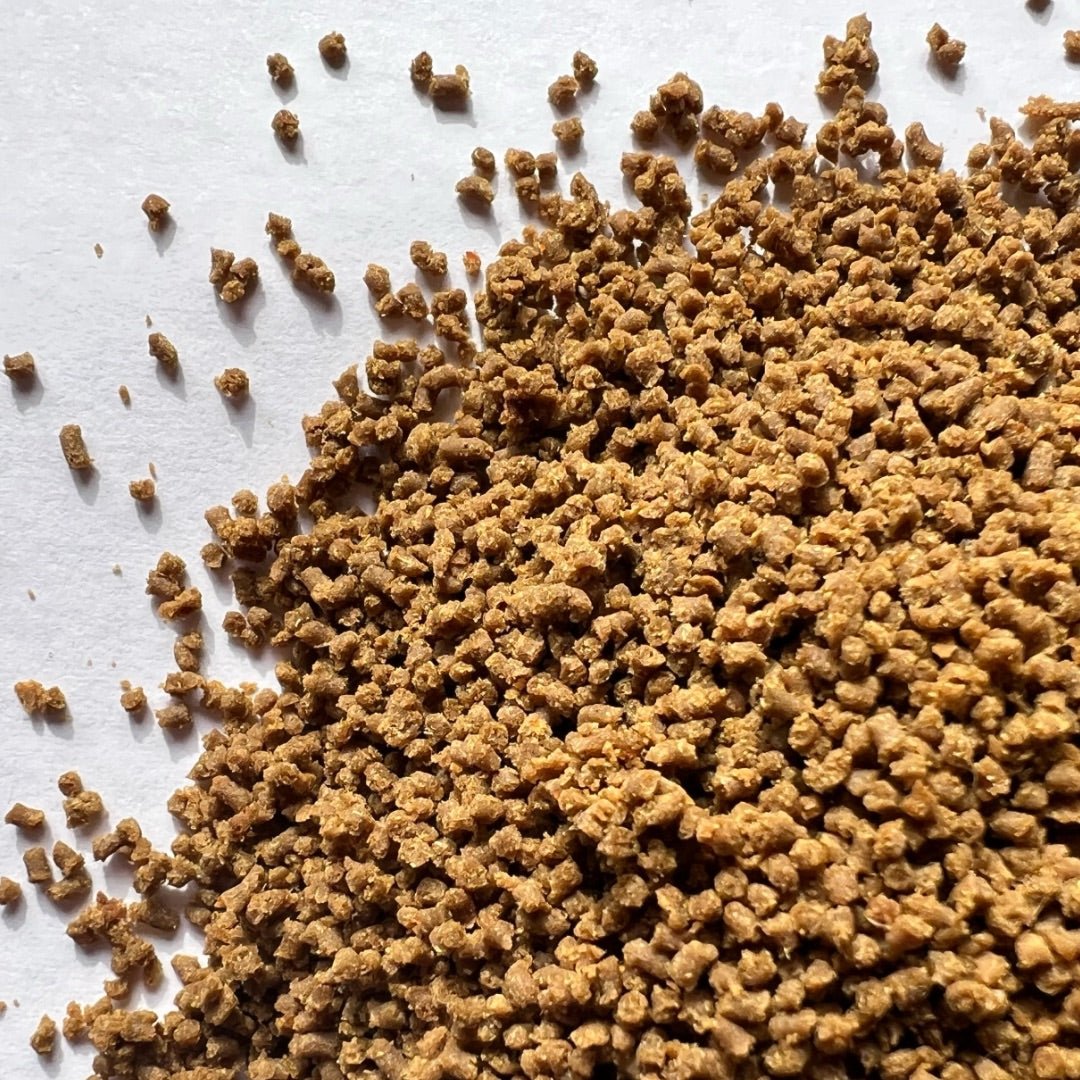
Reefphyto Marine Pellets are a complete soft sinking pellet formulated specifically for carnivorous and omnivorous marine fish, built around low-temperature whole fish meal, mussel, squid and shrimp alongside natural astaxanthin for colour support. At approximately 49% protein and 9% fat, each 1mm pellet is soft for ease of digestion and sinks slowly through the water column giving mid-water and bottom-feeding fish the time to locate and take food naturally, rather than competing at the surface or missing it entirely.
Feed once or twice daily, offering only as much as fish will consume within five minutes. The soft texture means pellets can be pressed together and fixed to the aquarium glass, letting you observe individual fish feeding up close and check that every animal in the tank is eating.
Since 2008, Darren and the Reefphyto team have been working with marine fish nutrition from our facility in Wales. If you want guidance on building a complete feeding programme around these pellets including how they work alongside live copepods and phytoplankton contact us directly at care@reefphyto.co.uk or call 01267 611533.
Give your reef fish a pellet that is built the way their diet should be.
Most reef fish will eventually accept a pellet. The question experienced keepers ask is not whether their fish will eat it, it is whether the pellet is genuinely doing the nutritional work it should be. Whether the protein sources are the right ones. Whether the fish are in the kind of long-term condition that only comes from a diet that consistently mirrors what they evolved to eat.
Reefphyto Marine Pellets are built around that question.
What Makes a Marine Pellet Worth Feeding
The marine fish in a reef tank, clownfish, angelfish, wrasses, gobies, hawkfish, damselfish, butterflyfish, pufferfish share a common evolutionary background. They are adapted to hunt and digest marine prey: small fish, crustaceans, molluscs, and zooplankton. Their digestive systems are optimised for marine proteins, marine fats, and the specific carotenoid pigments found in the animals they eat in the wild.
A pellet that delivers those ingredients in high-quality, digestible form supports long-term health in a way that a commodity pellet built around cheaper protein sources simply cannot. The difference shows gradually in colour depth, in feeding response, in how fish handle the routine stresses of reef tank life.
H2: What Reefphyto Marine Pellets Contain
The formulation is built around a marine protein core of low-temperature whole fish meal, mussel, squid and shrimp, the shell-bearing ingredients that provide the amino acid profile closest to what reef fish consume in the wild. Low-temperature processing preserves the nutritional integrity of the fish meal fraction in a way that high-heat extrusion does not, resulting in a more bioavailable protein source.
Natural astaxanthin is included as a pigmentation source. Astaxanthin is the carotenoid responsible for the vivid reds, oranges and pinks in reef fish it cannot be synthesised by fish independently and must come from the diet. Natural astaxanthin from marine sources is significantly more bioavailable than synthetic alternatives, and its presence in the formulation means colour support is built into the daily feeding routine rather than requiring a separate supplement.
The broader composition covers fish and fish derivatives, derivatives of vegetable origin, molluscs and crustaceans, oils and fats, blended fish oil, starch, fibre, and a full mineral and vitamin premix including Vitamins A, D3 and E alongside zinc, manganese, copper, iron and calcium iodate.
Analytical breakdown: crude protein approximately 49%, crude fat approximately 9%, crude fibre approximately 1.7%, moisture approximately 20%, ash approximately 17%.
The higher moisture content compared to dry extruded pellets is characteristic of soft moist pellet formats it contributes to palatability and digestibility, and is one of the reasons soft pellets tend to be accepted more readily by finicky feeders than hard dry alternatives.
The Soft Sinking Format - Why It Matters
Reefphyto Marine Pellets are soft and sink slowly through the water column. This is deliberate. In the wild, marine fish do not feed exclusively at the surface they hunt at mid-water and along the substrate, responding to the movement and position of prey as it drifts and sinks. A pellet that hits the surface and sinks immediately before slower or more cautious fish can reach it replicates none of that.
The slow sink rate gives mid-water feeders time to locate and intercept the pellet naturally. It also means that in a mixed community with fish of different feeding speeds and positions, a common situation in any reef tank more animals get fed effectively from each portion.
The soft texture serves a secondary purpose: pellets can be pressed between fingers and fixed to the aquarium glass, which lets you observe individual fish feeding at close range and verify that every animal in the tank is taking food. For reef keepers who want to monitor condition and catch feeding problems early, this is a genuinely practical feature.
Each pellet is approximately 1mm suitable for the range of marine fish species typically kept in reef aquariums, from smaller gobies and clownfish to larger wrasses and angelfish.
Which Fish Are Reefphyto Marine Pellets For?
The formulation is designed for carnivorous and omnivorous tropical marine fish. Species that respond particularly well include clownfish, angelfish, butterflyfish, gobies, damselfish, wrasse, hawkfish and pufferfish, fish whose natural diets are weighted toward animal protein and marine invertebrates.
For dedicated herbivorous species such as tangs, surgeonfish and rabbitfish that require a high proportion of plant-based nutrition, Reefphyto Soft Algae Pellets are the more appropriate daily food, with Marine Pellets used as a supplementary protein source alongside them.
Using Marine Pellets Alongside Live Food
Reefphyto Marine Pellets provide the dry food foundation of a complete marine feeding programme. For reef keepers also using live copepods, phytoplankton or zooplankton, the pellets and live foods work in complementary ways rather than competing.
Live copepods deliver the feeding behaviour stimulus the hunting response that dried food cannot replicate. They also provide nutritional complexity, particularly in EPA and DHA fatty acids, that even a well-formulated pellet cannot fully match. Marine Pellets provide the consistent daily nutritional base: a reliable, complete protein and vitamin source that sustains fish between live food additions and ensures the whole tank is fed even on days when live food is not added.
For fish that are difficult to wean onto prepared foods, introducing Marine Pellets alongside live copepods can help the presence of live prey stimulates feeding activity, and fish that are actively hunting will often accept a sinking pellet that enters their feeding zone during the same session.
Feeding Guidelines
Feed once or twice daily, offering only as much as fish will consume within five minutes. Remove any uneaten pellets after feeding to prevent nutrient loading. The 1mm size is suitable for most reef community fish; portion size should be adjusted based on the number, size and species of fish in the tank.
Available in three sizes to suit different tank sizes and feeding frequencies.
Frequently Asked Questions
Are these pellets suitable for all marine fish?
They are formulated for carnivorous and omnivorous marine fish. The protein-forward composition suits the majority of reef community species. For herbivore-dominant tanks or species with a high plant-matter requirement, Reefphyto Soft Algae Pellets are a better primary food, with Marine Pellets used in rotation.
How do soft moist pellets differ from hard dry pellets?
Soft moist pellets have a higher moisture content approximately 20% in this formulation which contributes to palatability and digestibility. Many marine fish, particularly finicky feeders or newly introduced fish, accept soft pellets more readily than hard extruded alternatives. The texture also allows the pellets to be pressed onto aquarium glass for close observation of feeding behaviour.
Can I use these pellets with live copepods?
Yes, and this is the approach most experienced reef keepers use. Marine Pellets provide the consistent daily dry food base; live copepods provide the feeding stimulus, hunting behaviour, and live nutritional complexity. The two work together effectively as part of a complete feeding programme.
How do Marine Pellets differ from Soft Algae Pellets?
Marine Pellets are built around marine animal proteins, whole fish meal, mussel, squid and shrimp for carnivorous and omnivorous species. Soft Algae Pellets are plant and algae-forward, designed primarily for herbivorous species such as tangs and surgeonfish. Both are soft sinking 1mm pellets, but they serve different nutritional roles in a reef feeding programme and are best used in rotation for a mixed community.
Why is the ash content higher than dry pellets?
The ash figure of approximately 17% reflects the high mineral content from shell-bearing marine ingredients, mussel, squid and shrimp all contribute calcium and other minerals that register in the ash fraction. This is normal and expected for a marine protein-forward formulation of this type.



 Roll over image to zoom in



 Darren Wordley
18 years culturing live phytoplankton in Wales
Darren Wordley
18 years culturing live phytoplankton in Wales
 Cultured in Wales, shipped live.