If your tang spends half the day picking at the rockwork, it is telling you something. Herbivorous reef fish are hardwired to graze on algae and plant matter throughout the day it is not optional behaviour, it is a nutritional requirement, and a tank without a reliable plant food source leaves that need unmet.
Without regular access to seaweed, tangs, surgeonfish, rabbitfish and lawnmower blennies can lose colour, become lethargic and grow more susceptible to common reef diseases like lateral line erosion conditions that are directly linked to nutritional gaps rather than water quality.
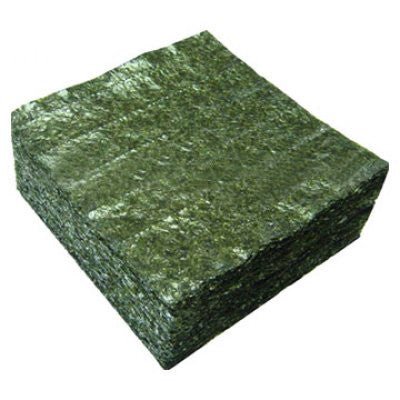
Reefphyto Nori Seaweed Sheets are dried whole-leaf nori, cut into large sheets sized for reef tank feeding. Nori is naturally rich in Vitamin C, Vitamin B12, iodine, carotenoids and chlorophyll the same broad-spectrum plant nutrition your fish would graze from live algae in the wild. Each pack contains 5 sheets. Attach a piece to a feeding clip or suction station and allow your fish to graze freely; remove any uneaten portions after a few hours to protect water quality.
Used consistently, nori transforms grazing behaviour in tanks where herbivores have been underfed on plant matter. Tangs that have been picking restlessly at rockwork settle into a proper feeding routine. Colour deepens over weeks as natural carotenoids build up. Fish that were borderline lethargic become visibly more active once their plant nutrition needs are consistently met.
At Reefphyto we have been working with marine fish nutrition since 2008, 18 years of understanding what reef animals actually need to thrive, not just survive. Nori sits alongside our Vegetable Flake, Spirulina Flake and Algae Wafers as part of a complete herbivore feeding range. If you are not sure which combination suits your tank, contact us at care@reefphyto.co.uk or call 01267 611533 and we will point you in the right direction.
Give your tangs and blennies the one thing most reef keepers forget to provide consistently and watch how quickly they respond.
Most reef keepers feed their fish well - but feed their herbivores poorly. Flake and pellet foods make up the bulk of the feeding routine in the majority of reef tanks, and while a good marine flake covers a lot of nutritional bases, it does not replace the sustained, whole-plant grazing that tangs, surgeonfish, rabbitfish and blennies are biologically built to do. These fish did not evolve to eat compressed pellets. They evolved to browse algae, picking continuously throughout the day, consuming chlorophyll, iodine, carotenoids and plant-based fibre in quantities that no processed food can replicate in a single feeding.
The consequence of under-feeding plant matter is not always obvious in the short term. A tang will not visibly decline in a week without seaweed. But over months, the absence shows: faded colour, persistent picking at rockwork, reduced immune resilience, and in long-term cases, head and lateral line erosion - a disfiguring condition strongly associated with nutritional deficiency rather than water chemistry. Dedicated plant feeding is not a luxury addition to the reef keeper's routine. For true herbivores, it is a core requirement.
What makes nori the right choice for reef tanks
Nori - dried whole-leaf seaweed from the Pyropia genus - has been used as a dietary staple in human diets for centuries, and its nutritional profile translates directly to the needs of marine herbivores. It is naturally rich in Vitamin C to support immune function and stress resilience, Vitamin B12 which is rarely found in plant foods but abundant in marine algae, iodine which is essential for thyroid function in fish, carotenoids which contribute to natural colour development, and chlorophyll which mirrors the live algae your fish would graze in a reef environment.
Crucially, nori is a whole food rather than a processed supplement. When your tang tears a piece from a feeding clip, it is engaging in the same physical behaviour it would perform on a reef - rasping and pulling at plant material with the exact jaw structure it evolved to use. That behavioural component matters. Grazing is not just about nutrients; it is about occupation, stimulation and natural feeding rhythm. A well-fed herbivore that is given regular access to seaweed is a calmer, less aggressive fish than one that is left to pick frustratedly at rock surfaces.
Reefphyto Nori Seaweed Sheets - what is in the pack
Each pack contains 5 large nori sheets, sized to allow multiple feeding sessions per sheet depending on the size of your tank and the number of herbivores you keep. The sheets are dried whole-leaf nori, pressed and cut to a consistent size suitable for use with standard feeding clips and suction cup stations.
To feed: tear or cut a portion of sheet - start with a piece roughly the size of your palm for a single tang, scale up for larger groups - and attach it securely to a feeding clip positioned where your fish are most active. Allow grazing for two to four hours, then remove any uneaten portion to prevent it breaking down and affecting water quality. Feed daily or every other day depending on the herbivore load in your tank.
Which fish benefit most from nori seaweed
Nori is the natural choice for any fish that grazes algae as a primary feeding behaviour. In a reef tank context this means tangs and surgeonfish of all species - from yellow tangs and blue tangs to kole tangs and naso tangs - as well as rabbitfish, lawnmower blennies, foxface fish, angelfish that include plant matter in their wild diet, and some larger wrasse species. Marine herbivores kept in mixed reef communities where carnivorous fish dominate the feeding routine are particularly at risk of getting too little plant matter, and dedicated nori feeding ensures they get what they need regardless of competition at the surface.
Nori is also useful in tanks where herbivores are new arrivals or recently stressed. The strong scent and visual stimulus of fresh nori on a clip often triggers feeding responses in fish that have been reluctant to eat, making it a practical tool during the settling-in period for newly introduced tangs or angelfish.
Building a complete herbivore feeding routine
Nori works best as part of a varied plant-based feeding programme rather than as the sole source of plant nutrition. At Reefphyto we recommend combining nori sheet feeding with our Vegetable Flake or Spirulina Flake for daily feeding sessions, and rotating in Algae Wafers for species that prefer to rasp food from the substrate rather than a clip. This combination covers the full range of plant-based nutrients your herbivores need and mimics the variety they would encounter grazing across different algae species on a natural reef.
If you keep a mixed community with both carnivorous and herbivorous species, adding nori to a feeding clip at one end of the tank while feeding a marine flake or pellet at the other is an effective way to ensure each group is getting what it needs without competition.
How often should I feed nori to my tang?
For a single tang in a mixed reef, daily nori feeding is appropriate and will not cause overfeeding if portions are sized correctly and uneaten pieces are removed. For tanks with two or more dedicated herbivores, increase portion size rather than feeding frequency - a single larger sheet once a day is easier to manage and less disruptive to water quality than multiple small additions.
Will nori affect my water quality?
Nori breaks down slowly in saltwater compared to many fresh or frozen alternatives, but uneaten portions left in the tank overnight will begin to decompose and can affect nutrient levels. The simple rule is to remove what has not been eaten within two to four hours. A well-sized portion for the number of fish in your tank should be fully consumed well within that window, especially once your fish settle into the routine.
Can I use nori alongside live copepods?
Yes, and in a mixed reef this is exactly the approach we recommend. Live copepods feed your carnivorous and omnivorous species - mandarins, wrasses, small reef fish - while nori and plant-based flakes cover the herbivores. Running both simultaneously means every fish in your tank is getting nutrition matched to its natural diet, which is the most reliable way to maintain long-term health, colour and behaviour across a mixed community.

 Roll over image to zoom in


 Darren Wordley
18 years culturing live phytoplankton in Wales
Darren Wordley
18 years culturing live phytoplankton in Wales
 Cultured in Wales, shipped live.