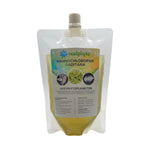
JBL ArtemioSal 230g UK: Brine Shrimp Hatching Salt with Micro Algae
You set up the hatchery, added the eggs, waited a day and a half, and got a poor hatch and a lot of empty shells.
Most failed brine shrimp hatches come down to the water, not the eggs. Table salt contains iodine, fluoride and anti-caking agents that hold the hatch back, and a pH that drifts during the hatch makes it worse. Keep using the wrong salt and you keep blaming the eggs.
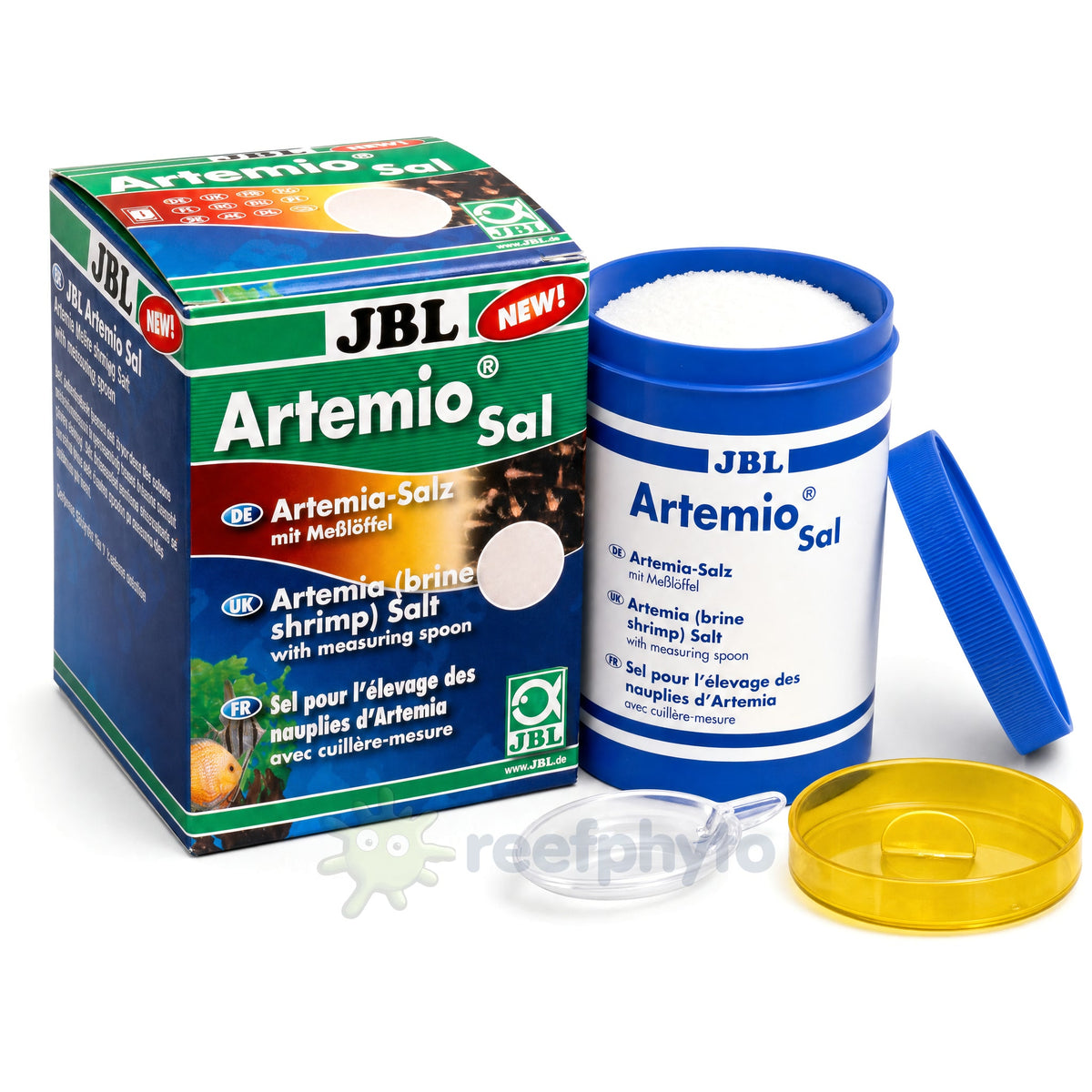
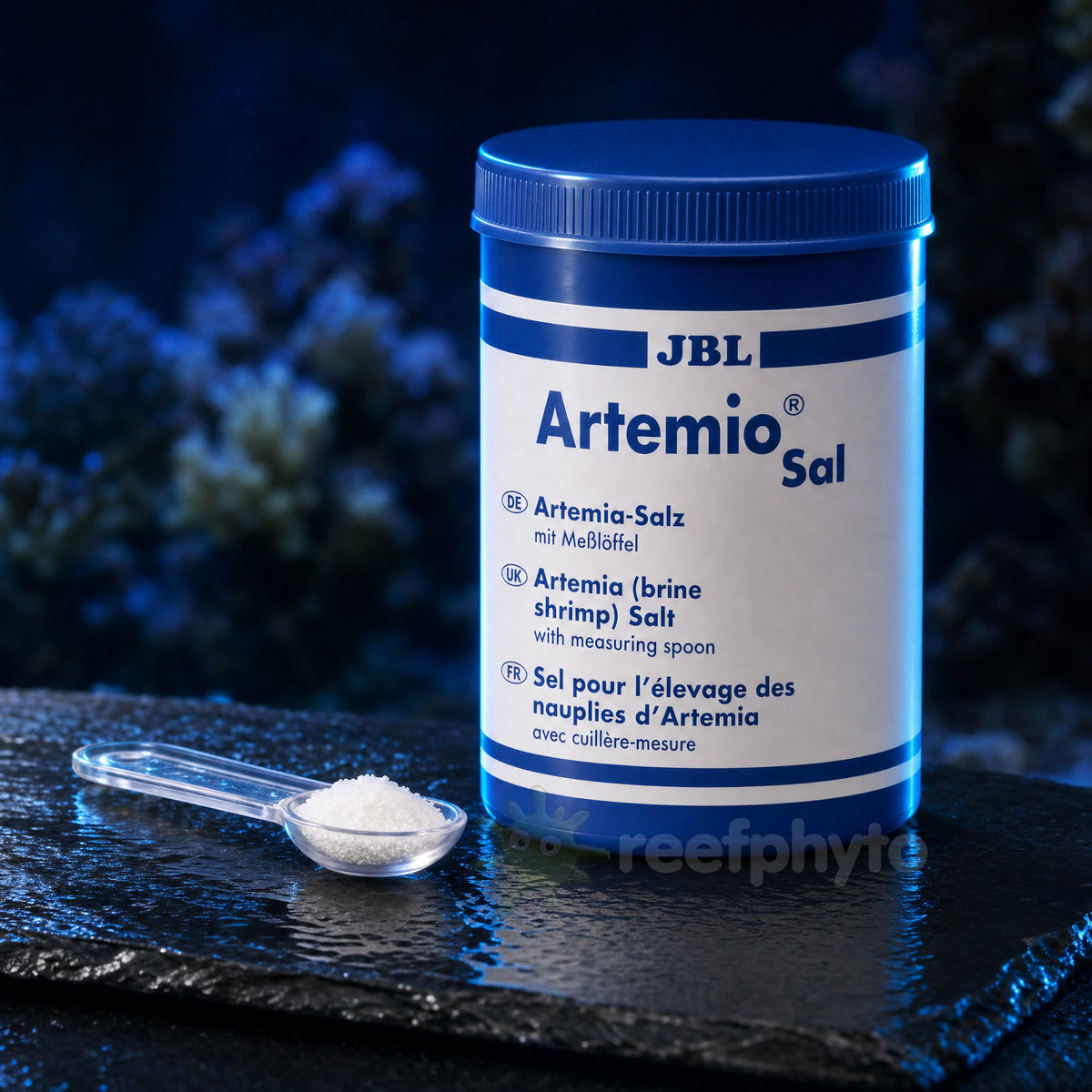
JBL ArtemioSal is a 230g pot of salt made specifically for hatching Artemia. It is balanced to hold the pH where brine shrimp eggs hatch well, and it contains micro algae so the newly hatched nauplii have something to eat once their yolk sac is used up. One pot makes 7 litres of hatching solution, and a measuring spoon is included. JBL recommend 2 level spoons per 0.5 litre of tap water.
Picture a hatchery cone full of orange nauplii, ready to siphon off and feed to fry, seahorses or a reef tank.
I have been culturing live marine food in Wales since 2008, with 18+ years in marine aquaculture, and I am happy to advise on getting a good hatch.
Get the salt right and let the eggs do the rest.
JBL ArtemioSal: What It Is
ArtemioSal is a hatching salt from JBL in Germany, sold in a 230g pot with a measuring spoon. It dissolves easily in tap water, and the proportion of salts is balanced to give the pH that Artemia eggs need to hatch well. It also contains micro algae, which gives the newly hatched nauplii a first food. JBL list the analytical constituents as crude protein 37%, fat 6%, crude fibre 1.1% and crude ash 7%. The pot makes 7 litres of hatching solution in total. Artemia eggs are not included.
Why Not Just Use Table Salt?
Table salt is made for cooking, not for hatching. The iodine, fluoride and anti-caking agents added to it all hold back the hatch, and plain salt does nothing to keep the pH stable over the 24 to 36 hours the eggs need. A dedicated hatching salt removes both problems, so if the hatch is poor you know to look elsewhere.
How to Use It
Dissolve 2 level measuring spoons of ArtemioSal in 0.5 litre of tap water, and scale up for larger hatchers. Add your Artemia eggs, keep the water moving with gentle aeration, and keep it warm. Around 25°C is ideal, and at cooler room temperatures the hatch can take up to 36 hours. Give the hatcher plenty of light. Once the nauplii have hatched, switch off the air, let the empty shells float to the top, and siphon or sieve the orange nauplii from the bottom. Rinse them in fresh salt water before feeding. Keep the lid on the pot between hatches so the salt does not clump.
What You Need Alongside It
You will need eggs and somewhere to hatch them. Our Brine Shrimp Eggs are the obvious partner. If you are starting from scratch, the JBL Artemio Set is a complete hatchery, and the Brine Shrimp Breeder is a simpler alternative. The JBL Artemio 4 Sieve Combination makes harvesting easier, JBL Artemio Fluid enriches the nauplii if you want to grow them on, and our air pump, air stones and check valves keep the hatcher aerated.
Brine Shrimp and Our Live Foods
Newly hatched brine shrimp are one of the best first foods for fry and a useful treat for reef fish, but they are only one part of the picture. For the smallest larvae, live rotifers are the first feed before brine shrimp, and live copepods give your reef fish and corals a food that lives and breeds in the tank.
JBL ArtemioSal FAQ
How much solution does one pot make?
The 230g pot makes 7 litres of hatching solution.
How much do I use?
JBL recommend 2 level measuring spoons per 0.5 litre of tap water. The measuring spoon is included.
Are eggs included?
No. Artemia eggs are sold separately.
Can I use table salt instead?
It is not recommended. Table salt contains iodine, fluoride and anti-caking agents that hold back the hatch.
What temperature do I need?
Around 25°C is ideal. At cooler room temperatures the hatch can take up to 36 hours.
If you are not getting the hatch rate you expect, get in touch. Darren responds personally.
 Roll over image to zoom in



 Darren Wordley
18 years culturing live phytoplankton in Wales
 Cultured in Wales, shipped live.