Quick Navigation
- Your Corals Are Animals, and They Need to Eat
- Photosynthesis and Heterotrophic Feeding: The Two Halves of Coral Nutrition
- What Do Corals Eat? A Quick Reference by Coral Type
- What Do SPS Corals Eat?
- What Do LPS Corals Eat?
- What Do Soft Corals Eat?
- The Role of Phytoplankton in Coral Nutrition
- The Role of Zooplankton: What Corals Eat on Wild Reefs
- How SPS, LPS, and Soft Corals Feed Differently
- Building a Live Food Feeding Schedule for Your Reef
- Common Coral Feeding Mistakes
- Why Live Food Outperforms Alternatives for Coral Feeding
- Getting Started: The Simplest Path to Better Coral Nutrition
- FAQs
Your Corals Are Animals, and They Need to Eat
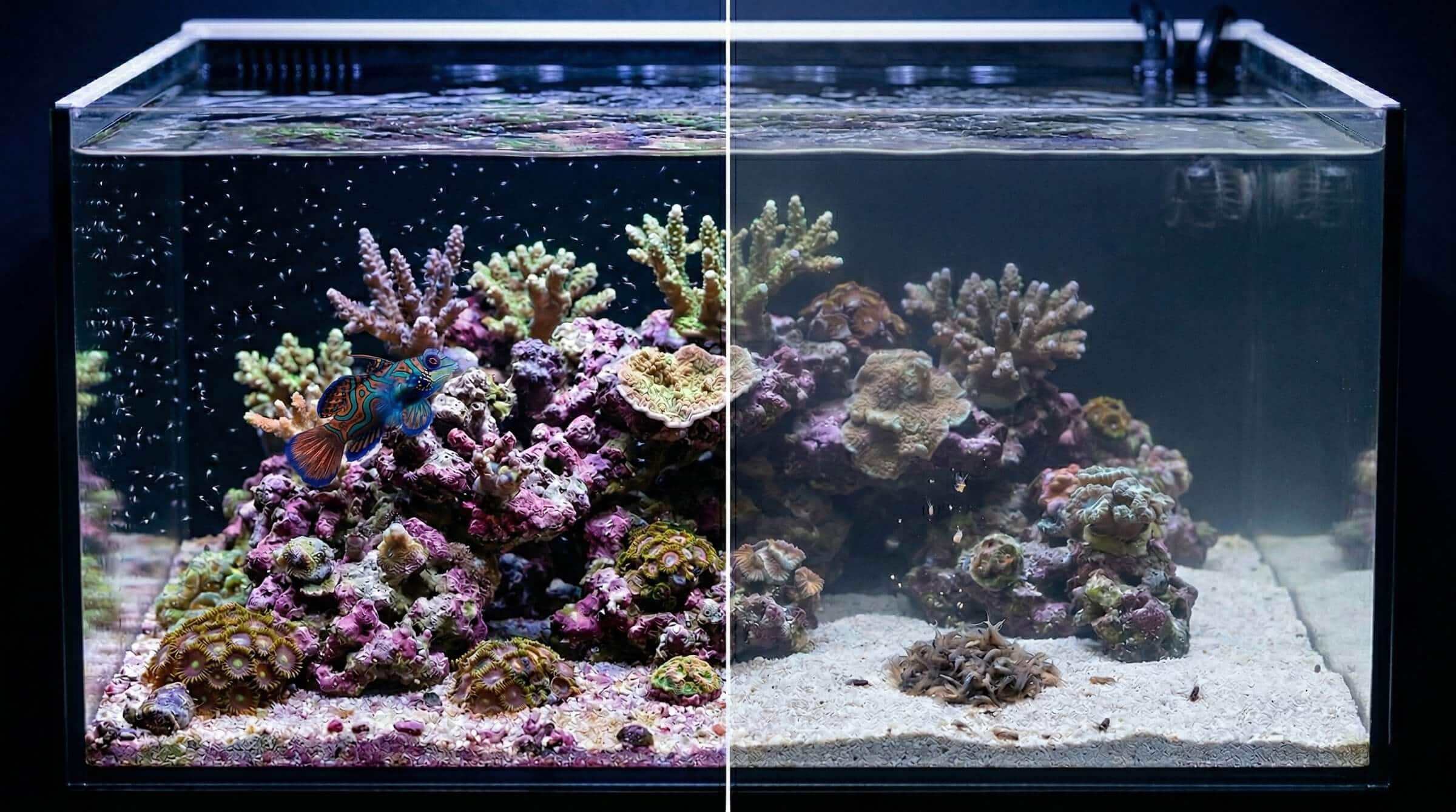
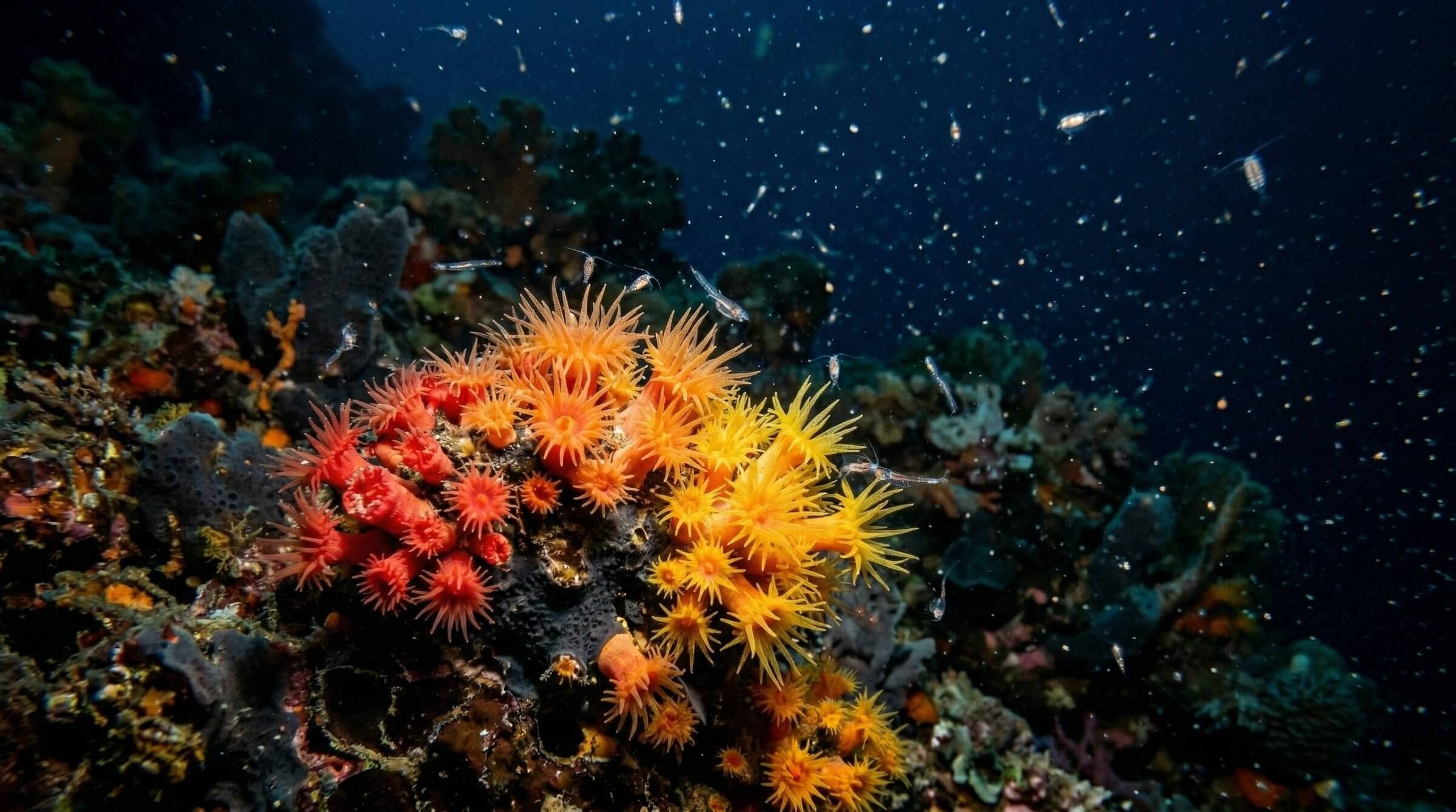
What do corals eat? It is one of the most common questions in reef keeping, and the answer matters far more than most keepers realise. Corals look like plants. They grow on rocks. They sit in one place. And because most of them contain photosynthetic algae, many keepers assume that good lighting is all they need to thrive.
It is not.
Corals are animals. Every single polyp on every colony in your tank is a living creature with a mouth, tentacles, and a digestive system. They evolved over hundreds of millions of years in oceans teeming with plankton, and their bodies are built to capture and consume food from the water column. When we put them in a glass box with filtered water and no planktonic food supply, we are asking them to survive on roughly half of what nature provides.
After 18 years of culturing live marine foods in Wales and working with reef keepers across the UK, I have seen the same pattern repeat itself hundreds of times. A keeper has good water parameters, good lighting, and good flow. Their corals look fine but they are not growing. Colours are muted. Polyp extension is minimal. SPS tips are pale. LPS feeding tentacles never appear. Everything plateaus.
The answer is almost always nutrition. Once you understand what corals eat and how to provide it, the results tend to be visible within weeks.
Photosynthesis and Heterotrophic Feeding: The Two Halves of Coral Nutrition
Most reef-building corals have a symbiotic relationship with microscopic algae called zooxanthellae. These algae live inside the coral tissue and use light to photosynthesise, converting carbon dioxide and water into sugars that the coral can use for energy. In return, the coral provides the algae with shelter and access to nutrients.
This photosynthetic contribution is significant. Depending on the species and lighting conditions, zooxanthellae can supply anywhere from 50 to 90 percent of a coral's energy needs. This is why lighting is so critical in a reef tank and why corals bleach when stressed: they are expelling the very algae that feed them.
But photosynthesis alone does not provide everything a coral needs. Sugars from zooxanthellae supply energy, but they do not supply the amino acids, proteins, lipids, and trace elements that corals need to grow skeleton, reproduce, repair tissue, and maintain immune function. For those, corals depend on heterotrophic feeding, which means capturing and consuming food from the water around them.
In the wild ocean, corals are bathed in a constant stream of phytoplankton, zooplankton, bacterioplankton, dissolved organic matter, and particulate organic matter. This planktonic soup provides the building blocks that photosynthesis cannot. In a typical reef aquarium, that planktonic food supply is almost entirely absent unless you deliberately put it there.
This is the nutritional gap. Your lighting handles energy. Your feeding handles everything else. Understanding what do corals eat in the wild is the key to replicating it in your tank.
What Do Corals Eat? A Quick Reference by Coral Type
Before diving into the detail, here is a summary of what do corals eat broken down by the three main coral types most reef keepers work with.
| Coral Type | Primary Foods | Particle Size | Feeding Method |
|---|---|---|---|
| SPS | Phytoplankton, copepod nauplii, rotifers, bacterioplankton | 2-200 microns | Broadcast |
| LPS | Live copepods, rotifers, mysis shrimp, coral pellets | 90-2,000+ microns | Target + broadcast |
| Soft Corals | Phytoplankton, fine zooplankton, dissolved organic matter | 2-200 microns | Broadcast |
What Do SPS Corals Eat?
Small polyp stony corals, the Acropora, Montipora, Pocillopora, Stylophora, and Seriatopora species that many reef keepers aspire to keep, have tiny polyps with very small mouths. They cannot capture large food particles. Their feeding is adapted to very fine prey: bacterioplankton, phytoplankton, nano-zooplankton, and dissolved organic compounds.
SPS corals are heavily dependent on their zooxanthellae and will not survive without strong, appropriate lighting. But the difference between an SPS colony that merely survives and one that grows rapidly with intense coloration is nearly always down to heterotrophic feeding.
Research has consistently shown that SPS corals fed with plankton grow faster, calcify more efficiently, and show stronger pigmentation than those relying on photosynthesis alone. The reason is straightforward: the nitrogen and phosphorus that corals need for tissue growth and skeletal formation come primarily from captured food, not from light.
The most effective foods for SPS corals are live phytoplankton, fine zooplankton such as rotifers and copepod nauplii, and amino acid supplements. The key is particle size. SPS polyps are small, so the food needs to be small. Live phytoplankton cells range from 2 to 20 microns depending on species. Rotifers sit at 90 to 200 microns. Copepod nauplii fall between 50 and 150 microns. All of these are within the capture range of most SPS polyps.
For SPS-dominant systems, a regular schedule of live phytoplankton dosed into the water column two to three times per week, combined with fine zooplankton additions, provides the heterotrophic nutrition that drives real growth and colour development.
5 Species Phytoplankton

£6.99
5 Species Phytoplankton Blend: Build a Thriving Marine Ecosystem Your corals are open, your fish are healthy, and your parameters are clean. But something about the tank feels thin. The microfauna community never quite established. Your copepod population does not… read more
What Do LPS Corals Eat?
Large polyp stony corals are the enthusiastic eaters of the coral world. Euphyllia, Goniopora, Lobophyllia, Acanthastrea, Scolymia, Fungia, and Trachyphyllia all have large, fleshy polyps with clearly visible mouths and tentacles. Many of them extend sweeping feeding tentacles at night, actively hunting for food in the water column.
LPS corals can capture much larger prey than SPS species. In the wild, they regularly consume copepods, small worms, fish larvae, and various zooplankton. In a reef tank, they respond dramatically to direct feeding with meaty foods, and this is where many keepers see the most immediate and rewarding results.
The best foods for LPS corals include live copepods, live rotifers, frozen mysis shrimp, reef-specific pellet foods, and broadcast zooplankton additions. Many LPS species can be target-fed using a pipette or turkey baster, delivering food directly to individual polyps. This is especially effective for species like Goniopora and Scolymia, which open wide feeding tentacles and can consume relatively large food items.
Live copepods are particularly valuable for LPS systems because they swim through the water column and trigger a natural hunting response. Unlike frozen food, which sinks and can be swept past corals by flow before they react, live copepods move and pause in ways that corals evolved to detect. A regular supply of live copepods in the tank, whether from a refugium population or regular additions, keeps LPS corals in active feeding mode and supports sustained growth.
What Do Soft Corals Eat?
Soft corals are often thought of as the low-maintenance members of the reef, and in terms of lighting and flow requirements, that is largely true. But soft corals are still feeding animals, and their nutritional needs are frequently overlooked.
Leather corals, zoanthids, mushroom corals, star polyps, Kenya trees, and gorgonians all feed from the water column. Their polyps are generally small and their feeding is less aggressive than LPS species, but they are absorbing and capturing food throughout the day and night. The difference between a soft coral that looks acceptable and one that grows quickly with vivid colours is almost always down to what is in the water.
Soft corals benefit most from broadcast feeding rather than target feeding. Adding live phytoplankton and fine zooplankton to the water column and allowing the particles to distribute naturally through the tank matches how these animals feed in the wild. They absorb dissolved organic matter and fine particulates through their tissue, and their small polyps capture microplankton as it drifts past.
For soft coral systems, live phytoplankton is the single most universally beneficial food addition. It feeds the corals directly, supports the copepod and rotifer populations that become secondary food sources, and enriches the overall water column microbiology. A two to three times weekly dosing schedule with a multi-species phytoplankton blend is a simple starting point that produces measurable results. For a deeper look at soft coral nutrition specifically, see our dedicated guide on the best foods to feed soft corals.
The Role of Phytoplankton in Coral Nutrition
Phytoplankton sits at the very base of the marine food chain. In the ocean, it is the primary producer that everything else depends on. In a reef aquarium, it fills a role that nothing else can replicate.
When you add live phytoplankton to your tank, several things happen simultaneously. The phytoplankton cells themselves are consumed directly by soft corals, filter-feeding invertebrates such as feather duster worms, clams, sponges, and tunicates, and by SPS coral polyps small enough to capture them. At the same time, the phytoplankton feeds the copepod and rotifer populations in your system, helping those populations grow and sustain themselves. And the presence of live phytoplankton in the water column supports beneficial bacteria and microbial communities that contribute to overall water quality and reef health.
The key distinction is between live phytoplankton and bottled or preserved products. Live phytoplankton has intact cell walls, active enzymes, and complete lipid profiles. Bottled products that have sat on a shelf for weeks or months often contain a high proportion of dead or degraded cells. They may look green, but the nutritional value is significantly reduced. For corals and filter feeders, the difference in bioavailability is substantial.
Our five-species live phytoplankton is cultured in-house at our facility in Wales and dispatched fresh. The multi-species blend provides a range of cell sizes and nutritional profiles that supports the widest possible range of coral species and filter feeders in a mixed reef system.
The Role of Zooplankton: What Corals Eat on Wild Reefs
If phytoplankton is the foundation, zooplankton is the engine. Copepods, rotifers, and their larvae are the primary prey items that corals evolved to capture and consume. They are rich in proteins, essential fatty acids including EPA and DHA, and carotenoid pigments such as astaxanthin that directly influence coral coloration.
In a healthy wild reef, the water column is dense with zooplankton, particularly at night when many species migrate from deeper water to feed in the shallows. Corals have evolved to take advantage of this, which is why many species extend their feeding tentacles after lights out. The feeding response that LPS corals show to live zooplankton in a reef tank, with tentacles reaching out and polyps opening wide, is the same behaviour they exhibit on a wild reef when the nightly plankton bloom arrives.
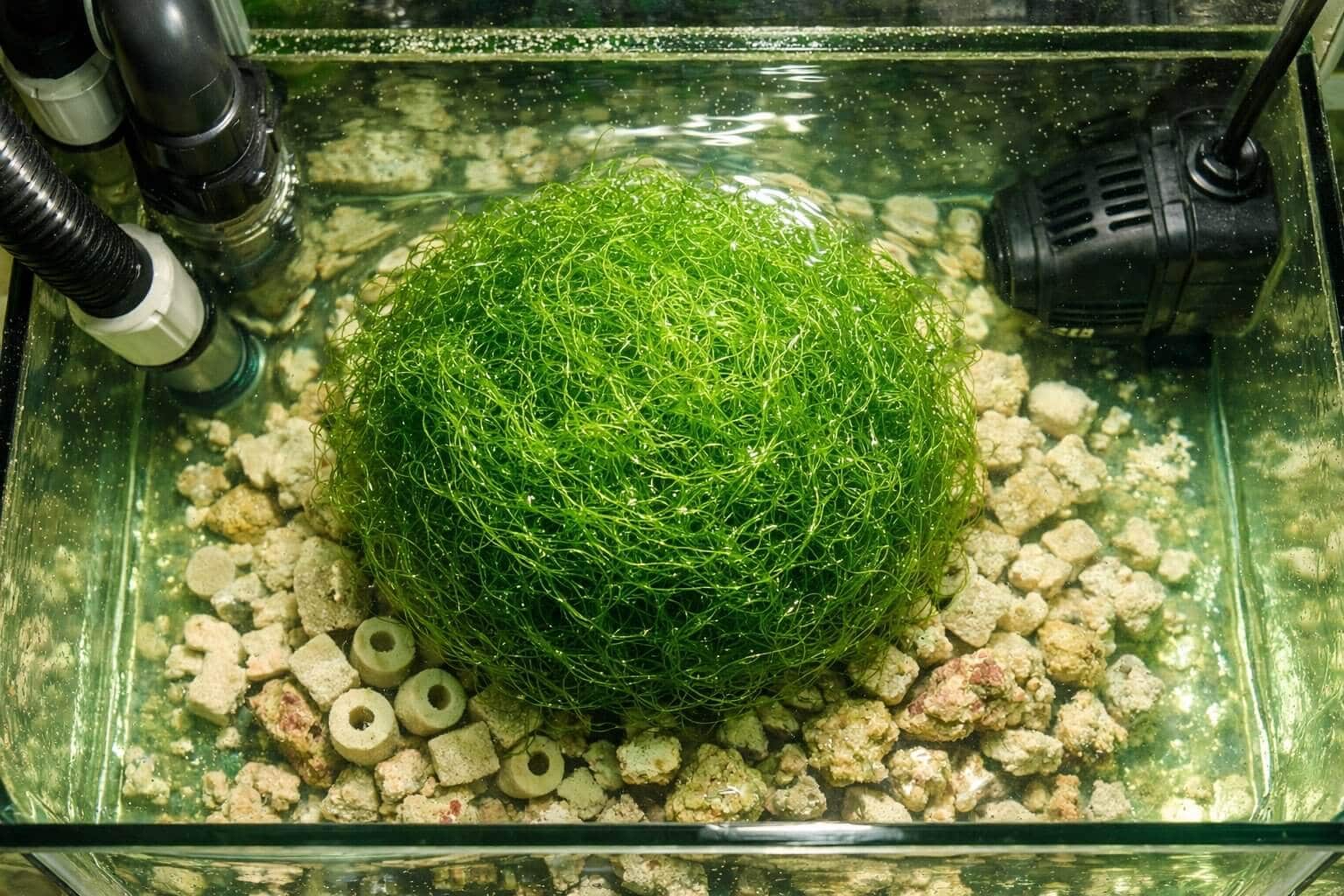
In a reef aquarium, there are two approaches to providing zooplankton. The first is to establish a self-sustaining population, typically in a refugium, that continuously produces copepods and other micro-crustaceans. The second is to add live zooplankton directly to the tank on a regular schedule. Most successful reef keepers use both.
A refugium stocked with live copepods provides a constant low-level supply of zooplankton that enters the display tank through normal water circulation. Supplementing this with regular direct additions of concentrated zooplankton, such as Zoo-Shot or live zooplankton mix, ensures that coral feeding density remains high enough to drive real nutritional benefit.
Zooplankton Live Food Mix

£12.99
Zooplankton Live Food Mix: Copepods, Rotifers & Phytoplankton Your tank is maintained, not alive. The water is clean, the equipment is dialled in, but something fundamental is absent. Corals sit half-extended. Fish pick at food without enthusiasm. The microfauna that… read more
How SPS, LPS, and Soft Corals Feed Differently
Understanding the mechanical differences in how coral types feed helps you choose the right food and the right delivery method for your specific system. The table below compares the key feeding characteristics side by side.
| Characteristic | SPS Corals | LPS Corals | Soft Corals |
|---|---|---|---|
| Polyp size | Under 1mm | Several mm to cm | Small to medium |
| Feeding style | Passive filter feeding | Active ambush predation | Absorption + filtering |
| Tentacles | Short, limited reach | Long, sweeping, often at night | Small polyps, large tissue area |
| Flow needs | High turbulent flow | Moderate flow | Moderate, reduce when feeding |
| Delivery | Broadcast dosing | Target + broadcast | Broadcast dosing |
| Light dependence | High (50-90%) | Moderate (varies) | Moderate to high |
SPS corals have tiny polyps, often less than a millimetre across. Their tentacles are short and their capture range is limited. They rely on volume: large numbers of very fine particles passing through the water column, a small percentage of which are captured by each polyp. This is why water flow is so critical for SPS feeding. Good, turbulent flow brings more particles into contact with more polyps per unit of time. For SPS systems, broadcast feeding with phytoplankton and fine zooplankton is the most effective approach.
LPS corals have large, muscular polyps with long tentacles and relatively big mouths. They can actively reach out and capture individual prey items. They are ambush predators rather than filter feeders, and they respond powerfully to larger zooplankton. For LPS systems, a combination of broadcast feeding and target feeding produces the best results. Adding live copepods to the water column triggers hunting behaviour, while pipette-feeding individual colonies with mysis, pellets, or concentrated zooplankton ensures that every coral gets a proper meal.
Soft corals sit somewhere between the two. Their polyps are generally small, but their tissue surface area is large. They absorb dissolved nutrients and fine particulates across their entire body, supplementing what their polyps capture. Broadcast feeding with phytoplankton and fine zooplankton, dosed into the water column with flow reduced slightly for 15 to 20 minutes, is the most natural and effective approach.
Building a Live Food Feeding Schedule for Your Reef
The most common question I get from reef keepers who want to start feeding their corals is how often and how much. Now that you know what do corals eat, the next step is putting a practical schedule together. Here is a framework that works for most mixed reef tanks.
| Food Type | Frequency | When | Skimmer | Dosing |
|---|---|---|---|---|
| Phytoplankton | 2-3x weekly | Evening / lights out | Off 30-60 min | 1ml per 27L (light), 18L (med), 9L (heavy) |
| Zooplankton | 2-3x weekly | Evening / lights out | Off 30 min | Near coral density |
| LPS target feed | 1-2x weekly | After lights out | Off 30 min | Pipette to polyps |
| Refugium top-up | Monthly then quarterly | Any time | No change | Into refugium/sump |
Phytoplankton: Two to Three Times Per Week
Dose live phytoplankton into the water column after lights out or during the evening when coral feeding activity is naturally higher. Turn off your protein skimmer for 30 minutes to an hour after dosing to prevent the phytoplankton from being removed before your corals and filter feeders can consume it. For a lightly stocked system, dose at 1ml per 27 litres. For a medium-stocked tank, 1ml per 18 litres. For a heavily stocked or coral-dense system, 1ml per 9 litres.
Zooplankton: Two to Three Times Per Week
Add live zooplankton in the evening or after lights out. Turn off mechanical filtration and skimming for 30 minutes. For concentrated products like Zoo-Shot, dose directly into the display tank near areas of high coral density. For bulk live zooplankton, add to the sump or refugium to allow the animals to distribute naturally through the system.
Target Feeding LPS: Once to Twice Per Week
Use a pipette or turkey baster to deliver food directly to individual LPS polyps. This works well with frozen mysis, coral pellets, or concentrated live zooplankton. Feed after lights out when tentacles are extended for the best response.
Refugium Maintenance: Monthly or as Needed
If you run a refugium with a copepod population, top up with fresh live copepods every three to four weeks until the population is fully established. Once established, quarterly topping-up is usually sufficient to maintain healthy numbers, particularly if you also run live phytoplankton in the system to sustain the population.
Common Coral Feeding Mistakes
Knowing what do corals eat is only half the picture. How you feed matters just as much. Several mistakes come up repeatedly in conversations with reef keepers, and they are all easily avoided.
The first is overfeeding with dry or frozen foods without managing the consequences. Every food addition increases the nutrient load in your water. If you broadcast-feed heavy amounts of frozen food without adequate filtration and export, you will see elevated nitrates and phosphates, nuisance algae, and potentially coral stress. Live foods carry far less risk here because they are alive and swimming until consumed. They do not decompose in the water column in the same way that uneaten frozen food does.
The second is relying entirely on photosynthesis and never feeding corals at all. This is especially common with SPS keepers who maintain ultra-low nutrient systems. While SPS corals can survive on photosynthesis alone in well-lit conditions, they will not reach their full growth potential or colour intensity without heterotrophic feeding. The corals you see in high-end reef tanks that seem to glow with colour are invariably being fed.
The third is feeding at the wrong time. Most corals are more active feeders at night or in low light conditions. Feeding during peak photoperiod when polyps are retracted and tentacles are withdrawn means much of the food is wasted. Evening or post-lights-out feeding consistently produces better uptake and less waste.
The fourth is not turning off the skimmer. Protein skimmers are extremely efficient at removing the very particles you are trying to feed to your corals. A 30 to 60 minute skimmer pause after feeding gives your corals time to capture what you have added.
Why Live Food Outperforms Alternatives for Coral Feeding
Frozen, freeze-dried, and powdered coral foods all have their place in a feeding routine, and many are well-formulated products that provide genuine nutritional value. But when you look at what do corals eat in the wild, live food offers advantages that no processed alternative can match.
Live phytoplankton has intact cell walls and active enzymes. The lipid profiles are complete and bioavailable. Dead or degraded cells, which make up a significant proportion of many bottled products, have ruptured cell walls and oxidised lipids that are far less nutritionally useful.
Live zooplankton moves. This matters more than most keepers realise. The swimming motion of a live copepod or rotifer triggers a prey detection response in coral polyps that static food particles do not. When you add live copepods to a tank with LPS corals, the feeding response is immediate and dramatic. Tentacles extend, polyps open, and the coral actively hunts. That behavioural response does not happen with frozen food sitting on the substrate.
Live food is also self-limiting. Uneaten live copepods and rotifers continue to live in your system, feeding and reproducing rather than decomposing. This means the risk of overfeeding and nutrient spikes is dramatically lower compared to frozen or dry alternatives.
Zooplankton Multipack
£23.72
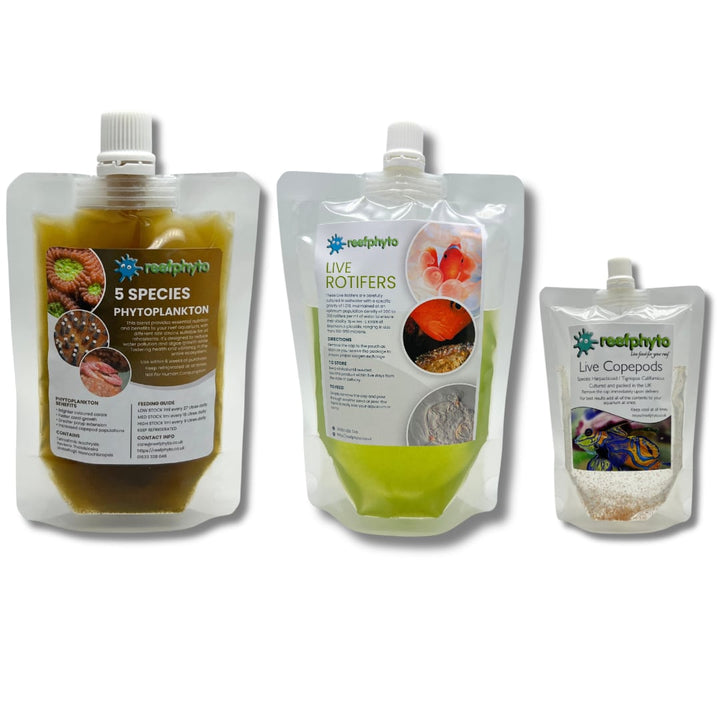
Zooplankton Multipack: Live Copepods, Rotifers and Phytoplankton You have been buying live food one pouch at a time. Copepods this week, rotifers the next, phytoplankton when you remember. But your reef does not feed in rotation. Every level of the… read more
Getting Started: The Simplest Path to Better Coral Nutrition
If you have never actively fed your corals, the simplest starting point is live phytoplankton. It benefits every coral type, every filter feeder, and the broader biology of your reef system. It is low risk, easy to dose, and the results in polyp extension and colour are typically visible within two to three weeks of consistent use.
From there, adding live zooplankton to the system provides the proteins, fatty acids, and carotenoids that drive growth and coloration. A zooplankton multipack that includes copepods, rotifers, and phytoplankton together is the most straightforward way to introduce a complete live food web in a single order.
For LPS-heavy systems, establishing a refugium with a live copepod population provides ongoing, low-maintenance nutrition that keeps your corals in peak condition between active feeding sessions.
What do corals eat? Plankton, zooplankton, phytoplankton, dissolved organics, and everything the ocean provides. Your corals are animals. They are hungry. And once you start feeding them properly, you will wonder how you ever kept a reef without doing it.