Quick Navigation
Soft corals are usually where reef keeping starts and for good reason. Leathers, zoanthids, mushroom corals, star polyps, and Kenya trees are forgiving of the learning curve that comes with maintaining a marine system, and they reward consistent care with fast, visible growth that gives new keepers the confidence to progress. But "forgiving" doesn't mean "unfussy," and the most common reason soft corals plateau — looking healthy but not growing, colours muted rather than vivid is almost always nutrition.
Soft corals feed. Not as aggressively or as visibly as LPS corals with their large sweeping tentacles, but they are actively capturing and absorbing food from the water column throughout the day and night. Understanding what soft corals actually need to eat, and how to get it to them efficiently, makes a measurable difference to how a soft coral tank looks and performs over time.
- Darren, Reefphyto
How Soft Corals Feed
Unlike stony corals with their hard calcium carbonate skeletons, soft corals have a flexible internal structure supported by small calcium spicules embedded in their tissue. This gives them the flowing, billowing movement that makes them so visually compelling in a reef tank but it also means their feeding apparatus works somewhat differently from LPS and SPS species.
Soft corals rely on a combination of photosynthesis and heterotrophic feeding. The zooxanthellae living within their tissue photosynthesise light into energy, providing a significant proportion of their nutritional needs when lighting is adequate. But this photosynthetic contribution alone is not sufficient for optimal health, most soft coral species also absorb dissolved organic matter, fine particulates, and microplankton directly through their tissue and via small polyp structures. Some species, particularly leather corals and gorgonians, are more active plankton feeders than their reputation as "easy, low-maintenance corals" tends to suggest.
The practical implication is that soft corals respond well to regular plankton additions even though they don't require the targeted direct feeding that LPS corals benefit from. The right food, delivered consistently into the water column, is absorbed passively and efficiently.
Phytoplankton: The Foundation of Soft Coral Nutrition
Live phytoplankton is the single most universally beneficial food addition for a soft coral system. It works at multiple levels simultaneously: it's directly absorbed by soft corals and filter-feeding invertebrates through their tissue; it feeds the copepod and rotifer populations in your refugium, which in turn become prey for your corals and fish; and it supports the broader water column microbiology that underpins a healthy reef.
The distinction between live and bottled phytoplankton matters here. Many commercially available bottled phytoplankton products have low viable cell counts by the time they reach the consumer they may look green but contain a high proportion of dead cells with degraded cell walls and reduced nutritional content. Live phytoplankton cultured and dispatched fresh has intact cell walls, active enzymes, and full lipid profiles that corals and the organisms that feed on them can actually use. For soft corals in particular, whose absorption is passive and tissue-based rather than active capture, the quality of what's in the water column determines what they actually receive.
Dose live phytoplankton two to three times weekly, directly into the sump or refugium with the skimmer turned off for 30–60 minutes after addition. This gives corals and filter feeders maximum exposure before the food is exported. In a tank without a sump, dose into a low-flow area of the display.
Zooplankton Multipack
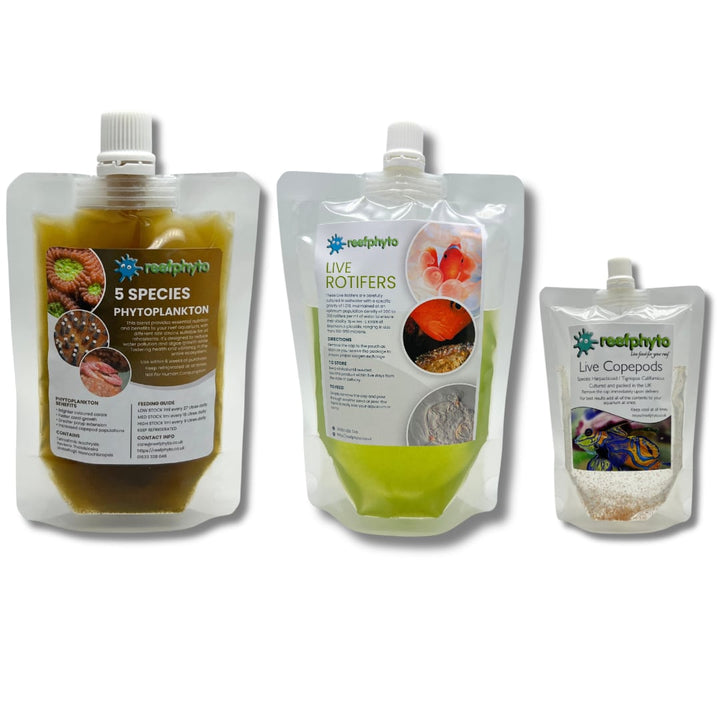
£23.72
Zooplankton Multipack: Live Copepods, Rotifers and Phytoplankton You have been buying live food one pouch at a time. Copepods this week, rotifers the next, phytoplankton when you remember. But your reef does not feed in rotation. Every level of the… read more
Zooplankton: Active Prey for Active Feeders
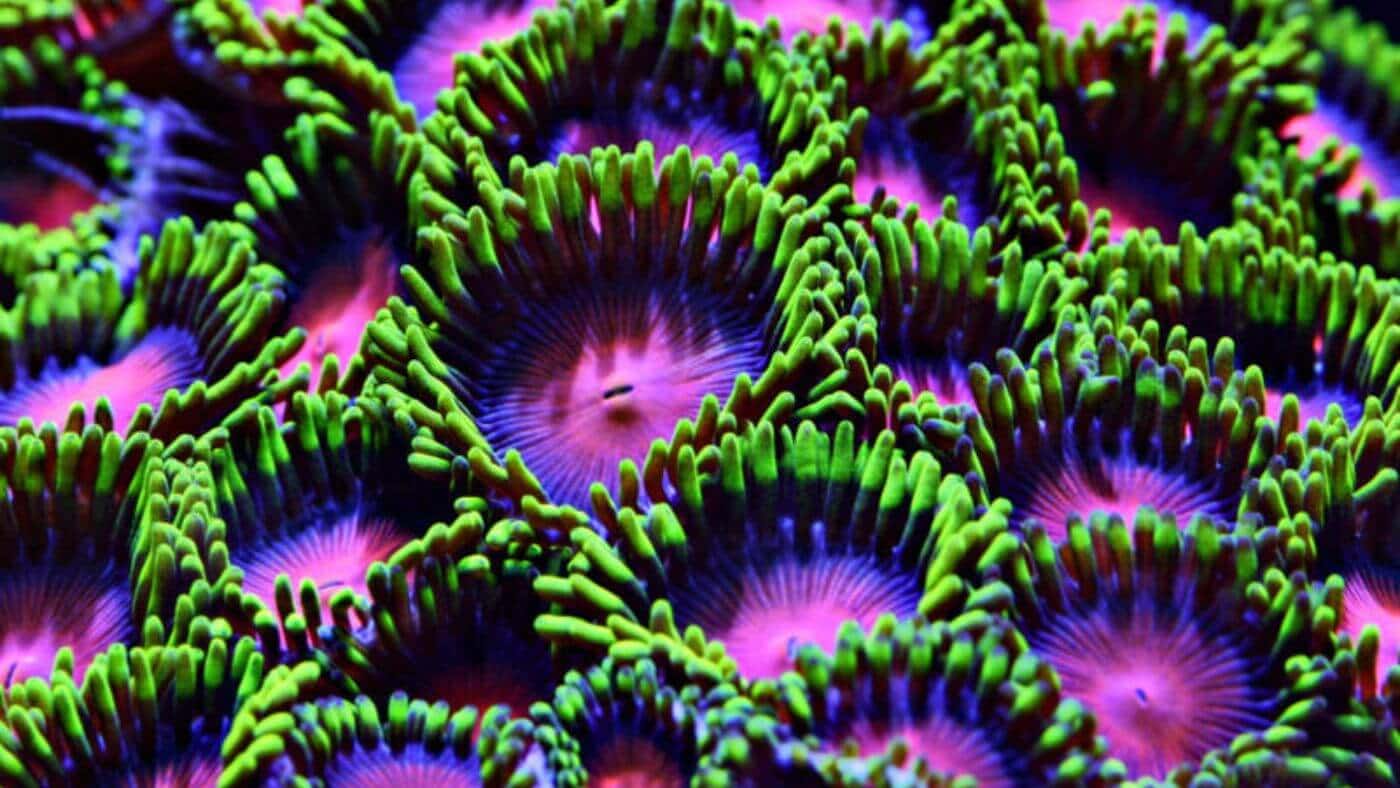
While soft corals are less aggressive capturers than LPS species, many do actively feed on small zooplankton particularly rotifers and small copepod nauplii that are small enough to be captured by their polyp structures. Zoanthids, star polyps, and gorgonians in particular show visible feeding responses to zooplankton additions, with polyps extending and attempting to capture particles in the water column.
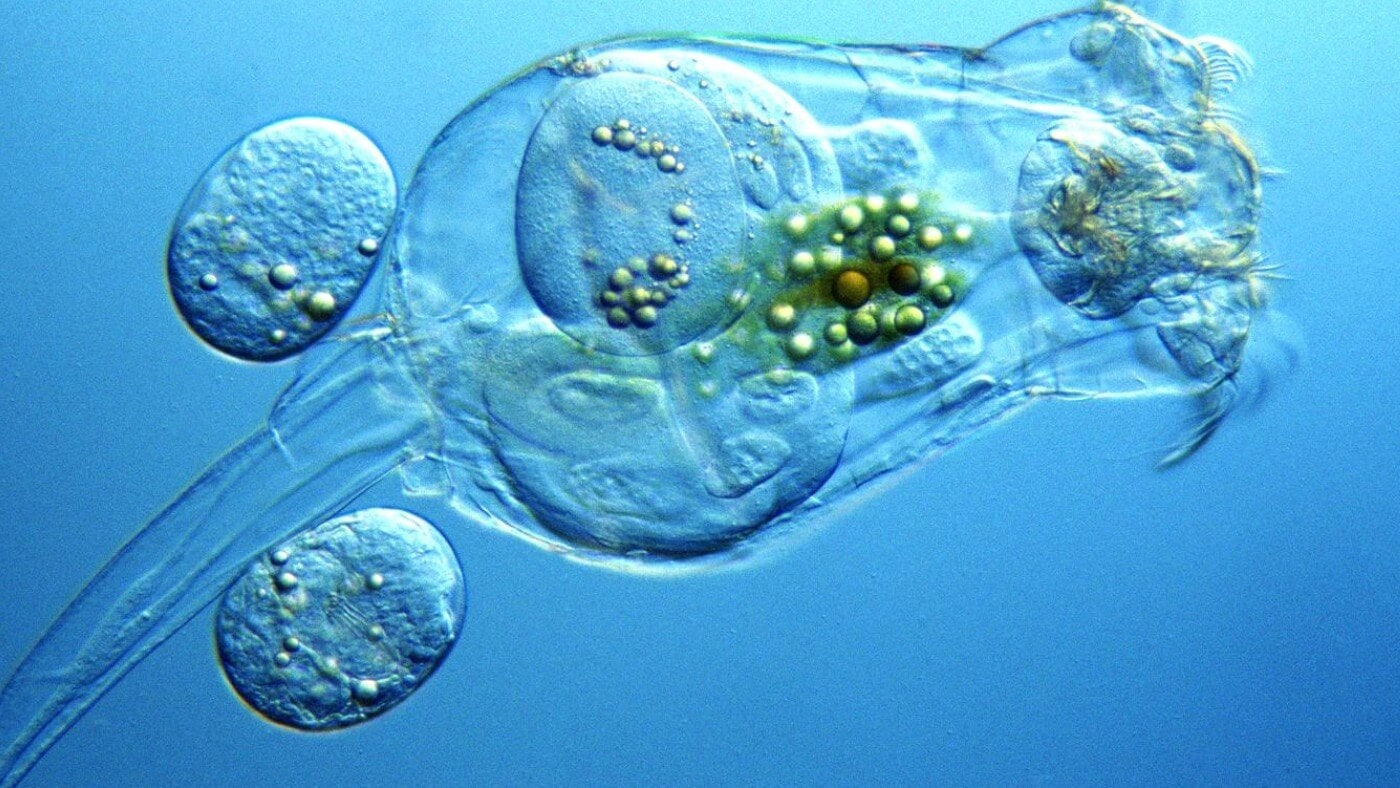
Live rotifers at 50–200 microns are ideally sized for most soft coral polyps and are absorbed efficiently with minimal waste. Live copepods provide a larger, more nutrient-dense prey item that benefits the fish and larger-polyped corals in the same system simultaneously. A twice-weekly addition of mixed live zooplankton into the water column during evening hours when many soft coral polyps are most active covers both the direct feeding benefit and the ongoing seeding of prey populations in the tank.
The key distinction between soft coral feeding and LPS feeding is that soft corals don't generally need targeted pipette feeding to individual polyps. Broadcast addition into the water column, with flow reduced slightly for 15–20 minutes to allow particles to distribute and settle rather than being immediately swept out, works effectively.
Coral-Specific Supplements
Beyond live plankton, dissolved amino acid supplements and coral food preparations provide additional nutritional support that soft corals absorb through their tissue. Products like Reef Roids, Coral Frenzy, and amino acid blends are absorbed rather than actively captured they work by elevating the dissolved organic content of the water to a level where passive tissue absorption provides meaningful nutrition. They're best used as a supplement alongside live food rather than as a substitute for it, since the bioavailability of live food far exceeds that of even well-formulated dry preparations.
For soft corals specifically, amino acid supplements can visibly improve colouration and polyp extension over several weeks of consistent use. They're straightforward to dose broadcast addition to the water column two to three times weekly and produce low waste compared to particle foods.
Feeding Frequency and Technique
Soft corals in a well-maintained system with good lighting and a productive refugium don't need intensive feeding regimes. Two to three feeding additions per week live phytoplankton and a zooplankton or amino acid addition is sufficient to produce noticeably better growth and colouration than a tank receiving no supplemental feeding at all.
The most common mistake is overfeeding rather than underfeeding. Excess food particles that aren't consumed before the skimmer and filtration remove them contribute to nutrient loading elevated nitrates and phosphates that creates the algae outbreaks most soft coral keepers dread. Small, frequent additions produce better results than large infrequent doses, and live food that's alive and swimming when it enters the tank produces far less waste than frozen food that sinks and settles before being eaten.
Flow management during feeding makes a practical difference. Reducing wavemaker output to its lowest setting for 15–20 minutes after a feeding addition allows food particles to distribute through the tank and reach coral polyps rather than being immediately concentrated and exported. Resume normal flow after this window.
What Well-Fed Soft Corals Look Like
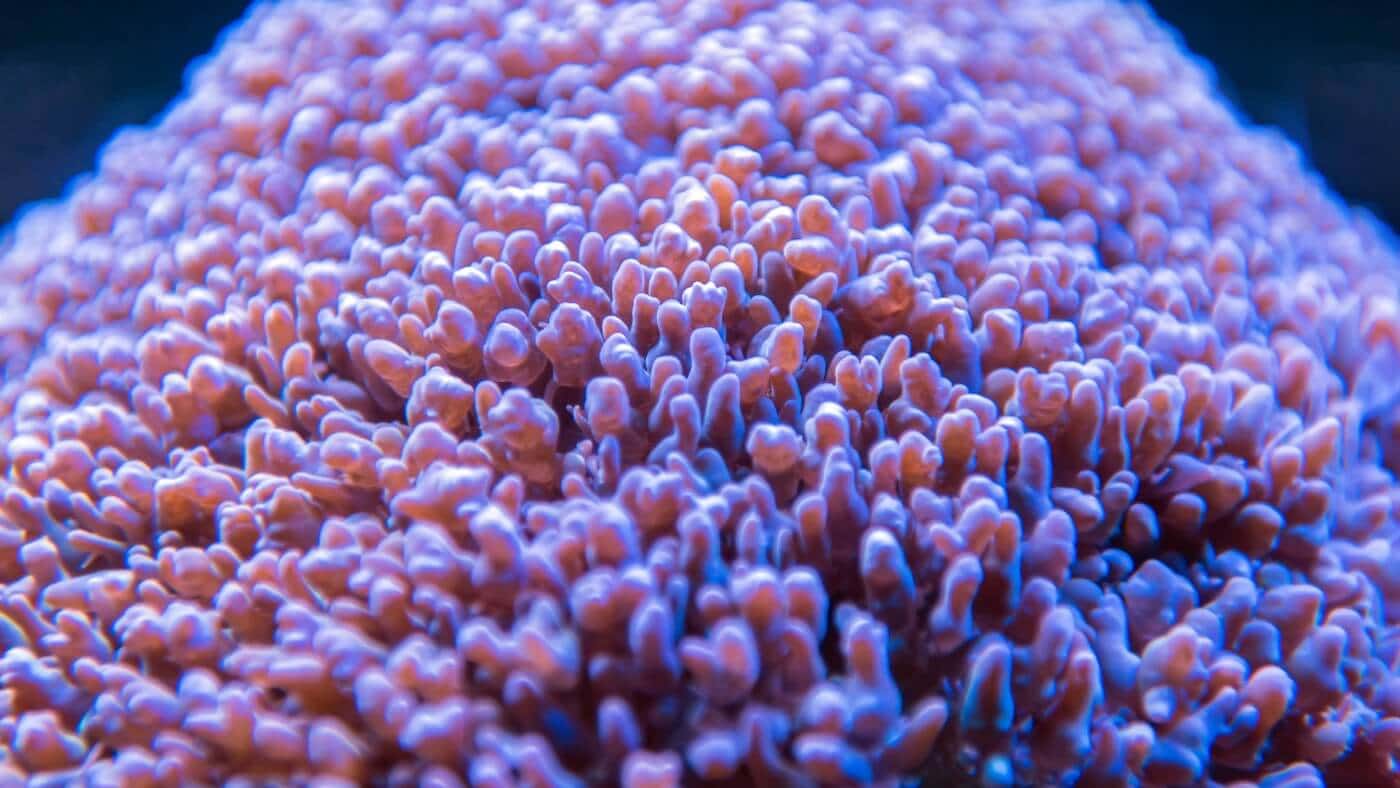
The difference between a soft coral tank with a consistent feeding regime and one without is visible within weeks, not months. Well-fed soft corals show fuller polyp extension during active periods, more saturated and consistent colouration, noticeably faster lateral spread in colonial species like zoanthids and star polyps, and better tissue condition across leather corals that can otherwise look deflated and lacklustre between periodic shedding events.
If your soft corals look healthy but static not visibly growing or changing and your parameters are in order, nutrition is almost always the variable worth adjusting first. A two to three week trial of consistent live phytoplankton and zooplankton additions is the most reliable way to assess whether feeding is the limiting factor in your system.
A Note from Darren
Soft corals are often undersold in the hobby as things that "look after themselves" and while they're genuinely more tolerant than stony corals, they respond to good nutrition as clearly as anything else in a reef tank. The improvement in a soft coral system that moves from no supplemental feeding to regular live phytoplankton and zooplankton additions is one of the most satisfying and immediate results I see customers report.
If you want advice on what to start with for your specific setup, call us on 01267 611533 or use the contact page. We culture everything fresh in Wales and I'm happy to help you build a feeding routine that works for your system.
FAQs
Do soft corals actually need feeding, or do they get everything from light?
They need both. The zooxanthellae living in their tissue photosynthesise light into energy and cover a significant proportion of their needs, but that alone is not enough for optimal health. Most soft coral species also absorb dissolved organic matter, fine particulates and microplankton directly through their tissue and polyp structures.
Leather corals and gorgonians in particular are far more active plankton feeders than their reputation as easy, low-maintenance corals suggests. Regular plankton additions make a visible difference even in a well-lit tank.
How often should I feed soft corals, and do I need to target feed them like LPS?
Two to three additions a week is enough. Live phytoplankton, plus a zooplankton or amino acid addition, will produce noticeably better growth and colouration than a tank getting no supplemental feeding at all.
You do not need to pipette individual polyps the way you would with LPS. Broadcast the food into the water column and let the corals absorb it passively. Two things improve how much actually reaches them: turn the skimmer off for 30 to 60 minutes after dosing phytoplankton, and drop your wavemaker to its lowest setting for 15 to 20 minutes so particles distribute through the tank rather than being swept straight out.
My soft corals look healthy but are not growing. What is the problem?
If your parameters are in order, nutrition is almost always the variable worth adjusting first. Soft corals that plateau, looking fine but static, with colours muted rather than vivid, are usually being underfed rather than mistreated.
Run a two to three week trial of consistent live phytoplankton and zooplankton additions and watch for the markers: fuller polyp extension during active periods, more saturated colour, faster lateral spread in zoanthids and star polyps, and better tissue condition on leathers that otherwise look deflated between shedding events. The difference shows in weeks, not months. Be careful not to overcorrect, though. Overfeeding is the more common mistake, and excess particles drive the nitrate and phosphate loading that causes algae outbreaks.