
Quick Navigation
If you've ever attempted to raise marine fish fry and lost them in the first week, the answer is almost always the same: they ran out of food before you realised they were hungry. Marine fry are tiny, relentless feeders from the moment they become free-swimming, and the gap between hatching and being able to consume brine shrimp nauplii is where most breeding attempts quietly fail. Rotifers for fry food are what fills that gap and without them, most species of marine fish simply cannot be raised successfully in captivity.
I've been working with live marine cultures for over 18+ years, and rotifers are one of the foods I feel most strongly about. Not because they're complicated they're actually among the easier live cultures to maintain, but because the difference they make to fry survival rates is so dramatic, and so many hobbyists don't discover them until after they've lost a first clutch. This guide covers why rotifers work, how to culture and enrich them at home, and how to feed them effectively so your fry get the best possible start.
- Darren, Reefphyto
Why Rotifers Are the Right First Food for Marine Fry
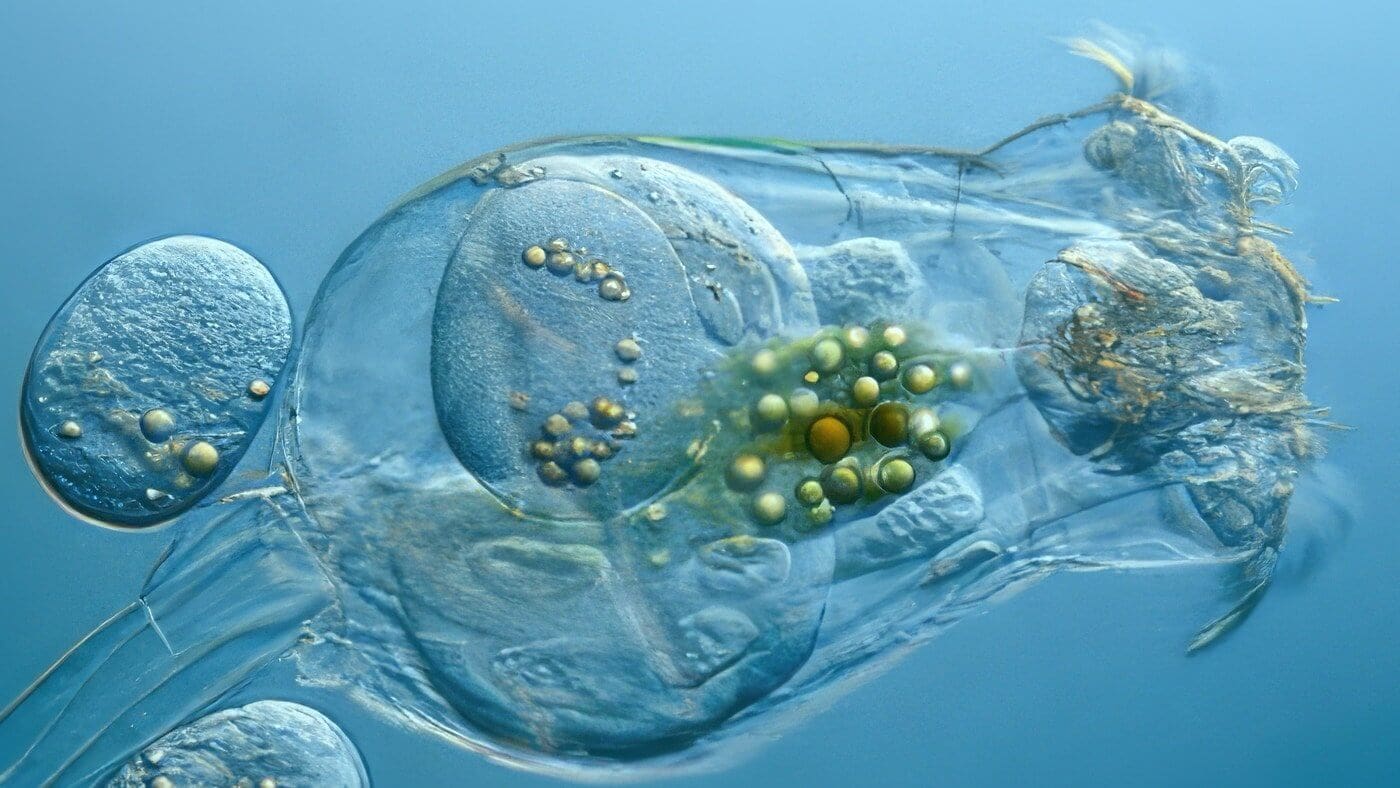
The challenge with marine fry nutrition comes down to size. At hatching, the mouths of most marine species clownfish, gobies, Banggai cardinals, dottybacks are simply too small for brine shrimp nauplii, which are the most commonly available live first-food. Rotifers, at 90–360 microns depending on strain, are the right size from day one. They're also soft-bodied and easy to digest, which matters enormously for animals whose digestive systems are still developing.
Beyond size, rotifers for fry food offer something that no dry or frozen alternative can replicate, they swim. The movement triggers the prey-capture instinct in newly hatched fry that static or slow-sinking foods simply don't activate. In the critical first days post-hatch, this feeding stimulus is the difference between fry that eat and fry that don't.
Live Rotifers

£5.99
Live Rotifers: Brachionus plicatilis You've watched your fish larvae appear healthy at hatching, only to fade and disappear within the first few days. The water is clean, the temperature is stable, and you've done everything the guides suggest. But they're… read more
The Nutritional Case for Enriched Rotifers
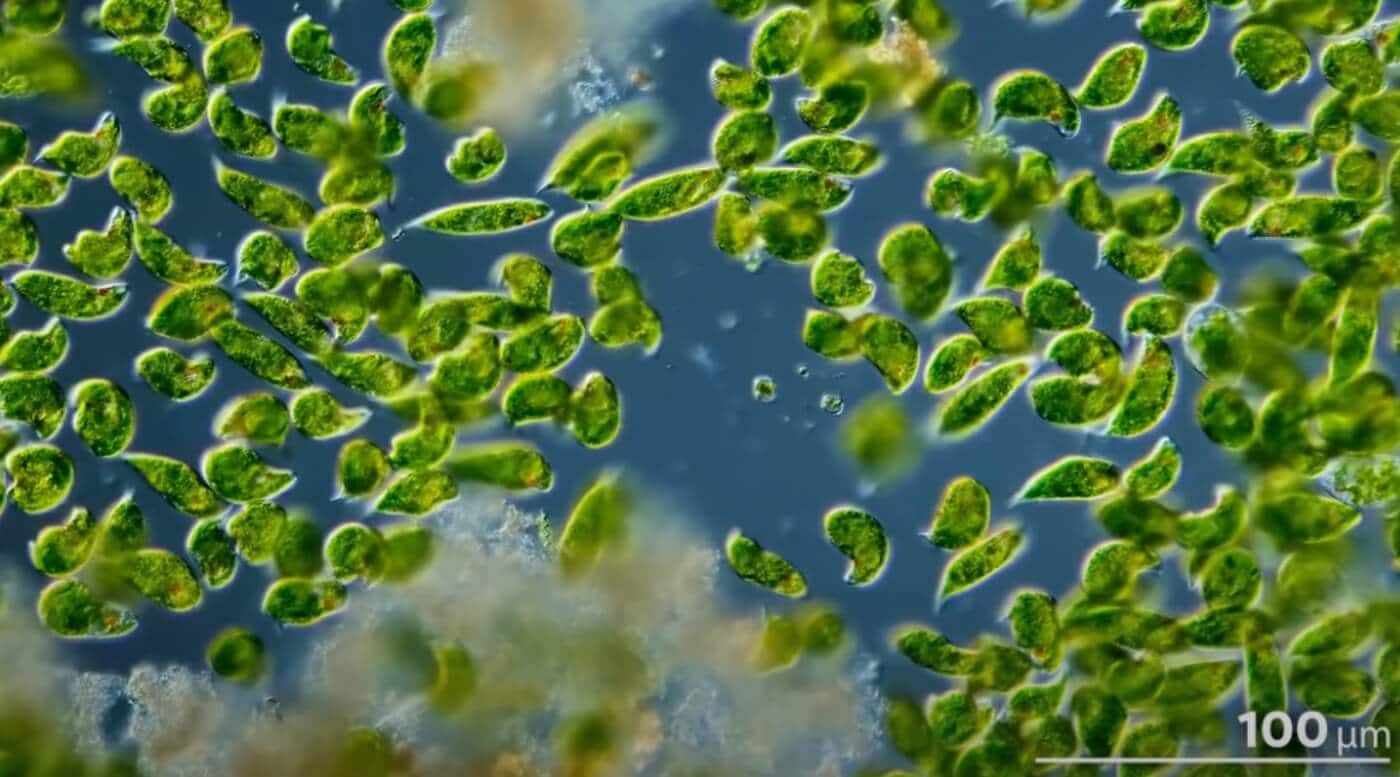
Rotifers, typically Brachionus plicatilis in marine aquaculture are filter feeders that eat phytoplankton and pass its nutritional content directly to whatever consumes them. This is known as the trophic transfer, and it's why the quality of what you feed your rotifers directly determines the quality of what your fry receive.
Plain rotifers fed on standard phytoplankton carry a reasonable nutritional profile, but enriching rotifers for fry food with a dedicated HUFA (highly unsaturated fatty acid) supplement 4–6 hours before feeding significantly elevates their value. The omega-3 fatty acids loaded during enrichment, EPA and DHA in particular are critical for fry neurological development, immune function, and pigmentation. Studies within the UK marine breeding community consistently show that enriched rotifers can double clownfish fry survival rates compared to unenriched alternatives. The enrichment step takes minutes and makes a substantial difference, it's worth building into your routine from the start.
Culturing Rotifers at Home
Running your own rotifer culture is more straightforward than most people expect, and for anyone breeding marine fish regularly, it removes the dependency on delivery timing that makes bought cultures unreliable at critical moments.
You need a 5–10 litre food-grade bucket or culture vessel, a small air pump with a fine airstone for gentle aeration (rotifers are sensitive to strong flow, gentle turbulence is the goal), RO/DI water mixed to a salinity of 1.020, and a starter culture of live rotifers. Temperature should sit at 22–25°C, a small aquarium heater in the culture vessel handles this easily in UK winters.
Feed daily with concentrated rotifer feed or live phytoplankton, clouding the water to a light green. A 50ml bottle of quality rotifer feed concentrate lasts several weeks at the doses required for a small culture. Under good conditions, rotifer populations double every 2–3 days, so a culture seeded on Monday can be ready to harvest by the weekend. Perform 20% water changes daily to prevent ammonia accumulation, this is the single most important maintenance habit for keeping a rotifer culture stable long-term.
When harvesting, siphon through a 50-micron sieve to collect rotifers while returning the culture water. Always leave a significant proportion of the population in the vessel ,never harvest more than 30–40% at a time so the culture can replenish before the next feeding is needed.
Feeding Rotifers to Your Fry
Timing the introduction of rotifers for fry food correctly is as important as having them available. Begin feeding 2–3 days post-hatch, once yolk sac reserves are depleted and fry become free-swimming. At this stage they are actively hunting and need food immediately available in the water column.
Dose at 5–10 rotifers per millilitre in the rearing vessel, enough to make the water slightly hazy without overloading it. In nano and pico reef setups where fry are being raised in or adjacent to the display tank, use a pipette for precision. Feed 2–3 times daily and test water parameters with each water change, ammonia should remain at zero throughout. Uneaten rotifers will eventually die and foul the water, so small frequent additions are preferable to large infrequent doses.
After 10–14 days, most fry species are large enough to begin transitioning onto baby brine shrimp nauplii. Continue offering rotifers alongside brine shrimp during this transition period rather than switching abruptly, fry that are familiar with live prey in the water column will take to brine shrimp more readily if rotifers are still present.
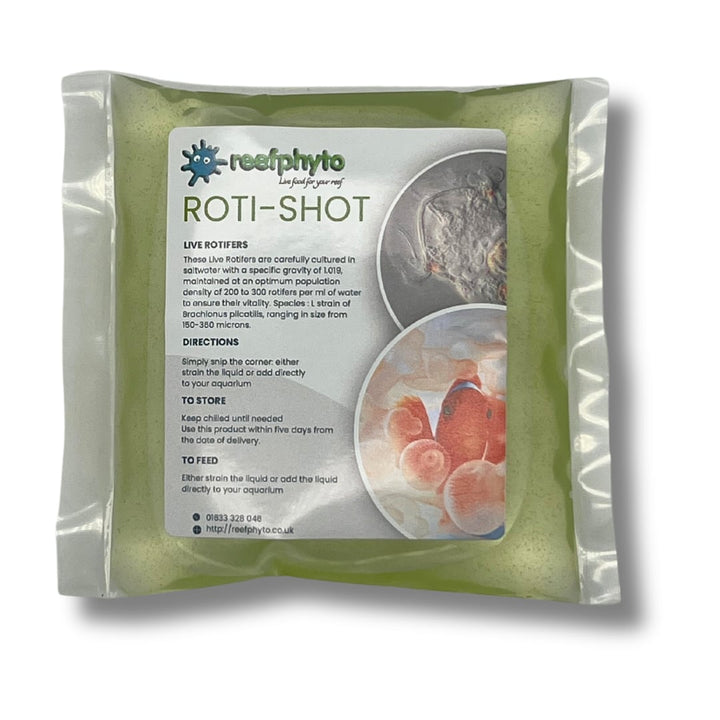
Roti-Shot - Live Rotifers
£3.10
Roti-Shot Live Rotifers UK: Brachionus plicatilis, Concentrated and Ready to Use You have a spawn happening and you need live rotifers today, not after you have set up a culture vessel, sourced a starter culture and waited for it to… read more
Troubleshooting Common Problems
Rotifer cultures are forgiving relative to copepod cultures, but they do have failure modes worth understanding before you depend on them for a breeding attempt.
The most common cause of culture crashes is overfeeding. It feels counterintuitive, but dosing too much phytoplankton causes bacterial blooms that foul the water and crash the population rapidly. Keep additions light, slightly green, not murky and maintain your daily water changes without exception. If the culture water smells strongly or turns brown, perform an emergency partial water change and reduce feeding immediately.
UK winter temperatures can slow rotifer reproduction significantly if the culture vessel is in an unheated space. A small heater set to 22°C resolves this. Contamination from dirty equipment is another common cause of failure, rinse all gear thoroughly after use and sterilise between cultures if you're restarting from scratch.
If fry aren't responding to rotifers, check the size of the strain you're using. Larger B. plicatilis strains (200+ microns) can be ignored by very small fry, source a smaller L-strain or SS-strain for species with particularly small mouths.
What Happens Without the Right First Food
It's worth being direct about the stakes here. Marine fry that don't receive adequate live food in the first 3–5 days post-hatch will not recover. They enter a starvation window that is irreversible, externally they may still appear active, but internal organ development has stalled and mortality follows within days. No amount of high-quality food introduced later corrects the nutritional deficit of those first days.
This is the reason experienced marine breeders prepare their rotifer cultures weeks in advance of an expected spawn, not days. Having a running, productive culture before you need it is the single most important thing you can do to protect a breeding attempt.
A Note from Darren
Rotifers changed what was possible for UK marine breeders, and they remain one of the live foods I'm most pleased to culture and supply. If you're preparing for a first breeding attempt, or you've lost fry before and want to understand what went wrong, I'm always happy to talk through your specific setup.
Our Live Rotifers are cultured on live phytoplankton, not yeast which means they arrive with the nutritional profile intact. Our Rotifer Culture Kit gives you everything you need to get a home culture running from day one. And if you just need a ready-to-use addition for an immediate feeding need, our Roti-Shot is a concentrated live culture that requires no preparation.
Any questions, call us on 01267 611533 or use the contact page. I read everything personally.