Quick Navigation
- How Corals Actually Feed
- Phytoplankton and Corals: The Indirect but Essential Relationship
- Zooplankton: The Direct Prey Corals Are Built to Hunt
- How Feeding Needs Differ Between Coral Types
- What Happens to Corals Without Adequate Plankton
- A Practical Plankton Feeding Strategy for UK Reef Tanks
- A Note from Darren
- FAQs
Do corals eat plankton? It's one of the questions I get most from reef keepers who are trying to understand what their coral actually needs and why their tank looks the way it does despite good water chemistry and quality lighting. The short answer is yes, emphatically. But the fuller answer is more interesting, and understanding it properly changes how you think about feeding your reef entirely.
Coral is not a plant, despite looking like one. It's an animal a colony of individual polyps, each capable of capturing and consuming prey from the surrounding water. Most corals also host photosynthetic algae within their tissue, which provides a significant portion of their energy through light. But that photosynthetic contribution, while important, is not the whole story. Corals that are only fed by light are not thriving, they're surviving. The difference is visible in their colour, their growth rate, and the quality of their tissue.
- Darren, Reefphyto
How Corals Actually Feed
Each coral polyp is a small predatory animal surrounded by tentacles armed with nematocysts, stinging cells that fire on contact with prey, immobilising it before the tentacles draw it toward the polyp's central mouth. In the wild, this happens continuously as ocean currents carry a dense, diverse plankton community past the reef surface. A single coral colony is making hundreds or thousands of individual prey captures every hour in a healthy reef environment.
In a home aquarium, that constant supply of passing plankton doesn't exist unless you create it. Water circulation keeps particles suspended, but without active plankton additions, most reef tanks are nutritionally sparse environments compared to the wild habitats these animals evolved in. This is why do corals eat plankton is such an important question for reef keepers to understand because the answer directly determines what your feeding strategy should look like.
Coral feeding is divided between two modes: autotrophic (energy from photosynthesis via zooxanthellae) and heterotrophic (energy from actively capturing and consuming food). Most corals rely on both in different proportions depending on species, depth, and light availability. In a reef tank, good lighting covers the autotrophic side but heterotrophic feeding is the part most reef keepers underinvest in.
Phytoplankton and Corals: The Indirect but Essential Relationship
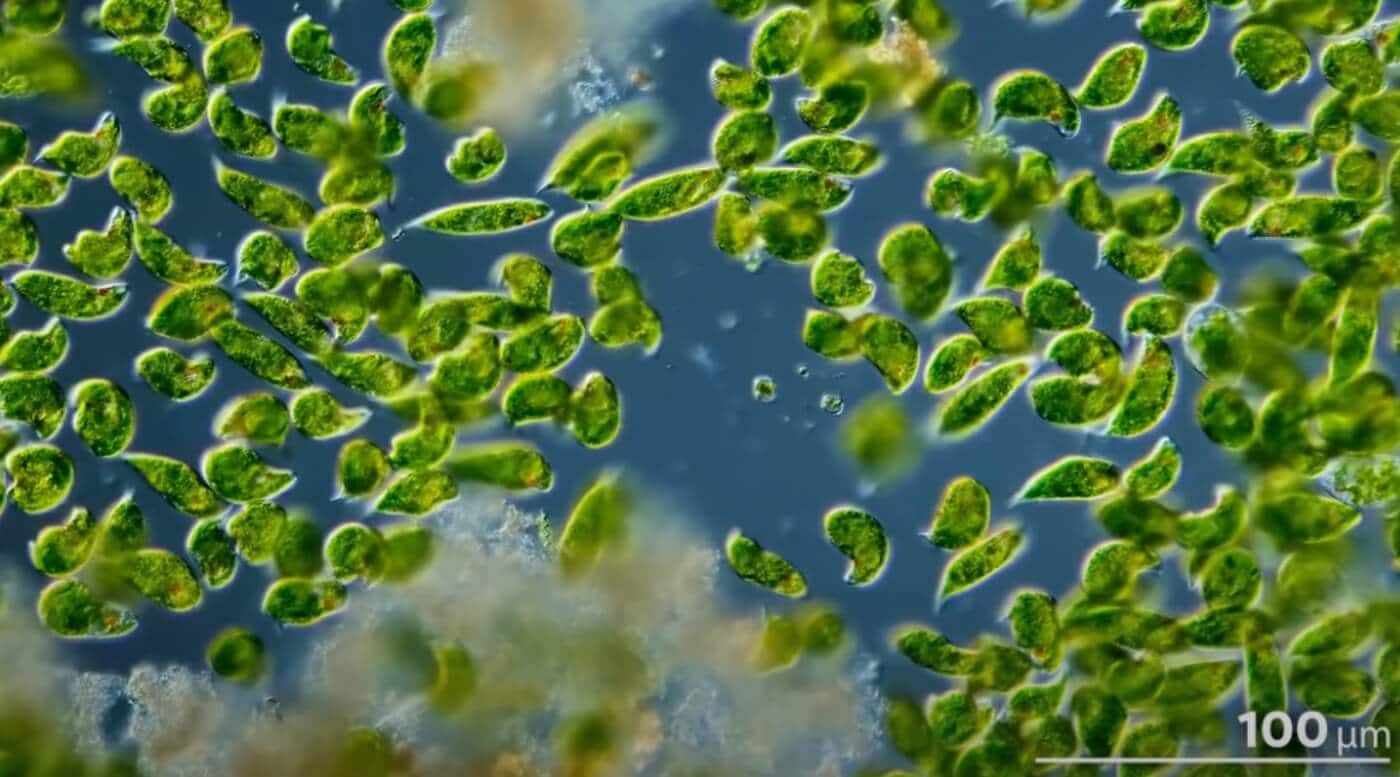
Phytoplankton microscopic single-celled algae sits at the base of the entire marine food chain. In terms of direct consumption, most stony corals don't capture and ingest individual phytoplankton cells in large quantities. The cells are often too small and too slow-moving to trigger the feeding response of larger polyps. But this doesn't mean phytoplankton is unimportant for coral health — it means its contribution works differently.
Phytoplankton is the primary food source for zooplankton, the copepods, rotifers, and other small animals that corals do actively hunt and consume. A tank with a healthy phytoplankton supply supports a productive zooplankton population, which in turn provides corals with the prey they need. Dose phytoplankton, and you're feeding the food chain that feeds your coral, not just adding a supplement.
There are also coral species particularly soft corals, fan corals, and filter-feeding invertebrates that do absorb phytoplankton more directly through mucus trapping and filter feeding. For these species, regular phytoplankton additions make a direct and visible difference to polyp extension and tissue condition. And across all coral types, phytoplankton supports the water column microbiology that underpins a healthy reef system.
Zooplankton Multipack
£23.72
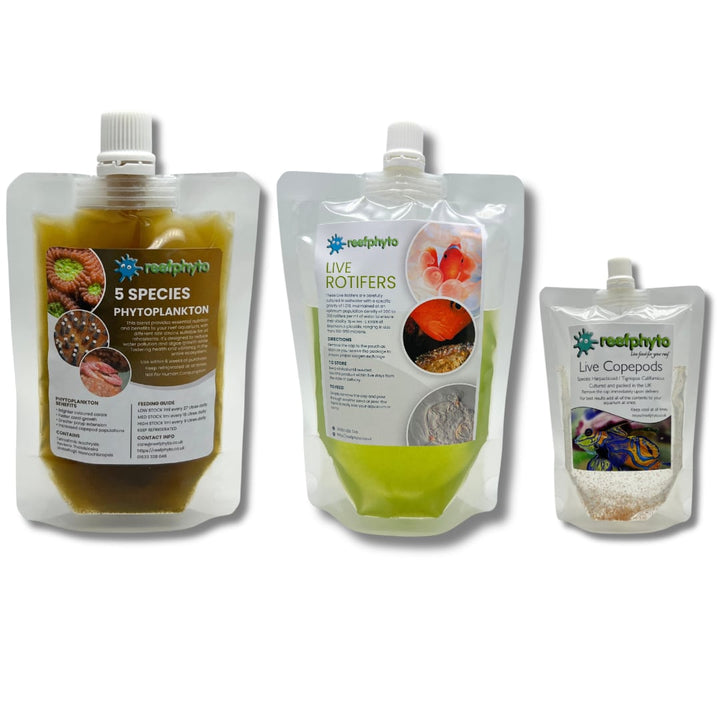
Zooplankton Multipack: Live Copepods, Rotifers and Phytoplankton You have been buying live food one pouch at a time. Copepods this week, rotifers the next, phytoplankton when you remember. But your reef does not feed in rotation. Every level of the… read more
Zooplankton: The Direct Prey Corals Are Built to Hunt
Zooplankton, copepods, rotifers, amphipods, larval invertebrates is what corals evolved to capture. These are the organisms that trigger the nematocyst response, get drawn into the polyp mouth, and deliver the protein, lipids, and fatty acids that drive coral growth, calcification, and the vivid colouration that distinguishes a well-fed coral from a merely surviving one.
Copepods are particularly valuable. They're nutrient-dense rich in EPA, DHA, and astaxanthin and their movement in the water column triggers active feeding responses even in species that might not respond to static food particles. A tank with a healthy, established copepod population is one where corals are being continuously exposed to live prey as pods move through the rockwork and water column at all hours. This is the natural feeding environment corals evolved in, and it's what a properly seeded refugium can replicate.
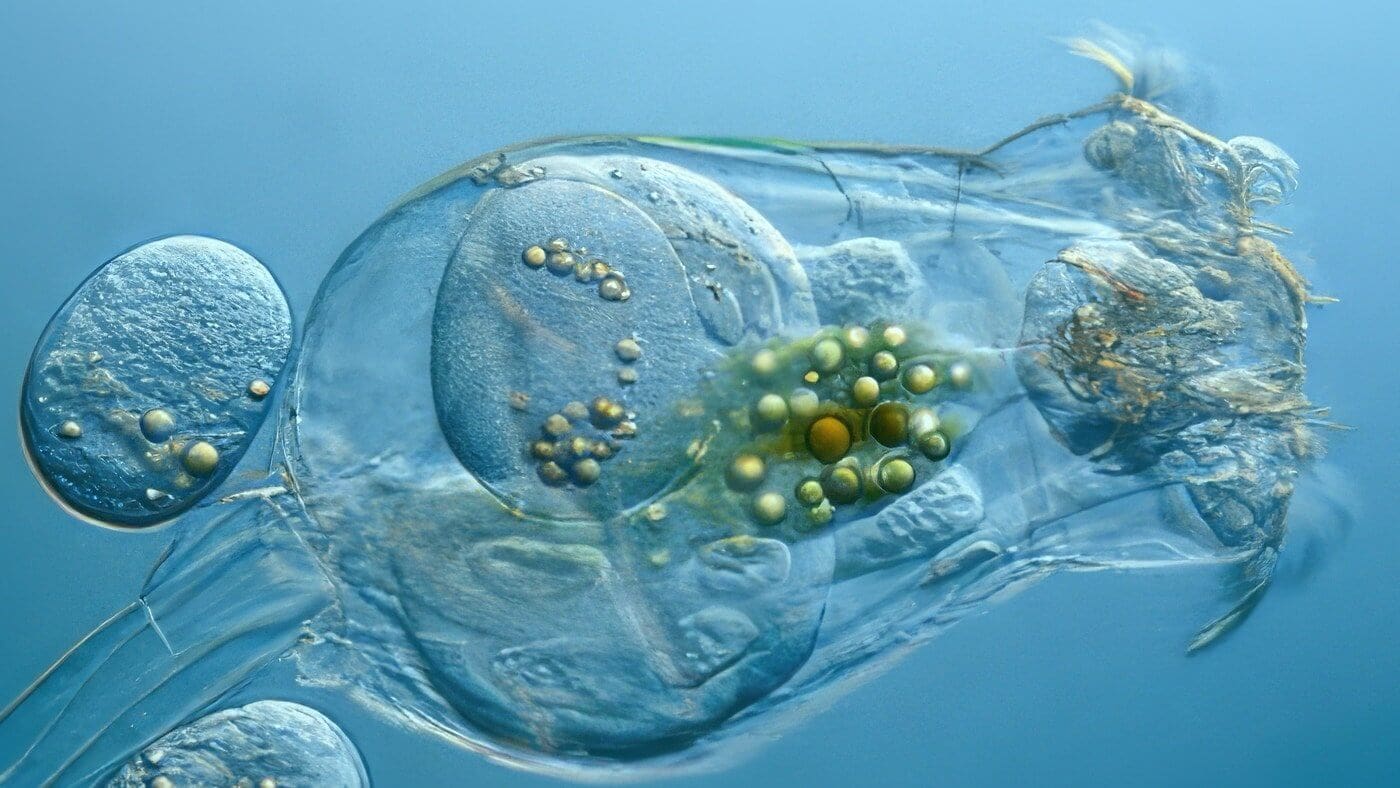
Rotifers, at 50–200 microns are smaller than most copepods and particularly useful for corals with smaller polyps, including many SPS species and soft corals, where larger prey particles may not be captured efficiently. They're also the first-feed prey for any coral larvae in the system, making them valuable in any tank where natural reproduction is occurring.
How Feeding Needs Differ Between Coral Types
Not all corals feed in the same way or at the same rate, and understanding these differences lets you target your feeding more effectively rather than broadcasting food that won't reach the animals that need it.
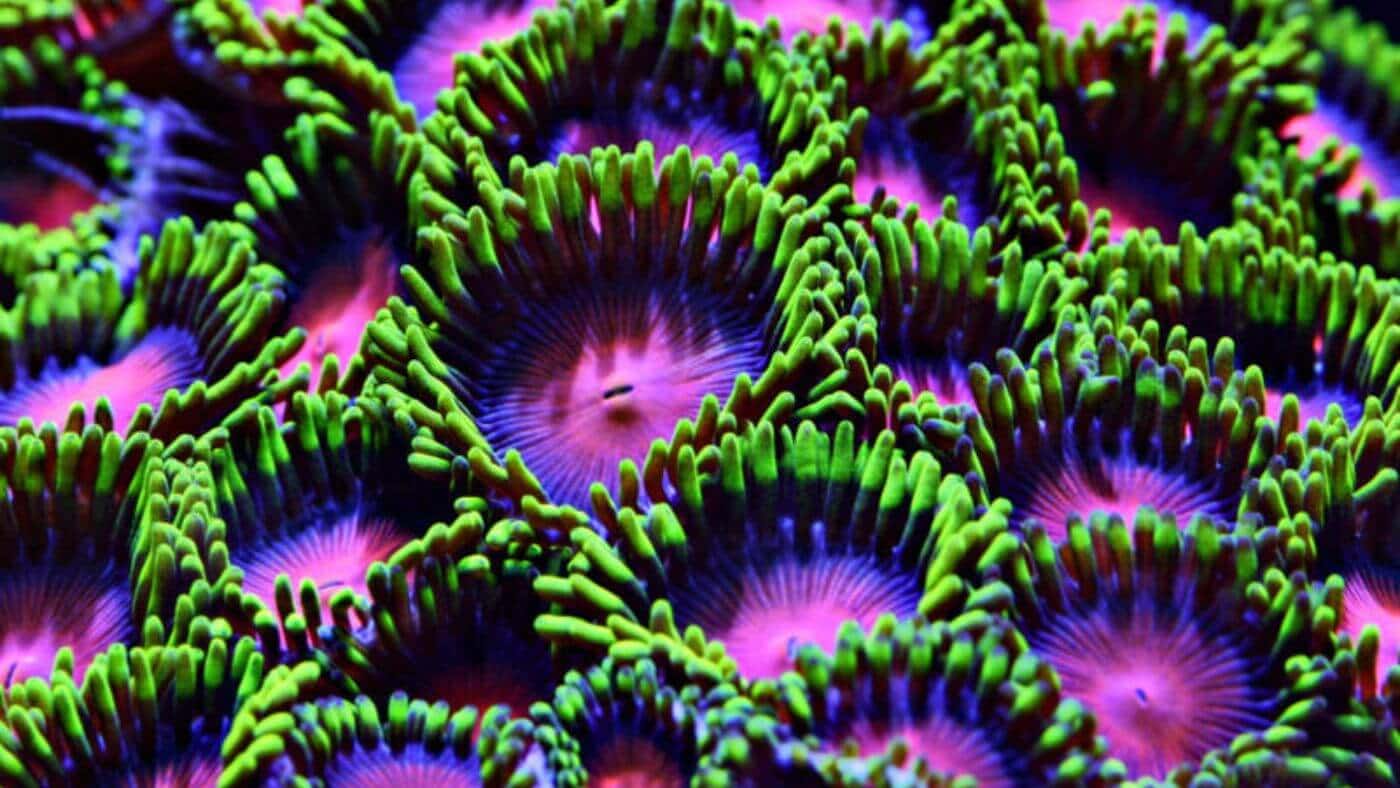
Soft corals such as leathers, zoanthids, mushrooms, star polyps are primarily photosynthetic and tend to be less aggressive active feeders than stony corals. They benefit from phytoplankton additions and the general improvement in zooplankton density that comes from a well-seeded refugium, but they typically don't require targeted direct feeding to thrive. Two to three phytoplankton additions per week makes a measurable difference to their tissue condition and growth rate.
LPS corals such as hammers, torches, frogspawn, brain corals have large, expressive polyps with well-developed tentacle feeding apparatus and are among the most responsive corals to direct zooplankton feeding. Target feeding two to three times weekly during evening hours when polyps are most extended, using copepods, rotifers, or appropriately sized frozen foods delivered by pipette, produces noticeably faster growth and better colouration compared to LPS corals that rely on ambient feeding alone. Reduce flow for 10–15 minutes after feeding to give polyps time to capture and ingest prey before it's swept away.
SPS corals such as Acropora, Montipora, Stylophora have smaller polyps and feed primarily on dissolved organic matter, fine particulates, and small zooplankton rather than larger prey. They respond well to broadcast additions of dissolved amino acids and regular phytoplankton and rotifer additions rather than target feeding. The overall planktonic richness of the water column matters more for SPS than direct feeding precision.
What Happens to Corals Without Adequate Plankton
The consequences of insufficient plankton feeding aren't dramatic or immediate which is exactly why so many reef tanks run below their potential for months without a clear cause being identified. A coral that isn't being fed adequately doesn't bleach suddenly. It pales gradually. Polyp extension becomes slightly less full. Growth slows or stalls. Tissue begins to look thinner over the skeleton. The tank still looks like a reef tank — just a tired one.
Ultra-low-nutrient systems where nitrate and phosphate are maintained at near-zero can actually produce similar symptoms, because the zooxanthellae within coral tissue need trace nutrients to photosynthesise efficiently. A tank kept too clean, with no plankton supplementation and near-zero nutrients, creates paling corals that are often mistaken for a lighting problem or a parameter imbalance when the real issue is starvation.
The tank that answers the question do corals eat plankton with a proper feeding strategy regular phytoplankton additions, a seeded copepod refugium, targeted zooplankton feeding for LPS — is consistently the tank that looks most alive and most vivid, regardless of how its parameters compare on paper.
A Practical Plankton Feeding Strategy for UK Reef Tanks
The most effective approach combines live phytoplankton, live copepods, and live rotifers as the foundation, with frozen or prepared foods used as targeted supplements for LPS and for occasions when live food isn't available. Small, frequent additions are consistently better than large infrequent doses they maintain a more constant particle density in the water column, produce less uneaten waste, and more closely replicate the continuous feeding environment of a natural reef.
Dosing live phytoplankton into the sump or refugium two to three times weekly with the skimmer turned off for 30–60 minutes after addition gives corals and zooplankton maximum exposure before the food is exported. Adding live copepods to a refugium weekly or fortnightly seeds and maintains a self-sustaining population that continuously delivers prey to the display tank without any further intervention. Target feeding LPS corals with rotifers or copepods two to three times weekly during evening feeding periods completes a regime that covers all coral types in the system.
This isn't a complicated or expensive addition to an existing reef keeping routine. It's a small number of consistent habits that produce a compounding improvement in coral health that becomes clearly visible over months.
A Note from Darren
Do corals eat plankton? Yes and feeding them properly is one of the highest-return changes most reef keepers can make to an established system. I've been culturing live phytoplankton, copepods, and rotifers in Wales for over 16 years, and the feedback I hear most consistently from customers who switch to a live food regimen is that the difference is visible within weeks — not months.
If you want to know where to start for your specific setup, call us on 01267 611533 or use the contact page. I'm happy to talk through what your coral needs.