
Quick Navigation
How long do live rotifers live is one of those questions that sounds simple but has a genuinely useful answer for anyone keeping them in a reef tank or running a culture. The short answer is that individual rotifers live between three and fourteen days depending on temperature, food availability, and water conditions. The more useful answer is that for reef keeping purposes, what matters less is how long do live rotifers live as individuals, and more how quickly your culture or tank population reproduces and replenishes itself.
Understanding the rotifer lifecycle helps you get more from your live rotifer additions, time your feedings more effectively, and recognise when a culture is healthy versus when it's declining.
Darren, Reefphyto
The Lifespan of Live Rotifers
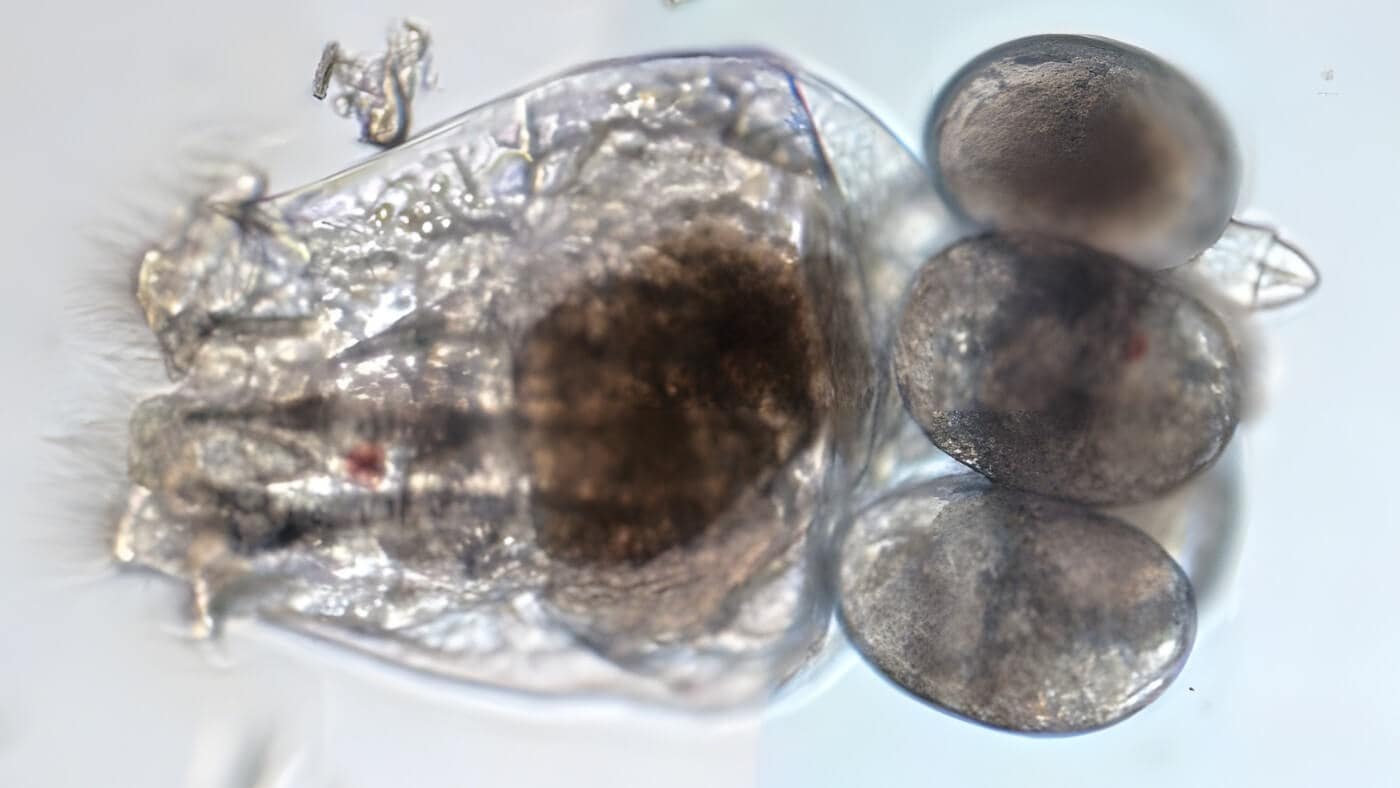
Brachionus plicatilis, the marine rotifer species used in reef aquaculture, typically lives between five and ten days under optimal conditions in a saltwater system. At cooler temperatures around 18 to 20 degrees Celsius, lifespan extends toward the upper end of that range. At warmer temperatures closer to 26 to 28 degrees, metabolism accelerates and individual lifespan shortens, though reproduction rate increases simultaneously.
How long do live rotifers live in practice depends heavily on the quality of their environment. Individual lifespan is only part of the picture. Rotifers reproduce asexually under good conditions, with females producing eggs every few hours that develop into new adults within 24 hours. In a productive culture at optimal temperature and with consistent feeding, a rotifer population can double every 24 to 48 hours. This means that even though individual rotifers are short-lived, a well-maintained population maintains itself continuously without numbers declining.
When a culture crashes, it's almost never because the rotifers have aged out. It's because reproduction has been interrupted by starvation, temperature stress, or deteriorating water quality. Understanding this distinction helps you focus your culture management on the conditions that support reproduction rather than simply trying to keep individual rotifers alive longer.
Live Rotifers

£5.99
Live Rotifers: Brachionus plicatilis You've watched your fish larvae appear healthy at hatching, only to fade and disappear within the first few days. The water is clean, the temperature is stable, and you've done everything the guides suggest. But they're… read more
What Affects How Long Live Rotifers Live
Temperature is the primary variable. Rotifers tolerate a range of 15 to 30 degrees Celsius but perform best between 22 and 26 degrees, which conveniently aligns with normal reef tank parameters. Within that range, temperature changes don't dramatically affect individual lifespan, but sudden swings of more than 2 to 3 degrees can trigger stress responses that shorten it and reduce reproductive output.
Food quality and availability matter significantly. Rotifers are filter feeders, drawing food particles into their mouths using cilia. Their natural diet is phytoplankton and bacteria. A rotifer fed on live phytoplankton develops a far richer nutritional profile than one fed on yeast or dried feeds, because it accumulates the fatty acids, carotenoids, and lipids from its food into its own tissue. This is what gut loading means in a rotifer context, and it's the reason rotifers cultured and fed on live phytoplankton deliver meaningfully better nutrition to the fish larvae, corals, and filter feeders consuming them than rotifers from a yeast-fed culture. It also directly influences how long live rotifers live in your culture vessel, since a well-fed rotifer is a longer-lived and more reproductively active one.
Salinity affects lifespan and reproduction. The L-strain Brachionus plicatilis we culture at Reefphyto tolerates a salinity range of 15 to 40 ppt, but performs best at 25 to 35 ppt. Acclimating rotifers from a lower-salinity culture environment to full reef salinity gradually over 30 minutes before adding them to the display reduces osmotic stress and improves survival time in the tank.
Rotifers in the Reef Tank: What Happens After You Add Them
How long do live rotifers live once they're added to a reef display tank varies considerably depending on the tank's population of predators. In a tank with fish, corals actively feeding, and copepods, rotifers are typically consumed within a few hours. This is entirely the intended outcome. The goal of a live rotifer addition to a reef tank is not for the rotifers to establish a self-sustaining population in the display, but to deliver a dense, live, nutritious food pulse that's consumed by the tank's inhabitants before the rotifers would naturally expire.
In a refugium with lower predator pressure and a consistent phytoplankton food source, rotifers can persist and reproduce, building a population that continuously supplies small numbers into the display tank over time. This is a useful secondary benefit of a productive refugium alongside the copepod population, but it requires the right conditions: consistent phytoplankton dosing, adequate aeration to keep rotifers suspended, and low predation pressure in the refugium itself.
If you're adding rotifers to a tank and want them to survive long enough to be useful rather than dying on the substrate before anything eats them, add them during the evening when most reef fish are less active and coral polyps are most extended. Reduce flow briefly to allow the rotifers to distribute through the water column rather than being swept into filtration immediately.
Rotifer Feed Concentrate
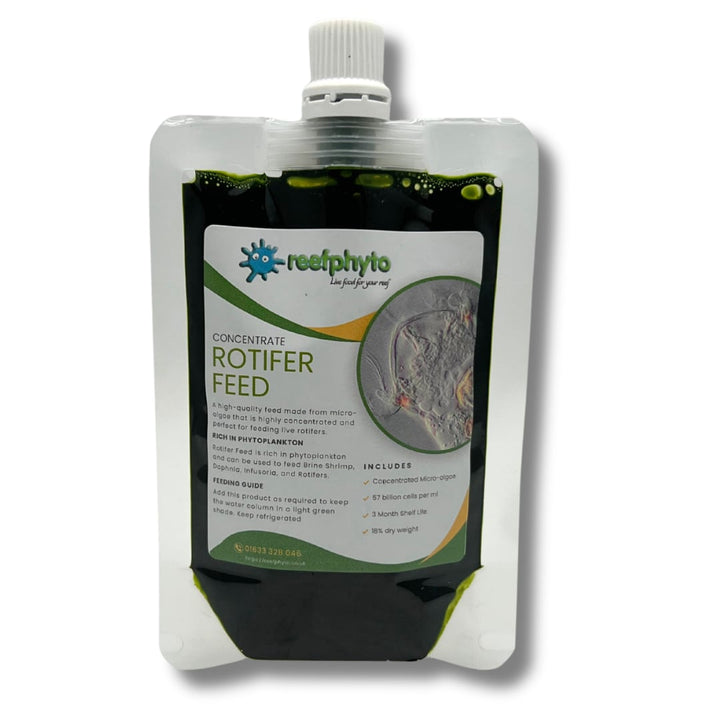
£9.99
Rotifer Feed Concentrate: Microalgae for Rotifer Cultures Running a rotifer culture for marine fish larvae, seahorses or filter feeders is one of the more demanding live food commitments in the reef hobby. When it works, when the culture is dense,… read more
Running a Rotifer Culture: Keeping Populations Healthy
For reef keepers who want a continuous supply of live rotifers rather than ordering regularly, running a home culture is straightforward once the basics are understood. The key variables are temperature, feeding, aeration, and harvest frequency, and managing these well keeps a culture productive for months. Understanding how long do live rotifers live under different conditions is what lets you interpret what you're seeing in a culture and respond to it correctly.
Temperature should be held between 22 and 26 degrees for maximum reproduction rate. Feed daily with live phytoplankton or a quality rotifer feed concentrate, aiming to keep the culture a pale green rather than clear, which indicates adequate food, or dark green, which indicates overfeeding and risks crashing water quality. Gentle continuous aeration keeps rotifers suspended and food distributed evenly through the culture vessel.
Harvest 20 to 30 percent of the culture volume every two to three days to prevent overcrowding. An overcrowded rotifer culture degrades rapidly as rotifers compete for food and oxygen, water quality deteriorates, and reproduction slows before the population crashes. Regular partial harvesting maintains the culture at a productive density and provides a steady supply of fresh rotifers for the tank.
Signs of a healthy culture are an even, active distribution of rotifers visible when you hold the container up to light, consistently pale green water, and a slight increase in population density between harvests. Signs of a declining culture are rotifers clumping at the water surface, a foul smell, water that stays clear despite feeding, or a visible population decline over 24 hours. Any of these indicate a water quality event and require a partial water change and reduced feeding immediately.
A Note from Darren
How long do live rotifers live is ultimately less important than whether the conditions in your culture or tank are supporting continuous reproduction. Rotifers are genuinely irreplaceable for certain reef keeping applications, particularly marine fish breeding, seahorse and pipefish keeping, and building the fine-particle zooplankton density that SPS corals benefit from. A live rotifer addition that gets consumed within hours is doing exactly what it should.
If you want advice on rotifer culture management, feeding schedules, or how to integrate rotifers into your feeding routine alongside copepods and phytoplankton, call us on 01267 611533 or use the contact page.