
Quick Navigation
One of the things that's genuinely shifted in UK reef keeping over the past few years is the availability of species that were either impossible to source or prohibitively expensive not long ago. Improved aquaculture programmes, better shipping protocols, and a growing network of specialist UK importers have brought a range of rare and emerging species within reach of serious hobbyists who would previously have seen them only in photographs. Some of these additions are striking enough to build an entire tank concept around. Others are quietly fascinating species whose behaviour and biology reward the keeper who understands what they're working with.
This guide covers the species I'm most interested in watching in the UK market, what they actually need to thrive, and honestly which ones are likely to disappoint if you go in without the right preparation.
- Darren, Reefphyto
Ruby Red Dragonet (Synchiropus sycorax)
The ruby red dragonet has gone from almost entirely unknown to one of the most talked-about UK reef fish in a relatively short period, and for good reason. Where the mandarin dragonet is defined by its extraordinary patterning, the ruby red makes its case through colour alone a deep, vivid red that holds its intensity under almost any lighting condition, which is rarer than it sounds in a hobby where photographs often lie.
What makes the ruby red genuinely interesting beyond its appearance is its biology. Like the mandarin, it's an obligate live-prey feeder it lacks the normal mucus coat that most fish use as a disease barrier and instead produces a toxic bitter mucus that predators learn quickly to avoid. It hunts copepods continuously throughout the day, consuming small numbers consistently rather than large amounts at mealtimes. This means a well-stocked refugium supplying a steady population of live copepods into the display tank is not optional for this species — it's the difference between a fish that thrives for years and one that slowly wastes over months.
If you're keeping or planning to keep a ruby red dragonet, establishing your copepod population before the fish arrives is the single most important preparation you can make. A mature refugium running Tigriopus californicus and seeded regularly gives you the continuous supply the fish needs without dependency on timed feeding additions.
Live Copepods

£11.99
Live Copepods UK: Tigriopus californicus, Cultured Fresh in Wales by Reefphyto Your reef looks right on paper. Clean water, stable parameters, good equipment. But something is still off. Your fish are pale, your mandarin is wasting, your corals are feeding… read more
Purple Masked Angelfish (Genicanthus personatus)
The purple masked angelfish has been one of the most sought-after and least accessible species in marine keeping for years, a deepwater angelfish from the Hawaiian archipelago with a distribution so limited and collection so difficult that specimens were almost exclusively available to public aquariums and the most well-funded private collectors. Aquaculture efforts over the past few years have changed this, and captive-bred specimens are beginning to appear in the UK trade at prices that are still significant but no longer extraordinary.
Unlike most angelfish, Genicanthus personatus is considered reef-safe, a haremic species where males display the striking purple facial mask while females carry a different, subtler pattern. They're pelagic feeders in the wild, swimming mid-water and consuming zooplankton rather than picking at coral tissue. In captivity this translates well: they accept quality frozen and prepared foods relatively readily compared to other angelfish, and their reef-safe classification holds reliably in most systems. They do require cooler, highly oxygenated water targeting the lower end of the 24–27°C range and maintaining excellent skimming and surface agitation serves this species well.
Goldflake Maroon Clownfish (Premnas biaculeatus)
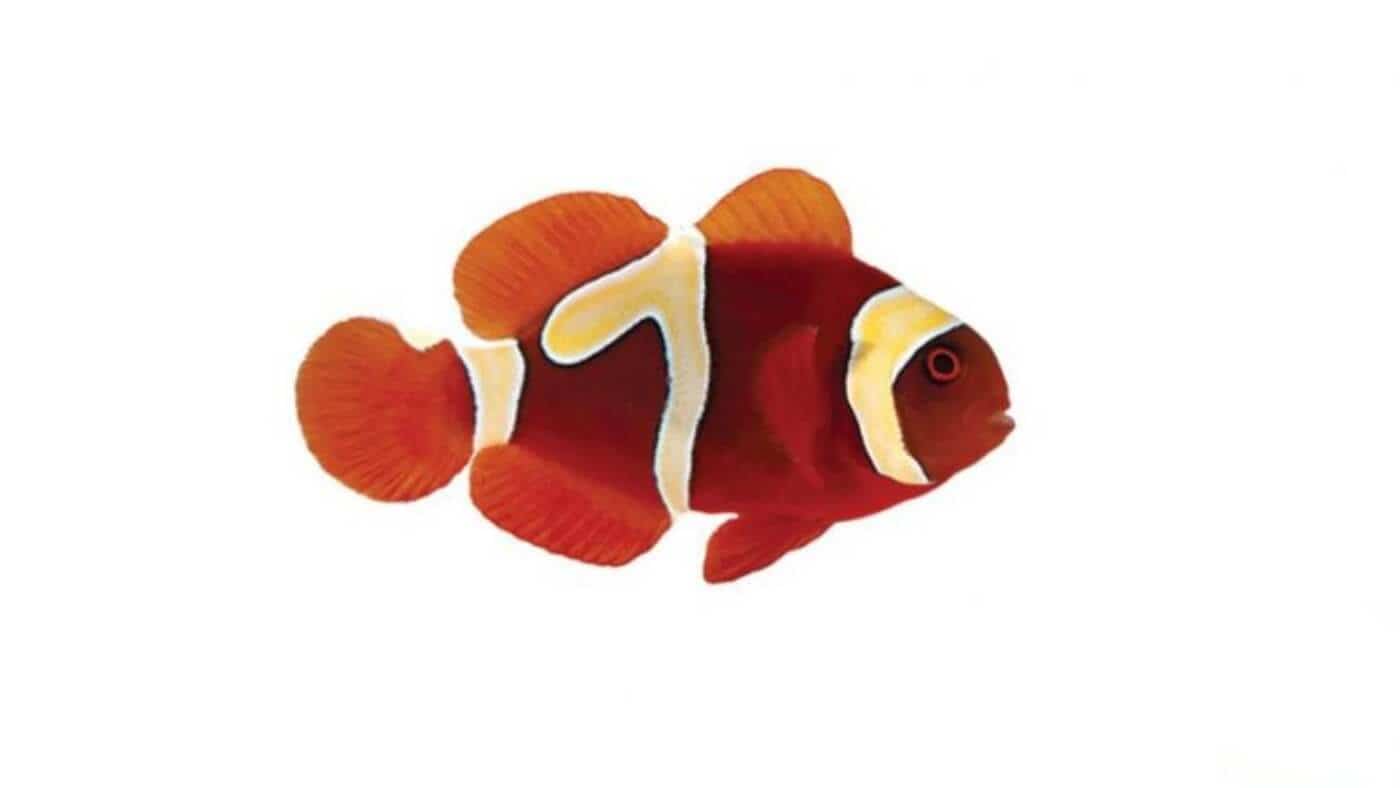
Selective breeding programmes have produced a remarkable range of clownfish variants over the past decade, but the goldflake maroon stands out even in that context. The base maroon colouration of Premnas biaculeatus is already striking deep burgundy to near-black depending on age and lighting and the goldflake variant adds irregular gold patterning across the flanks that becomes more pronounced as the fish matures. Well-established captive breeding means UK availability is now fairly consistent, and the specimens reaching the trade are generally healthy and well-acclimated to aquarium conditions.
The care note worth emphasising for anyone considering this species is temperament. Maroon clownfish are significantly more aggressive than the ocellaris and percula clownfish that most keepers start with, and females which are larger become increasingly territorial as they mature. A single pair in a dedicated system, or a single specimen as the dominant fish in a larger community tank, works well. Multiple maroon clownfish in a small tank is a combination that rarely ends without intervention.
Harlequin Filefish (Oxymonacanthus longirostris)
The harlequin filefish is one of those species the hobby has attempted repeatedly and largely failed a spectacularly patterned fish whose wild diet consists almost exclusively of Acropora coral polyps, making it an extremely difficult captive feeding proposition. What's changed recently is the availability of captive-bred specimens that have been trained onto prepared foods from juvenile stage, and this changes the viability picture substantially.
Wild-caught harlequin filefish almost invariably decline in captivity from starvation once their coral-polyp prey source is removed. Captive-bred specimens eating prepared foods, copepods, and enriched live foods are a genuinely different proposition, still a fish that requires attentive feeding and a varied diet, but one that can thrive long-term in a well-managed system. If you're considering this species, sourcing captive-bred stock from a reputable supplier and confirming the fish is actively eating before purchase is non-negotiable.
Yasha Hase Goby (Stonogobiops yasha)
The yasha goby is becoming more consistently available in the UK trade and deserves attention beyond its appearance which is striking, with a white body carrying orange-red banding. What makes it particularly interesting as a display animal is its obligate symbiosis with pistol shrimp, most commonly Alpheus randalli. The goby and shrimp share a burrow, with the near-blind shrimp maintaining the structure and the goby providing predator warning through body vibrations. Watching the pair operate together is genuinely compelling in a way that a fish alone rarely achieves.
They do best in sandy substrates deep enough to allow burrow construction, with tankmates small and peaceful enough not to harass them. They're active feeders and accept a range of prepared and live foods including small copepods and rotifers readily. For keepers interested in natural behaviour display over colour impact, this is one of the most rewarding species currently accessible in the UK.
Live Rotifers

£5.99
Live Rotifers: Brachionus plicatilis You've watched your fish larvae appear healthy at hatching, only to fade and disappear within the first few days. The water is clean, the temperature is stable, and you've done everything the guides suggest. But they're… read more
Feeding Rare and Emerging Species: What Actually Matters
The pattern across most of the rare and emerging species gaining ground in the UK market is that their nutritional requirements are more demanding than the fish most keepers start with. Obligate live-prey feeders like dragonets are the extreme case, but even species considered adaptable, the purple masked angelfish, the harlequin filefish, the yasha goby perform measurably better when live food is part of their regular diet rather than an occasional supplement.
The reason is the same across all of them: these species evolved consuming live, moving prey in environments where food particle density and variety was constant rather than episodic. Live copepods provide the continuous prey availability that dragonets and gobies evolved to hunt throughout the day. Live rotifers add size variety for species with smaller mouths or more selective feeding behaviour. Live phytoplankton supports the overall system health that keeps all of these animals in the best possible condition.
If you're investing in rare or demanding species, the live food infrastructure, a running refugium, a reliable culture or supply source, a consistent dosing schedule is as important as any other aspect of the setup. It's also one of the most common gaps between a keeper whose rare fish thrive and one whose don't.
A Note from Darren
The increased availability of rare and emerging species in the UK is one of the most exciting developments in the hobby over the past few years, and the shift toward captive-bred stock for species that were previously wild-collect-only is genuinely good news for the fish, for wild populations, and for keepers whose chances of long-term success are significantly higher with aquaculture-sourced animals.
If you're planning a system around any of the species covered here and want advice on live food requirements and how to set up the right feeding infrastructure before your fish arrives, call us on 01267 611533 or use the contact page. Getting the nutrition right before the fish lands is always easier than correcting a decline after it starts.