
Quick Navigation
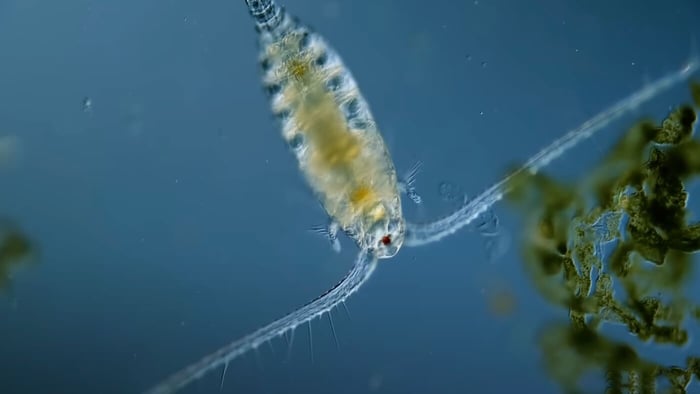
If you've been wondering how to successfully culture copepods at home, you're not alone and the answer is more straightforward than most people expect. There's a point in every reef keeper's journey where buying live copepods regularly starts to feel like it should have a simpler solution. Your mandarin needs a constant supply. Your refugium keeps running low. You've watched a carefully maintained population crash overnight and had to start again from scratch. The question is whether you can produce them yourself, reliably, without turning a corner of your home into a commercial aquaculture facility.
The good news is that learning how to successfully culture copepods is genuinely achievable for any reef keeper with a spare container and a consistent routine. I've been doing it professionally in Wales for over 16 years, and the fundamentals haven't changed, stable conditions, the right food source, and consistent maintenance. Get those three things right and a copepod culture will look after itself.
This guide walks through everything you need to set up and sustain a thriving copepod culture, whether your goal is supplementing a refugium, feeding a mandarin dragonet long-term, or reducing your dependence on bought cultures.
- Darren, Reefphyto
Why Culture Copepods at Home?
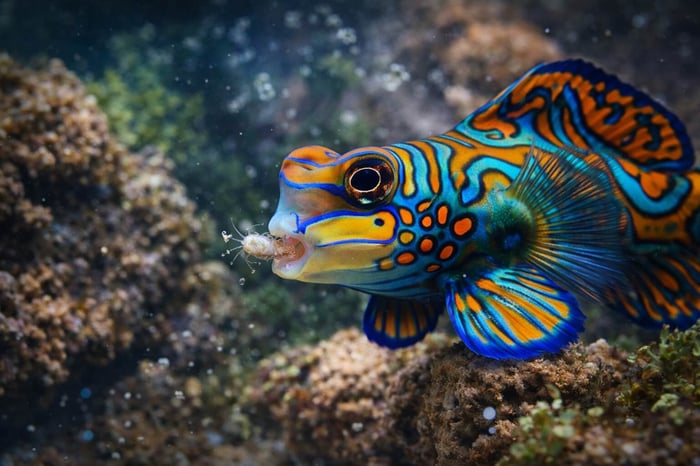
For most reef keepers, the motivation to learn how to successfully culture copepods comes down to one of three things: a fish that needs live prey consistently (mandarins, seahorses, pipefish), a refugium that's struggling to sustain itself under predation pressure, or the straightforward economics of buying live pods week after week.
A well-run home culture solves all three. It gives you an on-demand supply of live, nutritionally complete copepods, rich in EPA, DHA, and astaxanthin that you can dose into your system whenever it's needed. It removes the dependency on delivery timing. And over time, it costs considerably less per litre than purchasing equivalent live cultures regularly.
The other benefit that's easy to underestimate is flexibility. When you have a running culture, you can respond immediately to a population crash, top up a refugium after a difficult week, or bridge the gap while a new culture order is in transit. That kind of resilience matters when you're keeping animals that depend on live prey to survive.
Setting Up a Copepod Culture
Choosing a Culture Container
The first practical step in how to successfully culture copepods is choosing the right vessel. Copepods don't require sophisticated equipment, what they need is a stable, clean environment with consistent conditions. For most home cultures, a 20–40 litre plastic tub or a spare aquarium of similar volume is ideal. This gives you enough water volume to buffer minor parameter fluctuations without taking up excessive space. Larger containers produce more copepods but require proportionally more food and maintenance.
A dedicated refugium connected to your main system is an excellent option if space and plumbing allow the copepods benefit from the stability of a larger water volume, and your display tank benefits from a continuous supply of live prey. For standalone cultures, food-grade buckets or purpose-built culture vessels both work well. Whatever you use, ensure it's thoroughly cleaned and free from residue before adding saltwater.
Copepod Culture Kit

£34.99
Copepod Culture Kit: Grow Live Copepods at Home Buying live copepods every few weeks works, but it adds up. And every time there's a gap in delivery, your mandarin gets stressed, your corals stop extending, and you're back to square… read more
Water Parameters for Optimal Growth
Stability matters more than perfection when it comes to copepod cultures, they're more tolerant of slightly imperfect parameters than they are of sudden swings. That said, the target ranges that produce the most robust cultures are a salinity of 1.020–1.025, temperature of 22–26°C, pH of 7.8–8.4, ammonia and nitrite at zero (use aged, conditioned saltwater or a mature system), and nitrates below 10 ppm. A small amount of nutrient is fine and actually beneficial, copepods need something to eat.
Use reverse osmosis water mixed with quality reef salt as your base. Tap water introduces chlorine, chloramine, and dissolved solids that can harm cultures over time, even at low concentrations. If you're setting up a standalone culture vessel rather than a connected refugium, prepare your saltwater in advance and allow it to age for at least 24 hours before use.
Providing the Right Food Source
The most common reason home copepod cultures fail or plateau well below their potential — is inadequate feeding. Copepods are primarily microalgae grazers, and without a consistent, nutrient-dense food supply, populations stall, adults die off faster than juveniles recruit, and the culture slowly collapses.
Live phytoplankton is the gold standard food for copepod cultures. It most closely matches what Tigriopus californicus and similar harpacticoid species evolved to eat, it's immediately available and digestible, and its nutritional profile passes directly into the copepods meaning the phyto you dose into your culture shows up as EPA, DHA, and essential pigments in the copepods your fish ultimately consume. Dosing live phytoplankton daily is the single most impactful thing you can do for culture productivity.
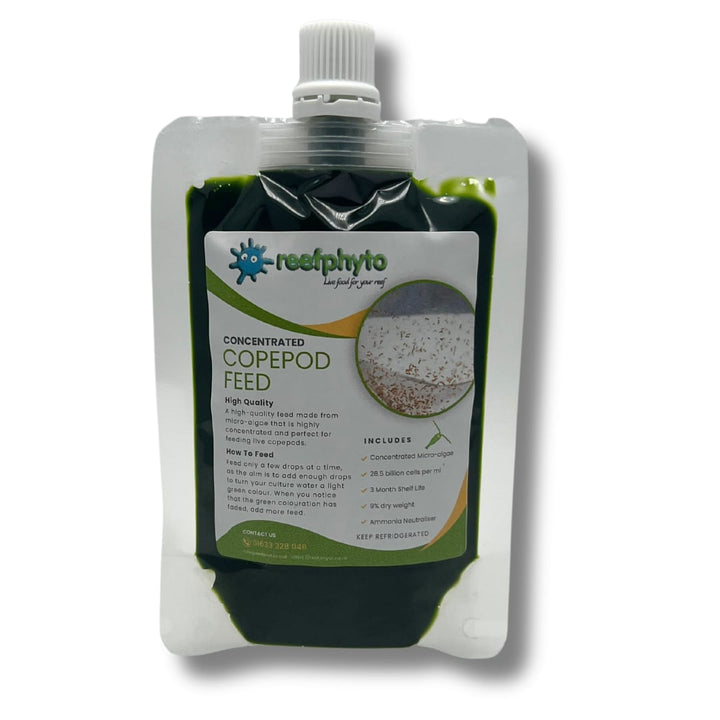
For dedicated culture feeding, we produce a purpose-blended copepod feed at Reefphyto that combines the microalgae species most beneficial to harpacticoid cultures. In a connected refugium, copepods will also graze on detritus and organic matter from the display which is one of the reasons a refugium culture is often more self-sustaining than a standalone vessel.
Copepod Feed
£5.99
Copepod Feed: Microalgae Blend for Copepod Cultures A copepod culture is only as good as what you feed it. You can start with a strong founding population of Tigriopus californicus, set up the right vessel, get the aeration dialled in… read more
Aeration and Water Movement
Copepods need oxygen and water movement, but they're sensitive to strong flow. The goal is gentle aeration that keeps food particles suspended and prevents stagnation without creating currents powerful enough to damage or exhaust the animals.
A simple airline tube with a small air stone, run at low pressure, is usually sufficient for a 20–40 litre culture vessel. This keeps the water gently circulating, prevents dead zones where waste accumulates, and maintains adequate oxygen levels. Avoid powerheads or circulation pumps in standalone cultures, the impeller can damage or kill copepods, particularly nauplii and juveniles. In a refugium connected to a sump, keep flow rates moderate and ensure copepods have access to low-flow refuge areas where they can shelter.
Harvesting Copepods
Sustainable harvesting is one of the aspects of how to successfully culture copepods that's most often done wrong, either too aggressively, which crashes the population, or too rarely, which allows the culture to become overcrowded and self-limiting.
The principle is straightforward: harvest no more than 30–50% of the visible population at any one time, and allow at least a week between significant harvests to let the remaining population recover and reproduce. Use a plankton sieve of 100–250 microns to separate copepods from culture water, this catches adults and larger nauplii while allowing the smallest juveniles to pass back into the culture and continue developing.
Harvested copepods can be dosed directly into your display tank or refugium, or held short-term in the refrigerator in a small volume of culture water. Refrigerated copepods slow their metabolism and remain viable for several days, though they should be brought back to tank temperature before introduction. For best results, use freshly harvested copepods rather than stored ones where possible.
Preventing Culture Crashes
A culture crash where a thriving population collapses rapidly, often over the course of a few days is the most disheartening thing that happens to keepers who are learning how to successfully culture copepods, and it happens to almost everyone at some point. Understanding the causes makes them largely preventable.
The most common culprit is food starvation. Copepod populations grow quickly when conditions are good, and it's easy to underestimate how much phytoplankton a productive culture requires. If dosing becomes inconsistent, skipped days, diluted cultures, reduced volumes, the population outstrips the food supply, adults begin dying off faster than they're replaced, and the culture enters a rapid decline. Daily feeding at consistent volumes is the most reliable protection against this.
Water quality failure is the second major cause. Ammonia and nitrite accumulation from uneaten food, dead individuals, or insufficient water changes can crash a culture quickly. Partial water changes of 20–30% weekly using aged, quality saltwater prevent this buildup. When doing water changes, use a fine mesh or sieve over the drain to recover any copepods in the removed water before discarding it.
Overharvesting is the third. The temptation when a culture is performing well is to take more than it can sustain. Always leave the majority of the population in place, and treat the breeding stock with the same respect you'd give a display tank inhabitant.
Running multiple small cultures simultaneously is the most robust long-term strategy. If one vessel crashes, the others continue and you can use a portion of a healthy culture to restart the crashed one immediately rather than waiting for a new starter culture to arrive.
Scaling Up Your Culture
Once a single culture is stable and producing reliably, scaling up is straightforward. Each additional vessel multiplies your output proportionally, and the maintenance routine per vessel is identical to what you're already doing.
At scale, automating phytoplankton dosing with a small peristaltic dosing pump removes the most time-sensitive part of the daily routine and improves consistency which typically improves culture yield. Gravity-fed drip systems work well for larger setups. If your output exceeds your own requirements, excess copepods can be sold or traded within the UK reef-keeping community demand consistently outpaces supply in most areas.
What Happens When a Culture Fails
It's worth being direct about this, because the stakes of a culture crash aren't just about losing the culture itself. If you're maintaining a mandarin dragonet, a pair of seahorses, or a pipefish that depends on live copepods as their primary food source, a culture collapse creates an immediate welfare problem. A fish that has been relying on a healthy refugium population can begin to show signs of starvation within days of that population crashing.
This is why the consistent habits, daily feeding, weekly water changes, sustainable harvesting matter beyond just culture productivity. They're the difference between a system that protects your fish and one that quietly lets them down.
If your culture does crash, restart immediately rather than waiting to see if it recovers on its own. A fresh starter culture dosed into a clean, well-prepared vessel will establish faster than a crashed culture repairs itself.
A Note from Darren
Knowing how to successfully culture copepods is one of those skills that feels more complex before you start than it does once you're doing it. The fundamentals are simple, the equipment is minimal, and the reward a consistent, high-quality live food supply that you control is genuinely transformative for the health of a reef tank.
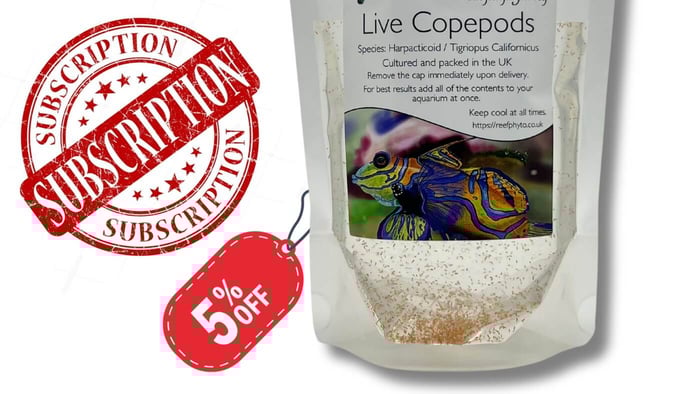
If you're starting from scratch and want to get it right first time, our Copepod Culture Kit includes a live starter culture, copepod feed, and everything you need to get a vessel running. If you already have a culture going but want to bolster your population with a fresh injection of live animals, our Live Copepods are cultured fresh here in Wales and dispatched live to your door.
Any questions about setup, troubleshooting a struggling culture, or working out what's right for your specific tank hit reply, use the contact page, or call us directly on 01267 611533. I'm always happy to talk through the detail.