
Quick Navigation
- The Reef Feeding Debate
- Myth 1: "Frozen Food Is Just as Good as Live"
- Myth 2: "Live Food Is Only for Mandarin Dragonets"
- Myth 3: "Live Food Is Too Expensive and Impractical"
- Myth 4: "My Fish Eat Pellets Fine, So They Don't Need Live Food"
- Myth 5: "Live Food Will Crash My Tank's Water Quality"
- When Live Food Is Genuinely Essential
- A Balanced Approach: How to Integrate Live Food Without Overcomplicating It
- A Note from Darren
- FAQs
It's one of the questions I get asked more than almost any other: do reef fish really need live food, or is frozen good enough? And I understand why it comes up so often. You've spent significant money on your tank, your equipment, your livestock and then you see live copepods, live phytoplankton, live rotifers on the menu, and you wonder whether it's genuinely necessary or whether it's a premium you don't actually need to pay.
I've been culturing and supplying live marine foods professionally in Wales for over 18 years. My honest answer is that it depends entirely on what you're keeping but the cases where live food makes no difference are far fewer than most people think, and the cases where it's genuinely essential are more common than the hobby tends to acknowledge.
This article works through the most persistent myths about reef feeding, what the evidence actually shows, and how to build a feeding strategy that gives your fish and corals the best possible chance of thriving.
- Darren, Reefphyto
The Reef Feeding Debate
Walk into any UK reef keeping forum and you'll find the same argument running in the background of almost every feeding thread. On one side, hobbyists who've kept healthy tanks for years on frozen mysis and quality pellets. On the other, experienced keepers who insist live food is irreplaceable. Both camps have valid points but neither fully answers the question of do reef fish really need live food, because the answer changes depending on the species.
The more useful frame isn't "live versus frozen" it's "do you want your reef inhabitants to survive, or do you want them to thrive?" Those are genuinely different standards, and the gap between them becomes visible over months, not days.
Myth 1: "Frozen Food Is Just as Good as Live"
This is the myth I hear most, and it's the one that causes the most quiet, gradual harm in reef tanks across the UK. Modern frozen foods are good, genuinely good but the freezing process degrades essential fatty acids (particularly omega-3s), destroys live enzymes that aid digestion, and reduces vitamin B and C content significantly. The nutritional gap between frozen and live is real, measurable, and cumulative over a fish's lifetime.
Fish fed exclusively on frozen food frequently show duller colouration over time, lower immune resilience, reduced spawning activity in breeding pairs, and less natural hunting behaviour which matters as a stress indicator, not just an aesthetic point. Flash-frozen products preserved at -80°C retain more nutrients than standard frozen, but they remain a step below live options in every meaningful nutritional category.
None of this means frozen food is bad. It means it works best as part of a system rather than the whole of one.
Myth 2: "Live Food Is Only for Mandarin Dragonets"
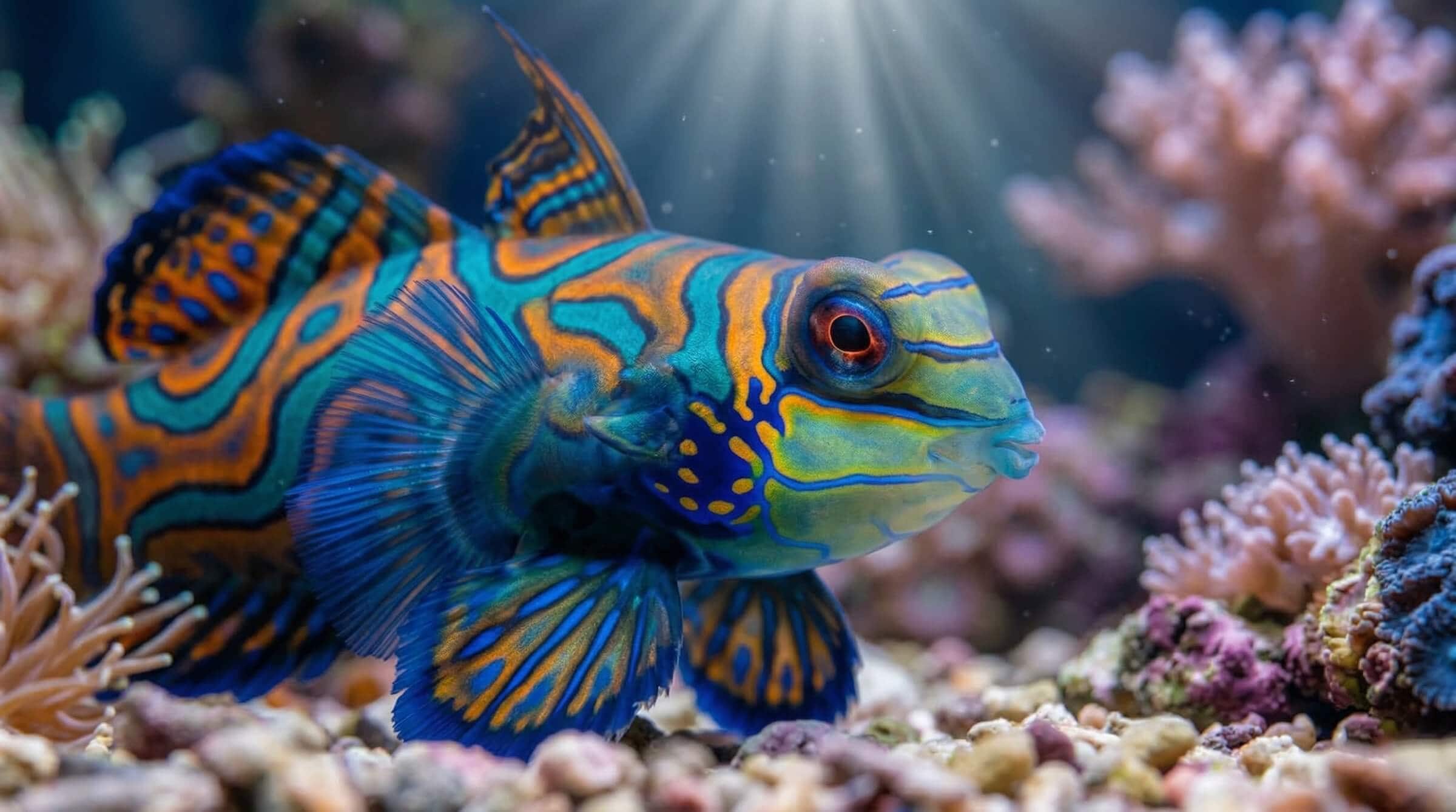
Mandarins are the species most associated with live food dependency, and rightly so but limiting the live food conversation to mandarins causes a lot of other species to be underfed in ways that aren't immediately obvious.
Seahorses and pipefish rely on movement-triggered feeding responses that frozen food rarely activates reliably. Anthias and fairy wrasses have metabolisms that demand nutritional density beyond what daily pellet feeding delivers. Scooter blennies and ruby red dragonets share the same obligate live-prey biology as mandarins. Juvenile marine fish of almost every species grow faster, develop better colouration, and show higher survival rates on live foods than on prepared alternatives alone.
Even species typically considered easy keepers like clownfish, tangs, smaller gobies show measurably improved health, breeding behaviour, and colouration when live copepods are part of their regular diet. The hunting behaviour alone provides mental stimulation that reduces chronic low-level stress in display tanks.
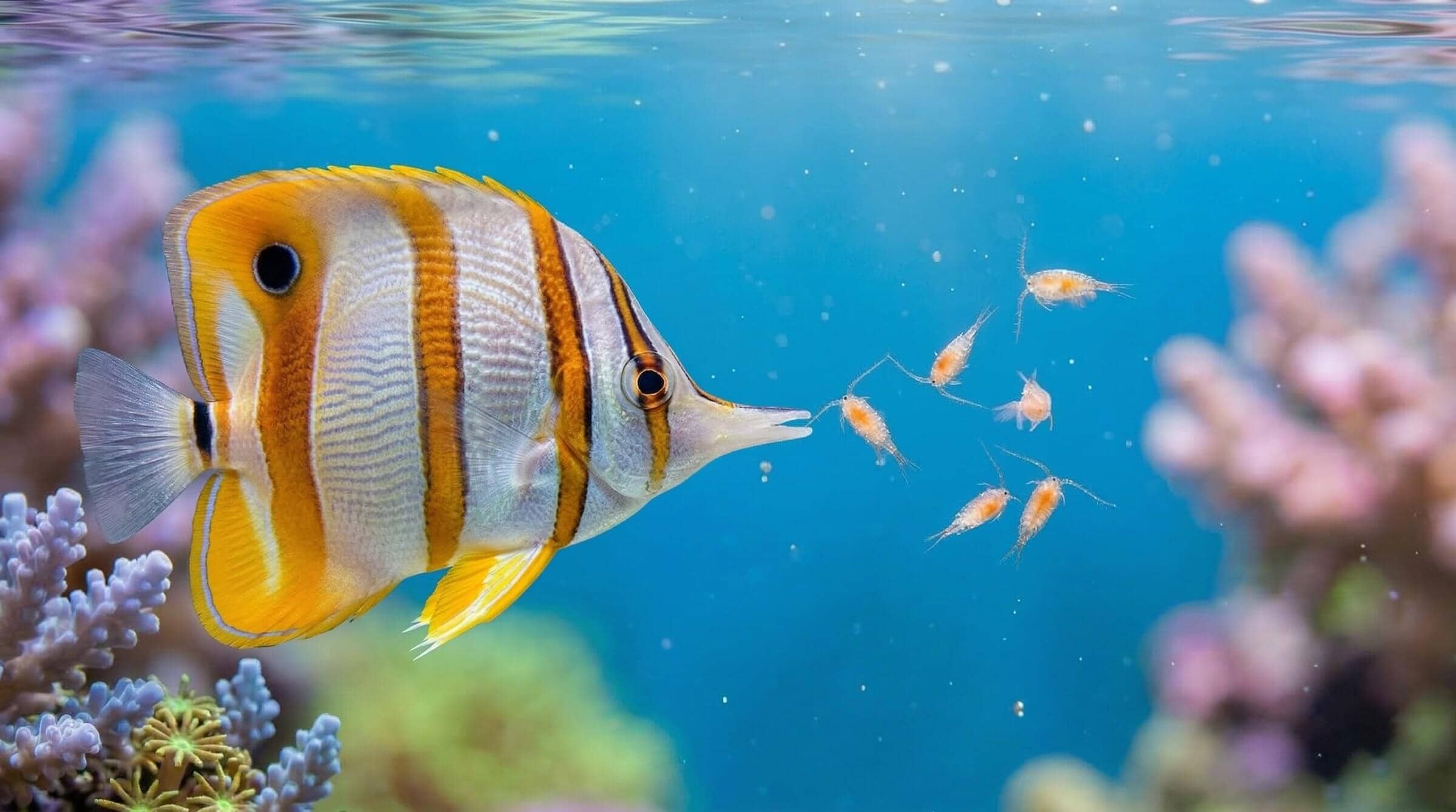
And corals are not passive recipients of whatever drifts past. LPS corals actively capture zooplankton with their tentacles. SPS corals absorb dissolved organics and particulate phytoplankton. Feeding your fish well without feeding your corals means your reef is only half fed.
Live Copepods
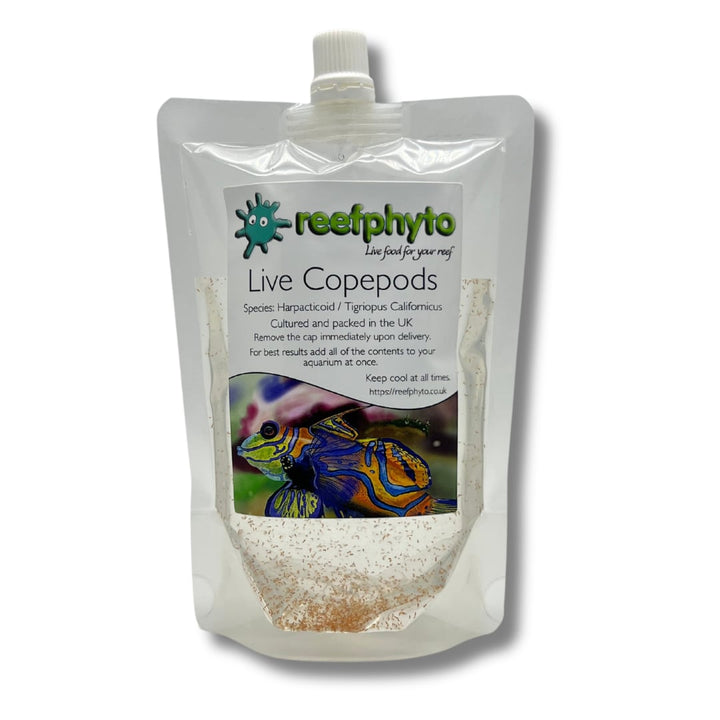
£11.99
Live Copepods UK: Tigriopus californicus, Cultured Fresh in Wales by Reefphyto Your reef looks right on paper. Clean water, stable parameters, good equipment. But something is still off. Your fish are pale, your mandarin is wasting, your corals are feeding… read more
Myth 3: "Live Food Is Too Expensive and Impractical"
This was a fair objection fifteen years ago. It's much less true now. The cost of establishing a refugium copepod population which then self-sustains and continuously seeds your display tank compares very favourably to the ongoing cost of quality frozen food, and delivers better nutrition in the process.
A 500ml live copepod culture dosed into a well-set-up refugium seeds a breeding population that costs you nothing to maintain beyond the phytoplankton you dose to feed it. Top up every four to six weeks to maintain genetic diversity and population density. For dedicated hobbyists with multiple tanks or expensive finicky species, a home culture kit produces live copepods at pennies per batch indefinitely.
| Food Type | Monthly Cost (UK) | Long-Term Value |
|---|---|---|
| Frozen food (daily feeding) | £20–40 | Ongoing expense, degrades in freezer over time |
| Dry pellets | £10–20 | Convenient but nutritionally limited |
| Live copepods (weekly top-up) | £15–25 | Establishes self-sustaining breeding population |
| DIY copepod culture kit | £45 one-time | Produces copepods for years from a single investment |
Copepod Culture Kit

£34.99
Copepod Culture Kit: Grow Live Copepods at Home Buying live copepods every few weeks works, but it adds up. And every time there's a gap in delivery, your mandarin gets stressed, your corals stop extending, and you're back to square… read more
Myth 4: "My Fish Eat Pellets Fine, So They Don't Need Live Food"
Acceptance isn't the same as optimal nutrition. Many reef fish will eat pellets when hungry but eating under hunger pressure and eating because food triggers their natural feeding response are very different states. A fish eating pellets out of necessity is doing the equivalent of surviving on a nutritionally adequate but monotonous diet. It will persist, but it won't reach its full colour, size, or behavioural potential.
What pellet-fed fish are missing is significant. Live copepods are gut-loaded with whatever phytoplankton they've consumed essentially delivering concentrated plant nutrition wrapped in animal protein. They provide digestive enzymes that aid nutrient absorption. They move, which activates the hunting behaviour that fish evolved over millions of years and which, when suppressed, creates measurable chronic stress. And for species like seahorses and pipefish, food that doesn't move isn't recognised as food at all.
So when people ask do reef fish really need live food and point to their pellet-fed fish as evidence it isn't necessary, they're right that those fish are surviving. They're measuring the wrong thing.
Myth 5: "Live Food Will Crash My Tank's Water Quality"
This concern comes from a reasonable place, overfeeding any food source damages water quality but it misunderstands how live food behaves in a reef system compared to frozen. Frozen food that isn't consumed immediately begins decomposing and producing ammonia within minutes. Live copepods and rotifers that aren't immediately eaten continue to live in your tank, grazing on microalgae and detritus until they are eaten. They don't foul the water sitting unused.
A well-stocked copepod population in a refugium actively contributes to water quality by grazing on the base of the algae food web and processing organic waste. The risk of live food damaging water quality is real only when massively overdosed, start conservatively (250ml per 100 litres fortnightly is a reasonable benchmark) and your tank will absorb additions without issue.
When Live Food Is Genuinely Essential
There are species where asking do reef fish really need live food isn't a question of optimisation it's a question of welfare. If you're keeping any of the following, live food isn't optional and treating it as optional will cost you the animal.
Mandarin dragonets, scooter blennies, and ruby red dragonets are obligate live-prey feeders. They do not consistently recognise non-moving food as prey, and their natural feeding rhythm, hundreds of individual prey captures across an entire day cannot be replicated with twice-daily prepared food additions. Seahorses and pipefish share the movement-dependency of dragonets and require continuous live prey access to maintain condition. Anthias species have metabolic demands that prepared foods alone rarely meet long-term. Marine fish fry of virtually every species require live rotifers or copepods for the first 10–14 days post-hatch, there is no prepared food substitute for this window.
If you're investing £50–100 in a mandarin dragonet and not provisioning regular live copepods, you're setting that fish up for a slow, preventable decline. The maths on live food as protective spend for expensive livestock is straightforward.
Live Rotifers

£5.99
Live Rotifers: Brachionus plicatilis You've watched your fish larvae appear healthy at hatching, only to fade and disappear within the first few days. The water is clean, the temperature is stable, and you've done everything the guides suggest. But they're… read more
A Balanced Approach: How to Integrate Live Food Without Overcomplicating It
You don't have to choose between live and prepared foods and most successful long-term reef keepers don't. The most practical approach combines the convenience of prepared foods for daily feeding with strategic live food additions for nutritional depth and natural behaviour.
Daily feeding with quality frozen or pellet food covers your fish's basic requirements. Two to three times weekly, dose live phytoplankton for coral and filter feeder support. Once or twice weekly, add live copepods either directly into a refugium to maintain a resident breeding population, or target-dosed into the display for finicky fish. For breeders or anyone keeping species with fry, live rotifers cover the first-feed window that nothing else can.
This isn't an expensive or time-consuming regimen. It's a small addition to a routine you already have, and the cumulative effect on fish condition, coral health, and tank vitality is visible within weeks.
A Note from Darren
The question of do reef fish really need live food comes up so often because the hobby has historically undersold the answer. The short version is: some absolutely do, many benefit significantly, and almost none are worse off for having it available. The long version is this article.
If you're not sure where to start, a 500ml live copepod culture into your refugium is the single highest-impact addition you can make. It seeds a population that sustains itself, continuously enriches your display tank, and gives any finicky feeder you decide to keep a genuine chance at a full, healthy life.
Questions about what's right for your specific livestock or tank size, call us on 01267 611533 or drop us a message through the contact page. I answer personally.