
One of the questions I get most often from newer reef keepers isn't about water chemistry or equipment, it's whether a small tank can actually work. Whether you can have a genuinely healthy, thriving reef in a flat, on a desk, or in a living room that doesn't have space for a 300-litre display. The honest answer is yes but only if you go in understanding what nano and pico reef tanks demand from you.
Small tanks are not easier than large ones. They're more unforgiving, faster to swing, and quicker to punish a skipped maintenance week. But they're also more accessible, more affordable to start, and for many UK reef keepers, the format that makes the hobby possible in the first place. I've been working with reef systems for over 16 years, and I've seen nano tanks produce some of the most beautiful reef displays I've encountered and some of the most avoidable losses. The difference almost always comes down to understanding what you're setting up before you fill it with water.
This guide covers everything you need to plan, set up, stock, and maintain a successful nano or pico reef in the UK, including the feeding strategies that most guides skip entirely.
- Darren, Reefphyto
What Are Nano and Pico Reef Tanks?
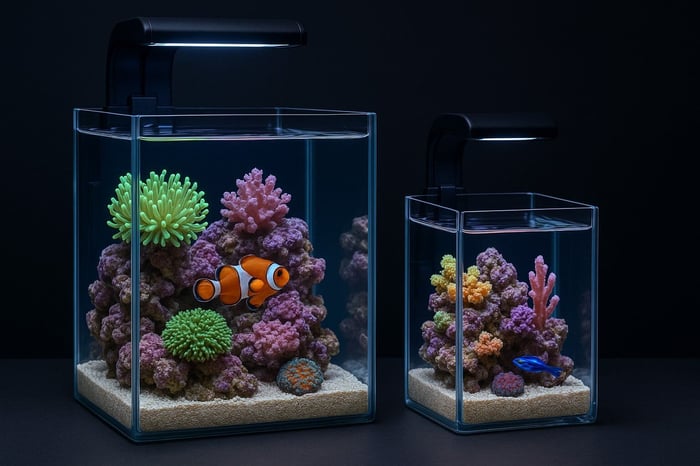
The distinction is straightforward. Nano reef tanks typically sit between 19 and 114 litres, large enough to host a small community of fish and corals, small enough to fit on a sturdy shelf or desk. Pico reef tanks are anything under 19 litres, a format that suits minimalists, invertebrate-focused setups, or dedicated single-specimen displays.
Both formats have surged in popularity among UK hobbyists in recent years, driven by all-in-one systems that combine filtration, lighting, and circulation in a single compact unit. Tanks like the Fluval Evo, Waterbox Cube, and Fluval Spec have made nano and pico reef tanks genuinely accessible for people who wouldn't previously have considered marine keeping and the results, when managed correctly, can be extraordinary.
Picking the Right Tank
The most important decision you'll make is matching the tank size to your realistic maintenance commitment. A 38-litre nano like the Waterbox Cube is well-suited to a small community, a pair of clownfish, some soft corals, and a clean-up crew. It gives you enough water volume to buffer minor fluctuations without becoming a major commitment to manage. A 9.5-litre pico like the Fluval Spec is better suited to a shrimp-focused display, a single coral specimen, or a dedicated invertebrate setup. The smaller the volume, the faster parameters shift which means the smaller the tank, the more attentive you need to be.
Look for all-in-one systems with built-in filtration compartments and adjustable flow. A glass lid is important for UK setups, evaporation in centrally-heated homes is faster than most new keepers expect, and salinity can creep up significantly in a small tank if it isn't managed daily.
Setting Up Your Mini-Reef
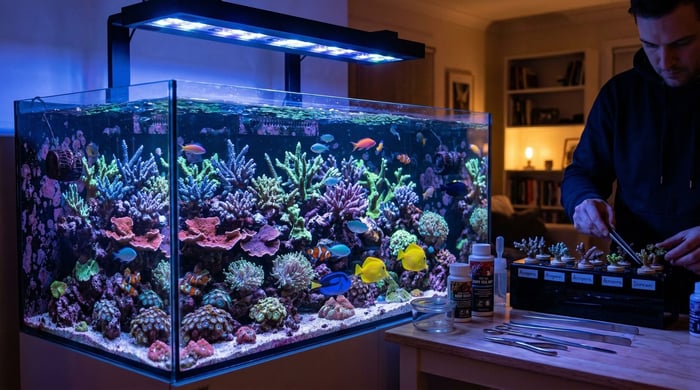
Before you add a drop of saltwater, make sure your surface can support the weight. A filled nano or pico reef tank weighs significantly more than it looks, a 38-litre system will be in the region of 45–50 kilograms once rock, sand, and equipment are accounted for. Purpose-built aquarium stands or solid furniture are worth the investment.
Use live rock at roughly 0.5–1 kilogram per 4 litres for natural biological filtration and to create a foundation for your aquascape. Mix RO/DI water with quality marine salt to reach a salinity of 1.025, then run a full nitrogen cycle before adding any livestock 2–4 weeks with a bacterial booster will establish the biological filtration you need. A heater sized appropriately for the volume (50W for nanos, 25W for picos) keeps temperature stable at 24–27°C. Quality LED lighting the AI Prime Nano is a popular UK choice provides the PAR levels coral needs without overheating a small volume.
Weekly water changes of 10–20% are the most reliable maintenance habit you can build. In nano and pico reef tanks, the margin for parameter drift is small enough that regular dilution through water changes is more effective than trying to correct problems after they develop.
Zooplankton Multipack
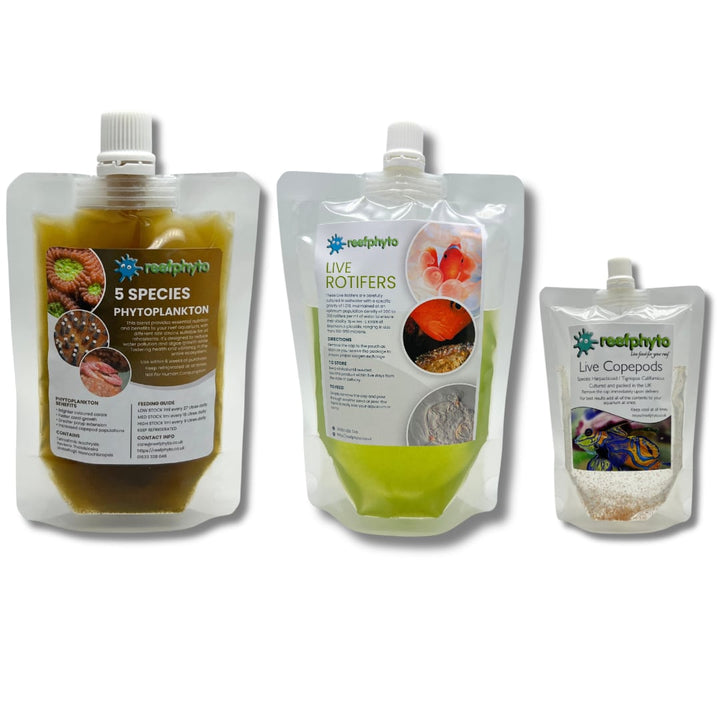
£23.72
Zooplankton Multipack - Live Copepods, Rotifers and Phytoplankton You have been buying live food one bottle at a time. Copepods this week, rotifers the next, phytoplankton when you remember. But your reef does not feed in rotation. Every level of… read more
Stocking Nano and Pico Reef Tanks
Restraint is the single most important principle when stocking small reef systems. The temptation to add more, another fish, another coral fragment, another invertebrate is one of the primary reasons nano and pico reef tanks fail. Overcrowding a small volume creates waste loading and competition that the filtration system simply can't handle.
For a nano tank in the 38–75 litre range, a pair of clownfish or a single firefish goby alongside soft corals like mushrooms and zoanthids is a realistic and rewarding combination. LPS corals such as torch and hammer varieties are achievable if parameters are stable. Pico tanks are better suited to invertebrates, sexy shrimp, porcelain crabs, and a small selection of soft corals create a display that's genuinely captivating without overstressing the system. SPS corals in pico tanks are extremely difficult to sustain and best left until you have a much larger, more stable system running.
A general rule of thumb is 2.5cm of fish per 19 litres in nano systems. Quarantine all new arrivals before introduction, in a small tank, a parasite or pest that might be manageable in a 300-litre display can devastate a nano reef in days.
Feeding Your Nano and Pico Reef
This is the area most nano reef guides underserve and it's where I see the most unnecessary losses. Corals and invertebrates in nano and pico reef tanks are not passive ornaments. They are active feeders with nutritional requirements that lighting alone cannot meet, regardless of how good your LED fixture is.
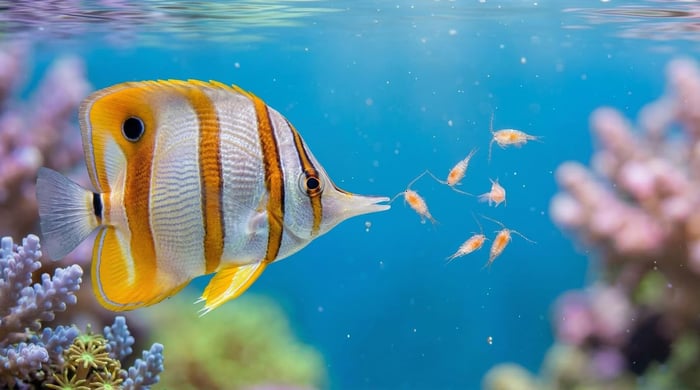
Live phytoplankton dosed two to three times weekly supports zooxanthellae, feeds filter feeders, and maintains the microbial food web that makes a small reef genuinely alive. Live zooplankton, copepods and rotifers provides the animal-based nutrition that corals, particularly LPS varieties, need for polyp extension, tissue health, and long-term calcification. In a nano or pico tank where natural microfauna populations are limited by volume, supplemental live food additions make a measurable difference to how your reef looks and performs.
Overfeeding is a real risk in small systems, excess nutrients from uneaten food fuel algae outbreaks and stress coral tissue. Small, frequent additions of live food are far preferable to occasional large doses. A pipette or target feeder lets you deliver food directly to coral polyps and minimise waste.
Reef Juice - Live Phytoplankton Blend

£9.99
Reef Juice Live Phytoplankton - Dinoflagellate Control & Reef Nutrition Something has changed in your tank. The water has a brownish tint in the mornings. A thin film is spreading across the sand bed and up the rockwork. Your corals… read more
Maintenance: Where Nano Reefs Win or Lose
Stability is everything in nano and pico reef tanks. The parameters that a large reef tank absorbs gradually, a small temperature rise, a slight alkalinity dip, a phosphate uptick can become significant problems in a small volume within hours. The solution isn't more equipment it's better habits.
Test weekly as a minimum, targeting nitrates below 5 ppm, phosphates around 0.03 ppm, and alkalinity at 8–9 dKH. A kit like Salifert gives you reliable results without breaking the budget. Evaporation is your most frequent daily challenge, top up with fresh RO/DI water rather than saltwater to prevent salinity creep, or invest in a nano auto-top-off unit like the Tunze Osmolator. Run your LED on an 8–10 hour photoperiod and dial in gentle, varied flow using a small wavemaker. Algae is an early warning sign rather than an aesthetic problem, address the nutrient source rather than just removing it manually.
Aquascaping: Small Canvas, Big Impact
One of the genuine pleasures of nano and pico reef tanks is the aquascaping. A small footprint forces creative decisions that larger tanks, don't every rock placement, every coral position is visible and deliberate. Stack live rock into arches or caves to create visual depth and maximise flow through the structure. Negative space is as important as what you put in, resist the urge to fill every area.
UK reef keepers have developed a strong culture around nano aquascaping, "bonsai reef" displays with carefully shaped branching rock and a single statement coral are a popular aesthetic, as are tightly planted soft coral gardens with zoanthid and ricordea colonies. Secure your rockwork with aquarium-safe epoxy before the tank is running to prevent collapses, and don't rush the layout, it's much harder to rescape once corals are established.
Common Challenges and How to Avoid Them
The most common problems in nano and pico reef tanks are almost always parameter-related, and almost always preventable. Temperature swings are a particular UK challenge, cold winters and warm summers both push small tanks toward stress conditions that larger systems absorb more easily. A small USB fan across the water surface handles summer heat inexpensively. In winter, check that your heater is correctly sized and that the tank isn't positioned near a draughty window or external wall.
Nutrient spikes usually trace back to overfeeding or insufficient water changes. Reduce feeding frequency, increase water change volume, and add phosphate-removing media if needed. Missing a maintenance week in a nano or pico reef tank has consequences that simply don't apply to larger systems, building reliable weekly habits is more valuable than any piece of equipment you can buy.
Remote monitoring tools like the Seneye Reef are worth considering for busy schedules, real-time alerts for temperature, pH, and ammonia give you early warning of problems before they become losses.
A Note from Darren
Nano and pico reef tanks are the format that brings more people into this hobby than any other and they deserve better information than they usually get. The guides that treat them as "easy" or "beginner" options without being honest about what they demand are the reason so many small reefs fail in the first year.
Get the foundations right, stable parameters, appropriate stocking, regular maintenance, and a feeding strategy that gives your corals what they actually need and a nano or pico reef will reward you with a display that punches well above its size.
If you have questions about feeding your nano reef with live foods, or want to know what's right for your specific setup, call us on 01267 611533 or use the contact page. I'm always happy to talk through the detail, it's what we're here for.