Quick Navigation
Understanding Coral Growth Basics
If you want to know how to grow coral at home successfully, it starts with understanding what coral actually is. Coral isn't a plant, and it's not quite an animal either it's both. Each coral polyp is a tiny animal that survives through a remarkable partnership with microscopic algae called zooxanthellae, which live within its tissue. These algae photosynthesise light into energy, providing up to 90% of the coral's nutritional needs. In return, the coral gives the algae a protected home rich in carbon dioxide and nitrogen.
This symbiotic relationship is why lighting is so critical. Without the right spectrum and intensity, zooxanthellae can't photosynthesise efficiently, and your corals will slowly starve no matter how good the rest of your setup is.
Beyond light, coral growth is driven by several interconnected factors: water temperature, salinity, water flow, nutrient levels, and the availability of key elements like calcium, magnesium, and alkalinity. Think of these as the legs of a table, weaken any one of them and the whole system becomes unstable.
Understanding this biology isn't just academic. It directly informs every decision you make about your tank, from which light to buy to how often you feed.
Types of Coral Suitable for Home Growing
Not all corals are created equal when it comes to how to grow coral at home. When growing coral for beginners, the type you choose makes an enormous difference to your chances of success. They fall into three broad categories, each with different care requirements.
Soft Corals (Beginner - Difficulty: 2/5)
Leather corals, mushroom corals (Discosoma), zoanthids, and star polyps are forgiving and fast-growing. They tolerate modest lighting, fluctuating parameters, and beginner mistakes better than most. Zoanthids in particular are excellent starters they're colourful, easy to frag, and can form impressive colonies within months. If you're figuring out how to grow coral at home for the first time, soft corals are where I'd always recommend beginning.
LPS Corals - Large Polyp Stony (Intermediate - Difficulty: 3/5)
Hammers, torches, frogspawn, and brain corals fall here. They require better water stability than softs, moderate to high flow, and benefit noticeably from targeted feeding. Their large, expressive polyps make them visually rewarding. Many UK hobbyists build entire systems around LPS for this reason.
SPS Corals - Small Polyp Stony (Advanced - Difficulty: 4–5/5)
Acropora, Montipora, and Stylophora are the pinnacle of reef keeping. They demand pristine, highly stable water chemistry, intense lighting, and consistent parameters day after day. SPS is not the place to start if you're learning how to grow coral at home, master the fundamentals first, and they become an achievable goal.
| Coral Type | Difficulty | Lighting | Flow | Feeding | Growth Rate |
|---|---|---|---|---|---|
| Soft Corals | Easy | Low–Medium | Low–Medium | Optional | Fast |
| LPS Corals | Intermediate | Medium–High | Medium | Beneficial | Medium |
| SPS Corals | Advanced | High | High | Essential | Slow–Medium |
Growth Rates and Expectations
One of the biggest frustrations for anyone learning how to grow coral at home is expecting too much too soon. Coral grows slowly and that's perfectly normal.
A typical zoanthid frag bought as five polyps might reach 30+ polyps in six to twelve months under good conditions. A hammer coral frag with two heads might double in eight to twelve months. Acropora, under near-perfect conditions, grows perhaps 5–10cm per year.
The takeaway: measure progress in months, not weeks. Don't be disheartened by a coral that looks unchanged after a fortnight as long as polyps are extending and colours are vivid, growth is happening.
Environmental stability dramatically affects growth rates. Corals in tanks with stable, consistent parameters consistently outgrow those in tanks with fluctuating chemistry, even if both tanks are within acceptable ranges. Consistency beats perfection.
Seasonal changes also matter. Central heating in winter and summer heat both make it harder to maintain stable temperatures, this is one of the more underrated challenges of how to grow coral at home in the UK, and worth planning for when choosing your tank placement and heating setup.
Essential Equipment for Your Coral Growing Setup
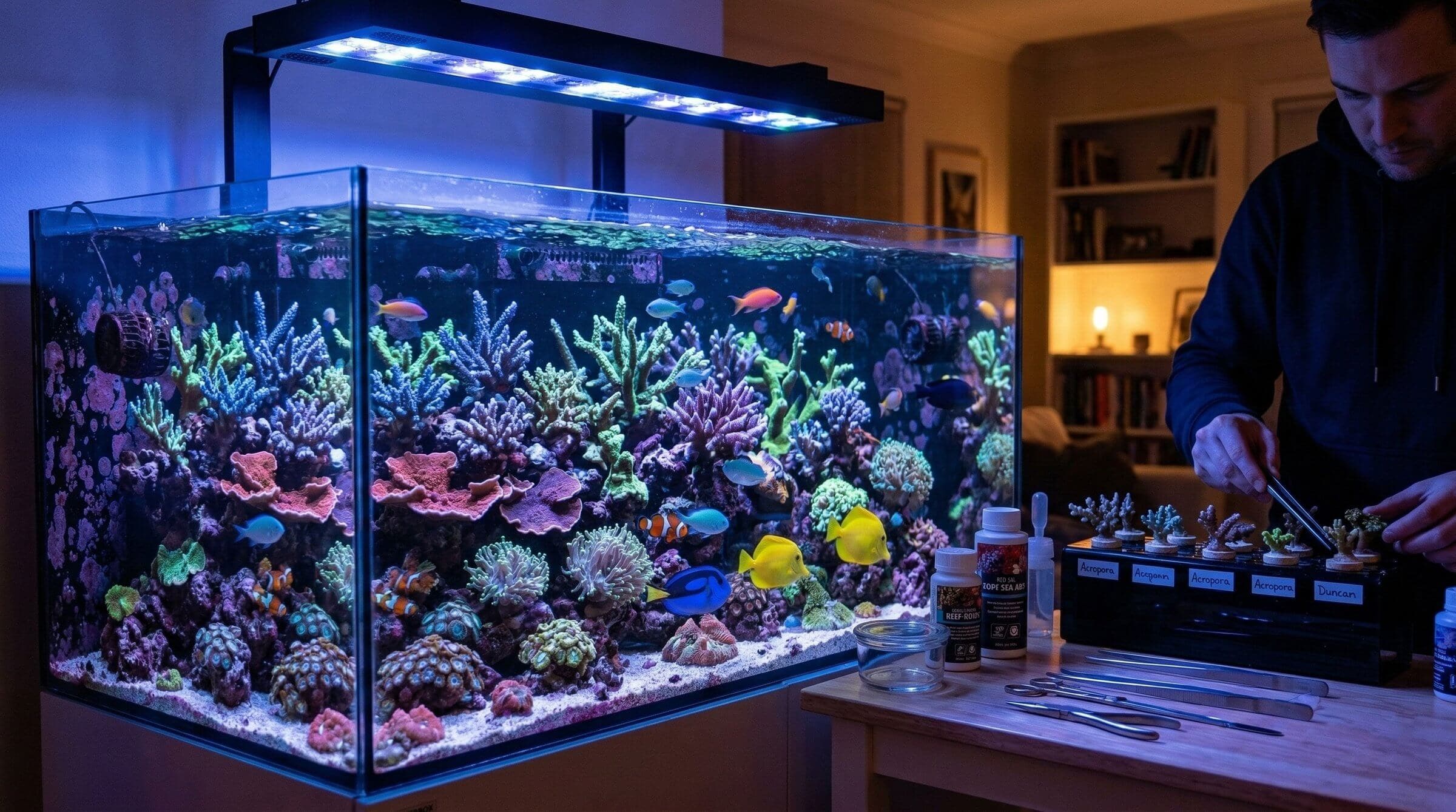
You don't need the most expensive equipment to know how to grow coral at home successfully but you do need the right equipment. Getting these foundations right from the start makes everything else easier.
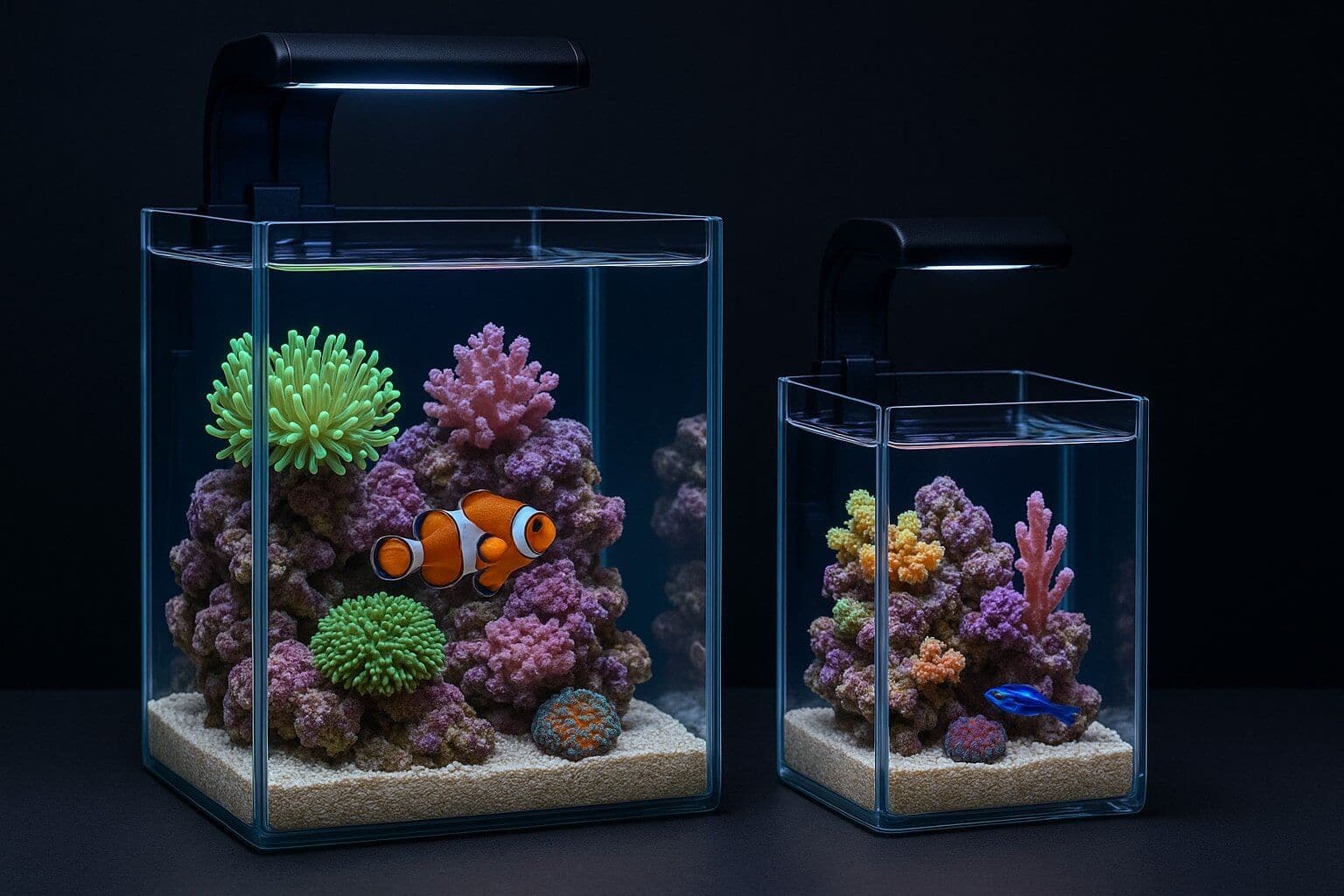
Tank Size: A minimum of 100 litres is recommended for a coral system. Smaller volumes are harder to keep stable, and even small parameter swings can stress coral significantly. A 200–300 litre tank gives you much more margin for error.
Protein Skimmer: Essential for removing dissolved organic compounds before they break down and cause nutrient problems. Match the skimmer rating to your tank volume, and consider upsizing slightly for better headroom.
Powerheads and Flow: Corals need flow not just for nutrient delivery but to prevent detritus settling on their tissue. Aim for 20–40x tank volume turnover per hour using wavemakers or powerheads with controllable patterns. Avoid direct blasting, flow should be turbulent and varied, not a fixed jet.
Heater: A reliable, calibrated heater is non-negotiable. Consider using two smaller heaters rather than one large one, if one fails stuck-on in winter, your tank won't cook. Aim for 25–26°C for most reef inhabitants.
Monitoring Equipment: A quality thermometer, refractometer for salinity, and a selection of reliable test kits are minimum requirements. As your system matures, investing in an alkalinity dosing system and an apex controller becomes worthwhile.
Refugium (Optional but Recommended): A small refugium growing macroalgae like Chaeto is excellent for nutrient export and provides a safe space for copepod populations to thrive, more on that in the feeding section. Seeding a new refugium with live copepods from Reefphyto gives it a head start from day one.
Live Copepods
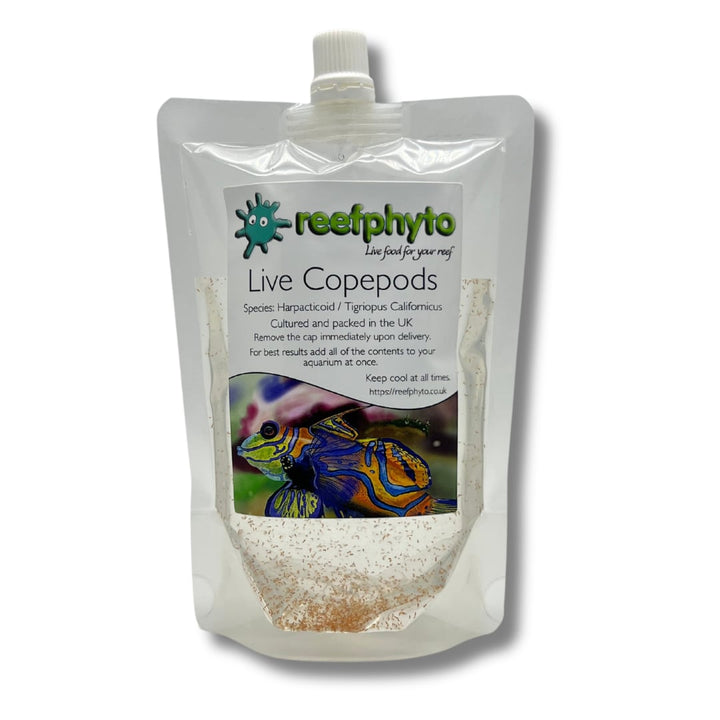
£11.99
Live Copepods UK: Tigriopus californicus, Cultured Fresh in Wales by Reefphyto Your reef looks right on paper. Clean water, stable parameters, good equipment. But something is still off. Your fish are pale, your mandarin is wasting, your corals are feeding… read more
Lighting Systems for Coral Growth
Lighting is where many UK hobbyists spend the most time researching and rightly so. Choosing the right lights is one of the most impactful decisions you'll make when learning how to grow coral at home, and getting it wrong is an expensive mistake to correct later.
LED vs T5
Modern LED fixtures have largely replaced T5s for new builds. Quality LEDs are energy-efficient, produce less heat, offer programmable spectrums, and last for years. Brands like Radion, AI Hydra, and Kessil are popular choices in the UK reef community.
T5 fluorescent lights still have loyal advocates. They produce exceptionally even light distribution across the tank and a pleasing natural shimmer. Many advanced SPS keepers run hybrid systems, T5 tubes with LED supplement for both coverage and controllability.
PAR (Photosynthetically Active Radiation)
PAR measures the intensity of usable light for photosynthesis. Different coral types require different PAR levels:
| Coral Type | Target PAR Range |
|---|---|
| Soft Corals | 50–150 µmol/m²/s |
| LPS Corals | 100–250 µmol/m²/s |
| SPS Corals | 200–400+ µmol/m²/s |
Filtration and Water Movement
A well-designed filtration system does three jobs simultaneously: mechanical filtration (removing solid waste), biological filtration (converting harmful ammonia and nitrite), and chemical filtration (polishing water clarity and removing dissolved organics).
Mechanical Filtration
Filter socks, filter rollers, or filter floss catch particulate matter before it decomposes. Whatever you use, clean it frequently, a clogged filter sock becomes a nitrate factory within days.
Biological Filtration
Live rock remains the cornerstone of biological filtration in reef systems. The porous structure hosts enormous populations of beneficial bacteria that process nitrogen compounds. Allow at least 1kg of quality live rock per 10 litres of water. Additional media like Marine Pure or Siporax provides extra biological surface area in sumps.
Chemical Filtration
Activated carbon removes yellowing compounds and improves water clarity. Run it passively in a filter bag and replace monthly. Phosphate-removing media like GFO (granular ferric oxide) helps control one of the primary algae-feeding nutrients, run it in a tumbling reactor for best results.
Flow Patterns
The goal is to create random, turbulent flow with no dead spots where detritus can accumulate. Corals respond well to alternating flow, many wavemakers have a wave or pulse mode that mimics tidal surge. Observe your corals' polyp extension as a guide: fully extended polyps indicate comfortable flow.
Maintaining Optimal Water Parameters
Stable parameters are more important than perfect parameters when you're learning how to grow coral at home. Here are the target ranges for a successful reef:
| Parameter | Target Range | Why It Matters |
|---|---|---|
| Salinity | 1.025–1.026 (35 ppt) | Affects all cellular processes |
| Temperature | 25–26°C | Enzyme function and zooxanthellae health |
| pH | 8.1–8.3 | Alkalinity buffering and calcification |
| Alkalinity (dKH) | 8–11 dKH | Skeleton building for stony corals |
| Calcium | 400–450 ppm | Skeleton building partner to alkalinity |
| Magnesium | 1250–1350 ppm | Stabilises calcium/alkalinity balance |
| Nitrate | 1–10 ppm | Low-level nutrients support zooxanthellae |
| Phosphate | 0.03–0.1 ppm | Trace nutrients needed for health |
A common mistake when people first learn how to grow coral at home is chasing zero nitrate and phosphate. Ultra-low nutrient systems can actually cause coral to pale, as zooxanthellae need some nutrients to function. The goal is low but not zero.
Testing and Monitoring Water Quality
For a new reef tank, test every two to three days during the first three months while parameters stabilise. Once stable, weekly testing for alkalinity, calcium, and magnesium, with monthly nitrate and phosphate checks, is typically sufficient.
Reliable UK-Available Test Kits
Red Sea, Salifert, and Hanna Instruments checker tests are well-regarded by UK reef keepers and widely available. For alkalinity in particular which fluctuates fastest in coral systems, a Hanna checker offers excellent accuracy at a reasonable price point.
What to Test and When
Alkalinity is consumed daily by growing stony corals and should be your most frequently tested parameter. Calcium and magnesium are consumed more slowly but track your alkalinity closely. Salinity should be checked after any top-off water additions or evaporation events.
Keep a log. A simple spreadsheet recording date, parameter, and any changes made is invaluable for spotting trends before they become problems.
Water Changes and Stability
Regular water changes are one of the simplest ways to maintain reef stability. They replenish trace elements, dilute accumulated waste, and reset minor parameter imbalances before they compound.
Recommended Schedule: A 10–15% water change weekly works well for most reef systems. Some experienced keepers reduce this to bi-weekly once their system is mature and dosing is dialled in, but weekly changes provide a useful safety net when you're starting out.
Mixing Saltwater Properly
Always pre-mix saltwater in a separate container for at least 24 hours before use. This allows salt to fully dissolve, gas to off-gas, and temperature to stabilise. Adding freshly mixed, cold saltwater directly to a reef tank is a significant shock to its inhabitants. Using RODI (Reverse Osmosis Deionised) water as your base removes chlorine, chloramine, and dissolved solids that can cause long-term problems.
Avoiding Swings
Match the temperature and salinity of your change water to your tank before adding it. Even small swings, a 0.5°C temperature difference cause measurable stress to sensitive corals and can trigger a bleaching response in SPS.
Feeding Strategies for Healthy Coral Growth
Corals are not passive filter feeders, they are active predators that catch and consume plankton. Whether you're coral farming at home on a small scale or simply keeping a display reef, regular feeding with appropriate foods noticeably accelerates growth, improves colour saturation, and increases resilience. Feeding is one of the areas most often underestimated by people learning how to grow coral at home.
This is where live foods make a genuine difference. Copepods and phytoplankton provide a nutritional profile that frozen and dry alternatives simply can't replicate. Live phytoplankton feeds zooxanthellae directly and supports the microplankton food web in your tank. Live copepods provide protein-rich live prey that stimulates natural feeding behaviours in both fish and coral. And for tanks with larvae, filter feeders, or seahorses, live rotifers complete the picture.
At Reefphyto, we culture all three fresh in Wales, not imported from overseas so they arrive vigorous and ready to work in your system. Customers consistently report improved polyp extension and faster growth when switching to a live food regimen. If you're not sure where to start, our Zooplankton Multipack combines copepods, rotifers, and phytoplankton in a single order, the complete food web in one delivery.
A refugium planted with macroalgae and seeded with copepods creates a self-sustaining micro-ecosystem that continuously doses your display tank with live zooplankton one of the best investments you can make for your reef's long-term health.
5 Species Phytoplankton

£6.99
5 Species Phytoplankton Blend: Build a Thriving Marine Ecosystem Your corals are open, your fish are healthy, and your parameters are clean. But something about the tank feels thin. The microfauna community never quite established. Your copepod population does not… read more
Live Foods vs Frozen and Dry Alternatives
The honest answer is that the best coral feeding regimen uses a combination of all three but live foods should form the foundation.
Live Phytoplankton
Provides intact cell walls, full lipid profiles, and active enzymes that are degraded during freezing. Zooxanthellae respond directly to live phyto additions, and the broader benefit to your tank's microbial food web is measurable. Best for: all corals, especially LPS and filter feeders like clams and sponges.
Frozen Foods
Mysis shrimp, cyclops, and specialist coral foods like Reef Roids are practical and effective. Nutritional value is reduced compared to live, but they're convenient and can be target-fed precisely. Best for: LPS corals with larger polyps that can actively capture food particles.
Dry/Powdered Foods
Products like Reef Energy or Amino Acid supplements are useful as a supplementary broadcast feed. Absorbed through coral tissue rather than captured, they support zooxanthellae health and tissue repair. Best for: SPS corals that struggle to capture larger particles.
| Food Type | Nutrition | Convenience | Best For |
|---|---|---|---|
| Live Phytoplankton | Excellent | Moderate | All corals, especially zooxanthellae support |
| Live Copepods | Excellent | Moderate | LPS, fish, refugium seeding |
| Frozen Mysis/Cyclops | Good | High | LPS target feeding |
| Dry/Amino acids | Moderate | Very High | SPS broadcast feeding |
Feeding Schedules and Techniques
Overfeeding is a real risk in reef tanks, excess nutrients from uneaten food fuel algae growth and stress coral tissue. The goal is frequent, small, targeted additions rather than large doses.
Soft Corals: Phytoplankton additions two to three times weekly are sufficient. They're primarily photosynthetic and don't require heavy supplemental feeding.
LPS Corals: Target feed two to three times weekly. Use a pipette or turkey baster to deliver small amounts of frozen mysis or copepods directly to extended tentacles during evening hours when polyps are most active. Turn flow off or down for 10–15 minutes after feeding to allow coral to capture food.
SPS Corals: Broadcast feed dissolved amino acids or coral food solutions two to three times weekly. Combine with regular live phytoplankton additions for optimal results. Keep nutrients in check, SPS is far more sensitive to nutrient spikes than LPS.
Live Phytoplankton Dosing: Add live phyto directly to your sump or refugium to avoid it being immediately skimmed out. Turn your skimmer off for an hour after addition for maximum benefit. For a convenient smaller-volume option, our Zoo-Shot delivers a ready-to-use zooplankton addition with no preparation required, ideal for regular top-ups between full culture orders.
Starting with Coral Frags
A frag (fragment) is a small piece cut from a larger coral colony, typically mounted on a small plug or tile. Frags are the standard starting point for anyone learning how to grow coral at home in the UK they're affordable, acclimatised to captive conditions, and more forgiving than wild-caught specimens.
Sourcing Frags
UK frag swaps, reef forums (UltimateReef, UK Reef Central), and reputable online retailers are all good sources. Buying UK-grown frags reduces shipping stress and ensures the coral is adapted to typical UK tap-water-based RODI conditions. Avoid ultra-cheap frags from unknown sources they frequently carry pests like Aiptasia anemones or zoanthid-eating nudibranchs.
Acclimating New Arrivals
Always quarantine new frags in a separate tank for two to four weeks if possible. This protects your display from pests and disease. If you don't have a quarantine tank, at minimum dip new frags in a coral dip solution (Coral RX or Tropic Marin Pro Coral Cure) before introducing them.
Float the sealed bag in your tank for 15–20 minutes to match temperature, then gently transfer the frag into your system. Place it in a low-flow, moderate-light area initially and allow two weeks for full acclimation before moving to its permanent position.
Frag Placement and Spacing
Coral placement is one of the most common sources of frustration when you're learning how to grow coral at home, get it wrong and corals either bleach from too much light, struggle in low-light areas, or wage chemical warfare on their neighbours.
Lighting Zones
Map your tank into high, medium, and low light zones using your PAR meter before adding corals. Place SPS frags in the top third of the tank, LPS in the middle, and soft corals towards the lower areas. Avoid placing new frags directly under the most intense light start lower and gradually move them up over two to four weeks.
Coral Warfare
Many corals are chemically and physically aggressive towards their neighbours. LPS corals like hammers and torches have sweeper tentacles that can extend several inches at night, burning anything they touch. Leave at least 10–15cm between LPS colonies, and keep zoanthids away from LPS their allelopathic chemicals can inhibit other corals even without direct contact.
Soft corals like leathers regularly release terpenoids that stress stony corals. Carbon filtration and regular water changes help mitigate this, but physical separation remains the best approach.
Monitoring Growth and Health
Learning how to grow coral at home well means learning to read your corals. Once you know what healthy looks like, problems become much easier to catch early.
Signs of a Healthy Coral: A healthy coral shows fully extended polyps during active periods (usually evening for LPS and soft corals, daytime for most SPS). Colours should be vivid and consistent. For stony corals, new skeletal growth white tips on branches or expanding edges is a reliable indicator of active growth.
Stress Indicators to Watch For: Retracted polyps that stay in during normal active periods, pale or washed-out colouration, tissue recession or RTN (rapid tissue necrosis), and excessive mucus production all signal problems. Identify the cause before it spreads, common culprits are parameter instability, inadequate flow, lighting issues, or chemical aggression from neighbours.
Photography as a Monitoring Tool: Take photos of your frags on arrival and monthly thereafter, from the same angle under the same lighting. It's the most reliable way to track growth and spot slow tissue recession that's invisible day to day.
Common Challenges and Solutions
These are the most common problems you'll encounter when learning how to grow coral at home in the UK, along with practical solutions for each.
Algae Outbreaks
The most common problem in new reef tanks. Addressed by reducing nutrients (feeding less, increasing skimmer efficiency, adding phosphate media), increasing water changes, and introducing appropriate clean-up crew like turbo snails, hermit crabs, and a small tang for hair algae. A thriving refugium with a healthy copepod population also contributes by grazing on microalgae at the base of the food web.
Coral Pests
Montipora-eating nudibranchs, zoanthid-eating spiders, flatworms, and Aiptasia anemones are common UK reef pests. Regular visual inspection, careful frag dipping, and quarantine procedures are your best defences. Aiptasia can be treated with Aiptasia-X or a peppermint shrimp; flatworms respond to Flatworm Exit used carefully.
Bleaching
Coral bleaching the expulsion of zooxanthellae from tissue is caused by thermal stress, extreme light changes, or severe chemical shifts. If you catch it early, move the affected coral to lower light and more stable conditions. Recovery is possible but not guaranteed. Prevention through stability is far easier than cure.
Disease and RTN/STN
Rapid and slow tissue necrosis are poorly understood but often linked to bacterial infection triggered by physical damage, stress, or water quality events. Fragging below the recession line and treating with elevated flow and water changes can halt progression. Remove affected tissue quickly to prevent spread.
UK-Specific Challenge: Temperature in Summer
UK summers can push tank temperatures into dangerous territory, especially in upstairs rooms. A small desk fan across the water surface provides evaporative cooling for free. Chiller units are available but expensive, prevention through tank placement (away from south-facing windows) is easier.
Key Takeaways
- The smartest way to learn how to grow coral at home is to start with hardy soft corals or beginner LPS frags before attempting SPS
- Stability matters more than perfection, consistent parameters produce better results than chasing ideal numbers
- Invest in quality lighting and a reliable protein skimmer before anything else
- Live phytoplankton and copepods provide nutritional benefits that frozen alternatives can't replicate
- Coral grows slowly, measure progress in months, not weeks
- Always dip and quarantine new frags before adding to your display tank
- Keep a testing log, trends matter more than individual readings
- Seed your refugium with live copepods and a regular phytoplankton supply to build a self-sustaining food system
Ready to take your reef feeding to the next level? Our live phytoplankton, copepods, and rotifers are cultured fresh here in Wales and arrive ready to work in your system. Browse the full Reefphyto live food range, or call Darren directly on 01267 611533 for personalised advice on what your reef needs. Free shipping on orders over £65.
Zooplankton Multipack
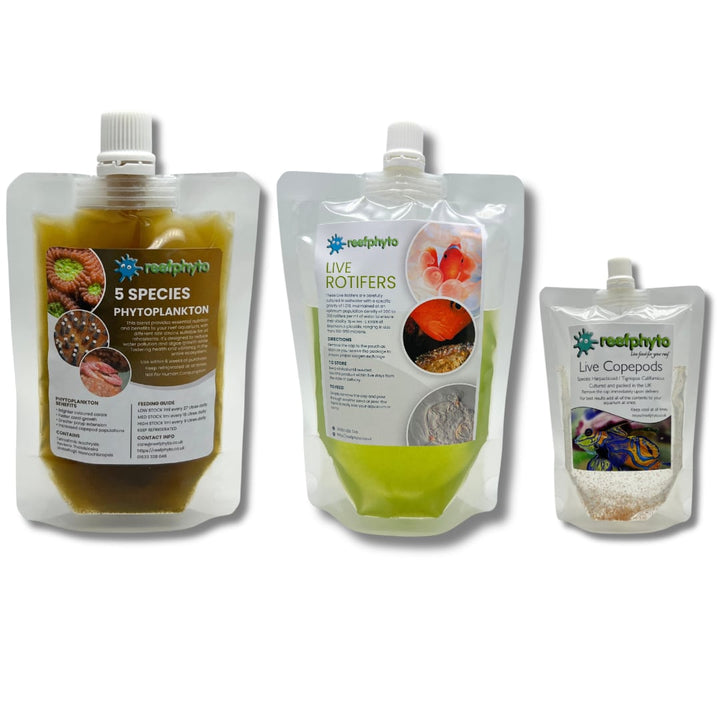
£23.72
Zooplankton Multipack: Live Copepods, Rotifers and Phytoplankton You have been buying live food one pouch at a time. Copepods this week, rotifers the next, phytoplankton when you remember. But your reef does not feed in rotation. Every level of the… read more
FAQs
Can I grow coral at home as a complete beginner?
Yes and it's more achievable than most people think. The key to learning how to grow coral at home as a beginner is choosing the right species first. Soft corals like zoanthids, mushroom corals, and star polyps tolerate modest lighting and minor parameter fluctuations far better than stony corals. Start with a stable, mature system and a handful of hardy frags rather than diving straight into SPS, and you'll find coral keeping far more rewarding from the outset.
How long does it take for coral to grow noticeably?
Most coral growth is visible over months, not weeks. Zoanthids are among the fastest, a frag of five polyps can reach 30+ polyps in six to twelve months under good conditions. LPS corals like hammers and frogspawn grow more slowly but produce rewarding results within a year. Expect to measure SPS progress in centimetres per year rather than rapid visual change. Patience is genuinely part of learning how to grow coral at home.
What is the best live food for coral?
Live phytoplankton is the single most universally beneficial food for a reef tank, it supports corals, zooxanthellae, and the broader food web including filter feeders and copepod populations. For LPS corals, adding live copepods provides protein-rich active prey that stimulates natural feeding responses. A combination of both covers virtually every coral in your system. Our Zooplankton Multipack is a popular starting point for reef keepers new to live feeding.
Do I need a refugium to grow coral at home?
A refugium isn't strictly essential, but it makes a significant difference to long-term success. It provides nutrient export via macroalgae, a safe space for copepod populations to establish without predation pressure, and a continuous supply of live zooplankton to the display tank. If your sump has space for a small lit section, it's well worth setting up. Seed it with live copepods and a regular phytoplankton feed to get populations established quickly.
Why are my corals not extending their polyps?
Retracted polyps are a stress signal. Common causes include poor water flow (too much, too little, or poorly directed), parameter instability (particularly alkalinity swings), lighting that's too intense for the coral's current position, chemical aggression from neighbouring corals, or the normal adjustment period following a new introduction. Give new frags two weeks to settle before worrying and check your alkalinity first if polyp extension is poor across multiple established corals.
How often should I feed my reef tank?
For soft corals, two to three phytoplankton additions per week are typically sufficient. LPS corals benefit from targeted feeding two to three times weekly with mysis, copepods, or specialist coral foods. SPS corals do well with broadcast amino acid or dissolved food additions two to three times weekly, combined with a background live phyto supply. The key is small, frequent additions rather than large, infrequent doses, overfeeding drives nutrient spikes that cause more problems than underfeeding.
Is it expensive to grow coral at home in the UK?
The initial setup cost is the biggest investment, a quality light, skimmer, and circulation equipment for a 200-litre reef system typically runs £500–£1,500 depending on brand choices. Ongoing costs are more manageable: salt mix, test kits, and live foods are the main monthly outgoings. Starting with affordable soft coral frags keeps specimen costs low while you're learning. Many UK reef keepers find that once the system is established, costs stabilise considerably especially if you frag and trade your own corals through the community.