
Quick Navigation
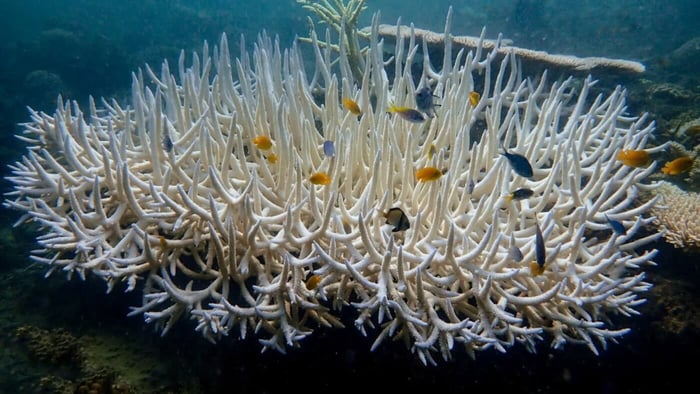
Coral bleaching is one of those reef keeping moments that stops you cold. You look into your tank and something that was full of colour yesterday is pale, not dead but visibly wrong. Th zooxanthellae that give coral its pigmentation and provide up to 90% of its energy through photosynthesis have been expelled under stress, and what's left behind is the coral's white skeleton showing through translucent tissue. It's one of the clearest distress signals a reef tank can send, and coral health and bleaching recovery begins the moment you recognise it for what it is.
The encouraging reality is that a bleached coral is not necessarily a dying coral. In a home reef system where you control the environment, recovery is genuinely achievable, I've seen badly bleached specimens recover fully over two to three months when conditions were corrected promptly and the animal was given proper nutritional support. The key is understanding what caused the bleaching in the first place, addressing it without compounding the stress, and then being patient while the coral rebuilds its symbiont population.
- Darren, Reefphyto
What Coral Bleaching Actually Is
Bleaching is a stress response, not a disease. When a coral's internal conditions move outside the range its zooxanthellae can tolerate, the coral expels them as a survival mechanism essentially jettisoning a metabolic process that has become harmful rather than helpful under stress conditions. Without zooxanthellae, the coral loses its colour and the majority of its energy supply. It can survive short-term on heterotrophic feeding capturing zooplankton and dissolved organics from the water column but it cannot sustain that indefinitely. Recovery depends on the zooxanthellae recolonising the coral tissue before the animal's energy reserves are exhausted.
In home reef tanks, coral health and bleaching recovery is almost always a question of identifying which stressor triggered the response. The most common culprits are temperature spikes, sudden lighting changes, significant water quality deterioration, and salinity swings often from inadequate top-off during evaporation. Any one of these can trigger bleaching; a combination makes recovery significantly harder.
Recognising the Warning Signs Before Bleaching Occurs
Full bleaching rarely arrives without warning. The coral's tissue colour typically fades progressively moving from vivid to muted to pale before whitening fully. Polyp extension reduces, with polyps staying retracted during periods when they would normally be extended. Growth slows or stops. In LPS corals, the fleshy tissue may begin to recede from the skeleton edge before colour loss is obvious.
These early signals are the most important window for intervention. A coral showing faded colour but still with tissue intact has a much stronger recovery prognosis than one that has been fully white for several weeks. Weekly observation not just testing, but actually looking closely at each specimen is the practice that catches bleaching early enough to act on it.
Common Causes in UK Home Reef Tanks
Temperature instability is the most frequent trigger I see in UK tanks, and it works in both directions. Summer heatwaves push tanks above 28°C in poorly ventilated rooms a level that stresses zooxanthellae rapidly. Winter cold snaps affect tanks near external walls or in unheated rooms when heaters are undersized or fail silently. A reliable heater with a separate temperature controller, rather than relying on the heater's built-in thermostat alone, is one of the most worthwhile investments in a reef system.
Lighting problems are the second most common cause. A new LED fixture introduced at full intensity, or an existing fixture whose spectrum has shifted as diodes age, can trigger bleaching in corals that were previously stable. Acclimating new corals gradually, starting them in lower light zones and moving them up over several weeks prevents the photoinhibition that causes bleaching under sudden high-intensity exposure.
Water quality deterioration, particularly elevated nitrates and phosphates combined with low alkalinity, creates a chemical environment where zooxanthellae populations become unstable. This form of bleaching tends to be slower and more diffuse affecting multiple specimens rather than a single coral and is usually a sign that maintenance routines have slipped.
Premium Activated Carbon
£6.49
Premium Activated Carbon for Reef Aquariums Your water parameters test clean but something is still off. A yellow tint to the water, a faint smell you cannot place, or corals that seem less vibrant than they should. Not everything that… read more
Immediate Steps When You Spot Bleaching
The first priority is to identify and remove the stressor not to dose anything, not to move the coral, but to stabilise conditions. Test temperature, salinity, alkalinity, nitrates, and phosphates immediately. If you've recently changed a lighting schedule or added a new fixture, that's likely the cause. If parameters have drifted, address them gradually correcting alkalinity or salinity too rapidly is itself a stressor that can worsen a bleached coral's condition.
Once you've identified and addressed the trigger, reduce light intensity to the affected coral by repositioning it to a lower-flow, lower-light area of the tank. A bleached coral has lost its primary energy source and cannot tolerate the same light intensity it could before bleaching, what was beneficial PAR before bleaching becomes damaging photoinhibition now. Shade is more helpful than bright light during the early recovery phase.
Nutrition becomes critical at this point. A bleaching coral is relying heavily on heterotrophic feeding to survive while it waits for zooxanthellae to recolonise. Target feeding with live or fresh zooplankton particularly small copepods and rotifers gives the coral animal-based nutrition it can capture and process without the energy burden of photosynthesis. This is one of the clearest practical contributions reef keepers can make to coral health and bleaching recovery, and it's one that's frequently overlooked in favour of chemical dosing.
Supporting Recovery Over Weeks and Months
Coral health and bleaching recovery is measured in weeks for mild cases and months for severe ones. The marker of genuine recovery is not colour returning it's stable tissue coverage, resumed polyp extension, and eventually the gradual reappearance of pigmentation as zooxanthellae repopulate. Colour returns last, not first.
During the recovery period, stability in all parameters matters more than optimising any single one. Alkalinity should be maintained consistently at 8–9 dKH, calcium at 400–450 ppm, and magnesium at 1,250–1,350 ppm. Avoid making multiple parameter adjustments simultaneously each change the coral has to adapt to is a small additional burden while it's already compromised. Continue target feeding two to three times weekly. Resist the urge to increase lighting intensity until the coral has been showing normal polyp extension consistently for at least two weeks.
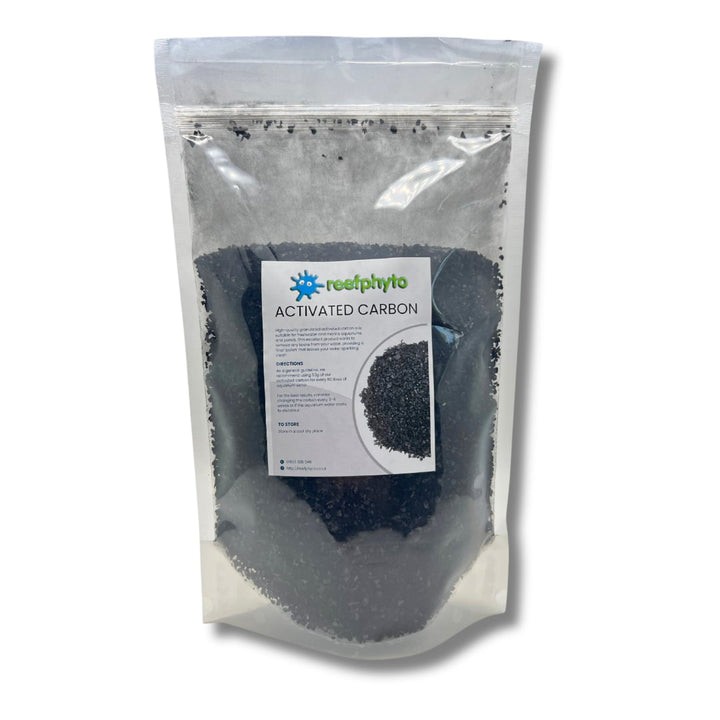
Activated carbon run continuously through recovery significantly improves water clarity and removes dissolved organics that would otherwise accumulate as the coral processes additional food. It's a simple addition that makes a measurable difference to the optical and chemical environment the recovering coral is living in.
Preventing Bleaching Long-Term
The most durable protection against bleaching in a home reef tank is consistent routine maintenance combined with early observation. Weekly water changes of 10–15% prevent the slow parameter drift that creates the chemical background stress most bleaching events occur against. A temperature controller with an audible alarm catches heater failures before they become emergencies. A simple PAR meter used when repositioning corals or introducing a new fixture removes the guesswork from lighting acclimation.
Nutritional support through regular live food additions also contributes to coral resilience over time. Corals that are regularly capturing and processing zooplankton maintain stronger tissue condition and show greater tolerance of minor parameter fluctuations than corals relying solely on photosynthesis. A bi-weekly addition of live zooplankton is one of the simplest upgrades a reef keeper can make to the long-term health of their coral.
A Note from Darren
Bleaching is distressing to witness particularly when you've invested significantly in a specimen and you're watching it pale in front of you. But it's worth keeping perspective: a coral that bleaches in a home reef tank is sending you a signal, and home reef tanks are environments where you can actually respond to that signal. The ocean can't lower the temperature, improve the water quality, or target feed a stressed coral. You can.
If you're dealing with a bleaching event and want to talk through what might have triggered it in your specific system, or want advice on live food additions to support recovery, call us on 01267 611533 or use the contact page. Coral health and bleaching recovery is something I'm always glad to help with, it's exactly the kind of problem that 16 years of reef experience is useful for.