
Quick Navigation
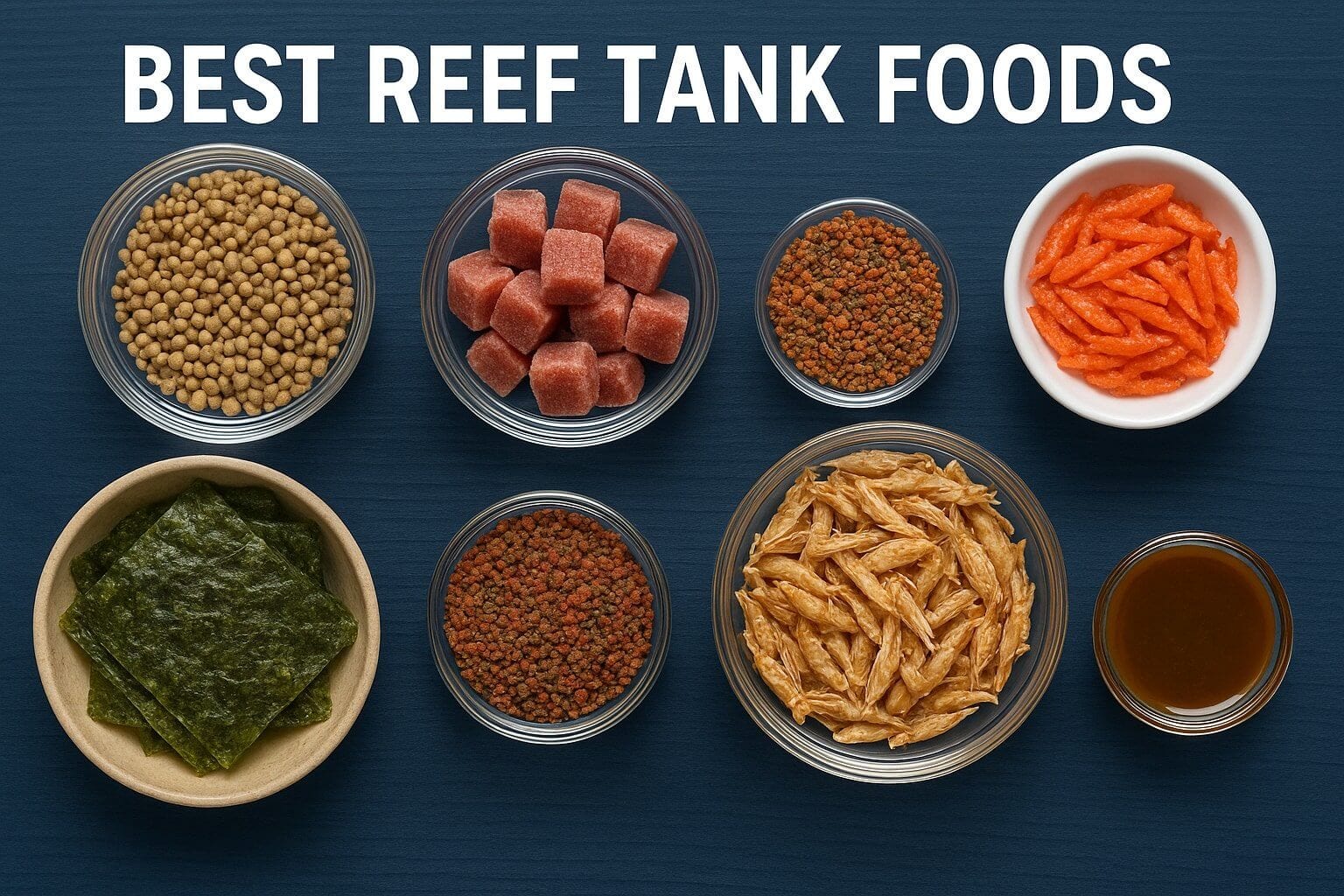
The best reef tank foods are the ones that most closely replicate what marine animals actually evolved to eat. That sounds obvious, but it cuts against the way most reef keeping is approached in practice. The majority of reef tanks are fed primarily on dried flakes, frozen cubes, and occasional pellets. These are convenient and not without nutritional value, but they are a compromise. The best reef tank foods are live, and understanding why changes how you think about feeding your tank.
Darren, Reefphyto
Live Phytoplankton
Live phytoplankton belongs at the foundation of any serious reef tank feeding programme. It is the base of the marine food chain and the dietary foundation for filter-feeding corals, clams, feather dusters, and the copepod populations that feed everything above them. The distinction between live and bottled phytoplankton is not trivial. Bottled products often have low viable cell counts by the time they reach the consumer, with degraded cell walls and reduced fatty acid content. Live phytoplankton dispatched fresh has intact cells, active enzymes, and the full lipid profile that makes it genuinely nutritious rather than simply green water.
Reefphyto's five-species phytoplankton blend provides a range of cell sizes and nutritional profiles that a single-species product cannot match. Different organisms in your tank absorb different species preferentially, and a blend ensures broader coverage across the whole system. Dose two to three times weekly into the sump with the skimmer off for an hour for best results.
Live Zooplankton

£13.99
Live Zooplankton You've added a new coral and watched it stay closed for weeks. Your SPS aren't extending the way they should. Your fish are present and your water is clean, but the tank feels static, like something essential is… read more
Live Copepods
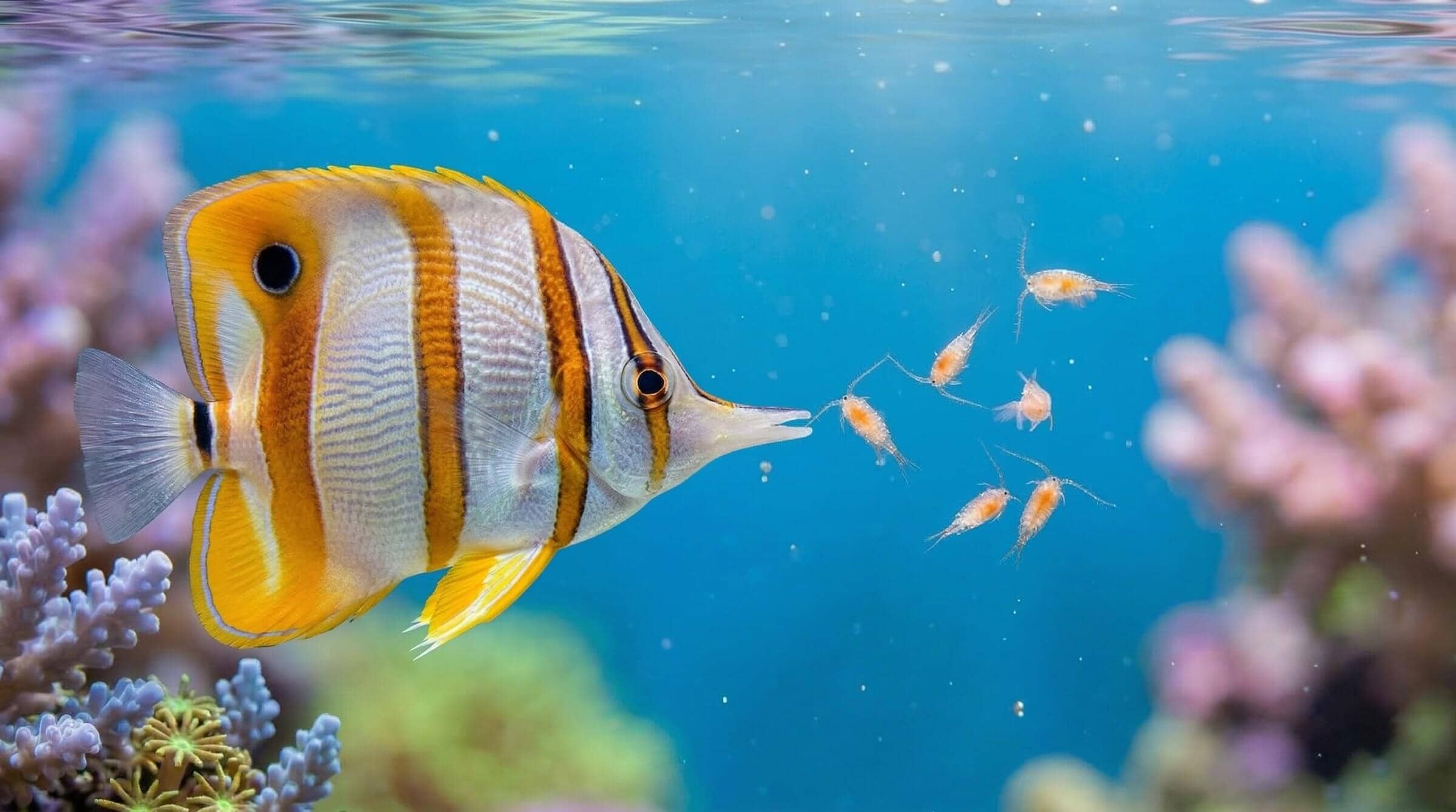
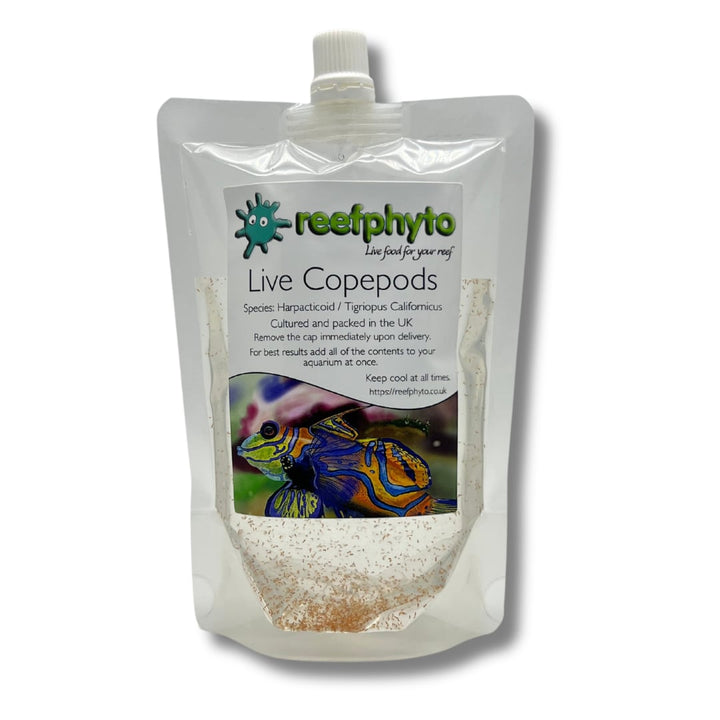
Live copepods are among the best reef tank foods available for any system housing fish that are difficult or impossible to feed on prepared foods. Mandarin dragonets, pipefish, and seahorses depend on live copepods entirely. Beyond the specialist feeders, copepods provide a continuous, live prey item for wrasses, anthias, dartfish, and most other reef fish species, triggering the natural hunting and foraging behaviours that frozen food cannot replicate.
The nutritional case for live copepods is specific. Tigriopus californicus, the harpacticoid species we culture at Reefphyto, is rich in EPA, DHA, and astaxanthin. These compounds are directly responsible for the vivid colouration reef fish display when fed well on live prey, and they support immune function and reproductive condition in ways that frozen alternatives cannot consistently deliver. Adding live copepods to a refugium establishes a self-sustaining prey population rather than simply delivering a one-off food pulse, which makes them among the most efficient of the best reef tank foods in terms of long-term return on investment.
Live Copepods
£11.99
Live Copepods UK: Tigriopus californicus, Cultured Fresh in Wales by Reefphyto Your reef looks right on paper. Clean water, stable parameters, good equipment. But something is still off. Your fish are pale, your mandarin is wasting, your corals are feeding… read more
Live Rotifers
Live rotifers are the best reef tank food for fine-particle feeding, breeding programmes, and any tank housing species with small mouths or filter-feeding behaviour. At 50 to 200 microns, Brachionus plicatilis rotifers are ideally sized for SPS coral polyps, soft coral tissue absorption, and the mouths of fish larvae and juvenile seahorses. No dried or frozen product reliably substitutes for live rotifers in a marine fish breeding context. The larvae of clownfish, dottybacks, and most other captive-bred marine fish require live rotifers as their first food, and the difference between rotifers cultured on live phytoplankton versus dried alternatives is measurable in larval survival rates.
In an established reef tank without a breeding programme, rotifers provide a broadcast food pulse that reaches the fine-particle feeders in the system that copepods and larger food items miss entirely. Added in the evening when coral polyps are most extended and fish activity is lower, they distribute through the tank and are absorbed efficiently before being exported by filtration.
Coral-Specific Supplements
Alongside live foods, dissolved amino acid supplements and fine-particle coral food preparations belong in the feeding rotation for tanks with significant coral populations. Amino acids are absorbed directly through coral tissue and contribute to pigmentation, tissue repair, and growth. They work alongside live food rather than competing with it, and produce visible improvements in colouration and polyp extension over four to eight weeks of consistent use.
Powdered coral food preparations, including products like Reef Roids and Coral Frenzy, provide lipids, vitamins, and proteins in a fine-particle format that corals can capture. They are most effective when broadcast into the water column two to three times weekly alongside live food additions rather than as a standalone feeding method. In SPS tanks, dose conservatively as these products are nutrient-dense and it is easy to push nitrate and phosphate above the ranges where SPS colouration begins to suffer.
A Note from Darren
The best reef tank foods are not complicated. Live phytoplankton, live copepods, and live rotifers, used consistently and in the right proportions for your stocking, will produce a visibly better result than any combination of dried and frozen products. I have been saying this for 16 years because I have watched it make the difference hundreds of times. If you want advice on where to start for your specific tank, call us on 01267 611533 or use the contact page.