Quick Navigation
- Smart Monitoring: Knowing What's Happening When You're Not Watching
- Automated Dosing: Consistency That Water Changes Alone Can't Provide
- AI-Controlled LED Lighting: Precision Over Intensity
- Filtration Automation: Reducing the Maintenance Burden
- Smart Feeding: Consistency for Fish and Corals
- What Technology Cannot Replace
- A Note from Darren
- FAQs
When I started keeping reef tanks over 16 years ago, monitoring water parameters meant a test kit, a colour chart, and a notebook. Equipment ran on timers or ran continuously with no middle ground. If something went wrong overnight, you found out in the morning. The gap between where the hobby was then and where technological integration in marine aquariums has brought it now is genuinely remarkable and for most reef keepers, it's made a measurable difference to the health and longevity of their tanks.
That said, technology is not a substitute for understanding your reef system, and some of the most expensive equipment on the market solves problems that better husbandry would prevent in the first place. This guide covers what's worth investing in, what it actually does, and how to think about integrating technology into a reef keeping routine rather than replacing that routine with automation.
- Darren, Reefphyto
Smart Monitoring: Knowing What's Happening When You're Not Watching
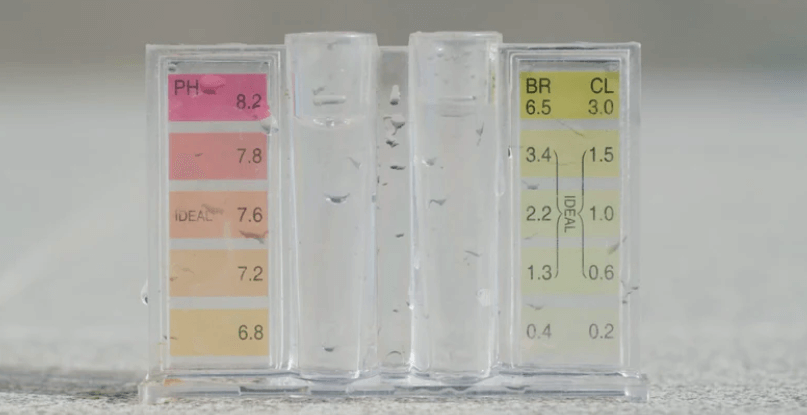
The single most impactful category of technological integration in marine aquariums is real-time parameter monitoring. The damage caused by a heater failure, a salinity spike from inadequate top-off, or a pH crash from a blocked skimmer air line is not the failure itself it's the hours between the failure and when you notice it. Smart monitoring systems close that gap by alerting you immediately when something moves outside a safe range, regardless of whether you're in the room or on the other side of the country.
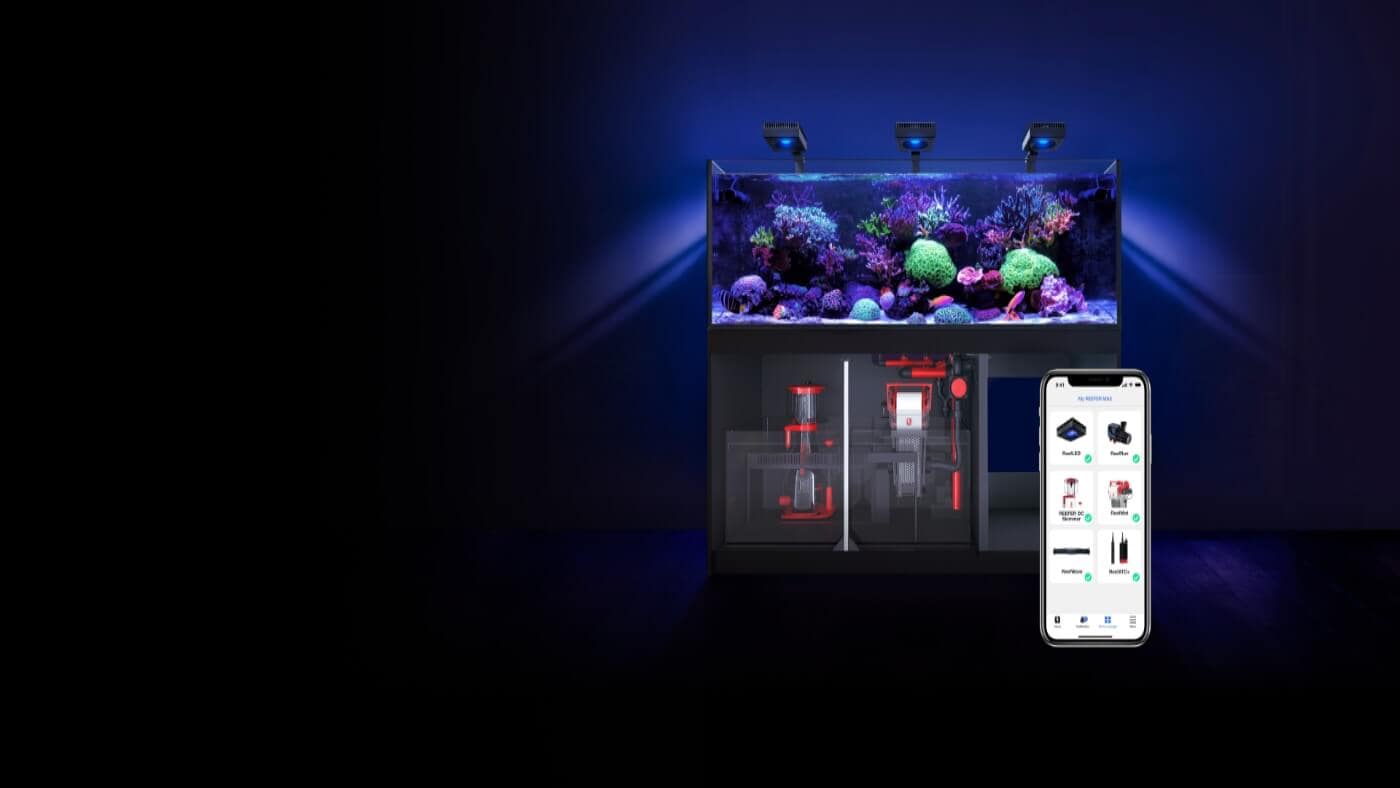
The Neptune Systems Apex remains the most comprehensive option available, providing real-time monitoring across temperature, pH, salinity, and ORP alongside the ability to automate responses turning a heater off if temperature exceeds a threshold, triggering an ATO if salinity rises, cutting lighting if a parameter reaches a critical level. The Seneye Reef offers a more accessible entry point, monitoring temperature, pH, and ammonia with app-based alerts. Hydros Control Systems sits between the two cloud-based, modular, and well-suited to keepers who want meaningful automation without the complexity of a full Apex installation.
For UK reef keepers, the most practical benefit of smart monitoring is temperature alerting through summer heatwaves and winter heater failures both events that can devastate a tank in the hours before they're noticed manually.
Automated Dosing: Consistency That Water Changes Alone Can't Provide
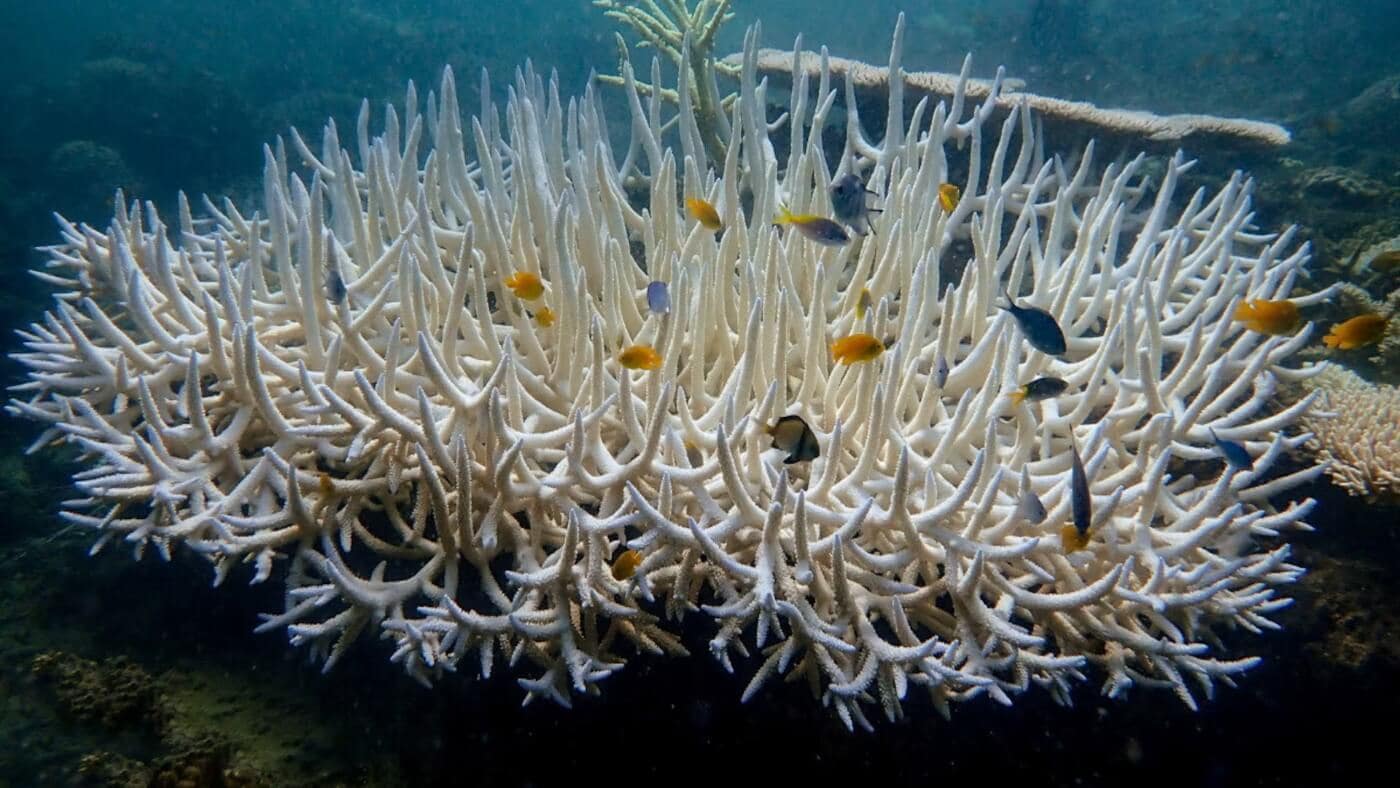
In any reef tank with growing stony corals, alkalinity, calcium, and magnesium are consumed at rates that manual dosing struggles to keep pace with consistently. The problem with manual dosing isn't intent it's that human schedules are irregular, doses get missed, and the cumulative effect of inconsistency shows up as parameter swings that stress coral tissue gradually and invisibly until something bleaches or stalls.
Automated dosing pumps deliver precise, programmable volumes on exact schedules, removing human variability from the equation. The D-D P4 Pro Doser and GHL Doser 2.1 are both well-regarded options that allow multiple simultaneous dose schedules covering two-part alkalinity and calcium solutions, trace element supplements, and live food additions for keepers who want to automate their phytoplankton or rotifer dosing alongside chemistry. Paired with a smart monitoring system, automated dosing becomes genuinely closed-loop: the monitor tracks drift, the doser corrects it, and you review logs rather than react to problems.
AI-Controlled LED Lighting: Precision Over Intensity
Modern AI-controlled LED systems have largely solved the lighting problem that caused enormous coral losses in earlier reef keeping generations, the inability to match light intensity to a coral's specific needs, depth position, and acclimation stage. Fixtures like the EcoTech Radion XR15 and XR30, the Aqua Illumination Hydra 32HD, and the Kessil AP700 all offer programmable spectrum control, automated sunrise and sunset simulation, storm and cloud cover effects, and remote adjustment via mobile app.
The practical benefit for coral health isn't the spectacle of a sunrise simulation it's the ability to set a reproducible, stable photoperiod and then adjust it incrementally as you acclimate new specimens. A coral introduced to a tank and immediately exposed to full PAR will frequently bleach under photoinhibition even if the light level is appropriate for established specimens. Programmable ramp-up sequences over two to four weeks eliminate that risk without requiring daily manual adjustment.
Energy efficiency is a genuine secondary benefit modern LED fixtures consume significantly less power than the T5 and metal halide systems they've replaced, which matters for both running costs and heat management in UK homes where summer ambient temperatures already push tanks toward their upper limits.
Filtration Automation: Reducing the Maintenance Burden
Automatic filter rollers, the Clarisea SK-5000 being the most widely used in UK reef systems address one of the most labour-intensive regular tasks in reef keeping: replacing filter socks before they become a nitrate source rather than a mechanical filter. A filter roller advances fresh fleece automatically as the media loads, maintaining consistent mechanical filtration without the weekly intervention that filter socks require. In a system where a skipped maintenance week has measurable water quality consequences, removing that dependency is worthwhile.
Smart protein skimmers that adjust their output based on bio-load rather than requiring manual tuning when feeding volume or fish load changes similarly reduce the maintenance attention that keeps water quality stable. Refugiums with dedicated smart lighting on reverse photoperiod timers, growing chaetomorpha for nitrate and phosphate export and pH stabilisation, complete the passive filtration picture for systems that want to reduce manual intervention without sacrificing water quality.
Smart Feeding: Consistency for Fish and Corals
Automated feeders for dry and pellet foods are among the most accessible and immediately practical pieces of technology in the hobby. An Eheim automatic feeder or Neptune AFS on a programmed schedule delivers consistent portion sizes at consistent intervals eliminating the overfeeding that commonly follows a busy week where larger compensatory doses are added, and maintaining feeding during holidays without requiring someone to visit the tank.
For live food additions phytoplankton, rotifers, copepods automated dosing pumps can be programmed to deliver small, frequent additions rather than relying on periodic manual doses. Small and frequent is consistently better for both water quality and feeding efficacy than large infrequent additions: it maintains a more constant food particle density in the water column, produces less uneaten waste that settles and decomposes, and more closely replicates the continuous low-level feeding environment that reef organisms evolved in.
Live Rotifers
£5.99
Live Rotifers: Brachionus plicatilis You've watched your fish larvae appear healthy at hatching, only to fade and disappear within the first few days. The water is clean, the temperature is stable, and you've done everything the guides suggest. But they're… read more

What Technology Cannot Replace
Technological integration in marine aquariums is a genuine force multiplier for good reef keeping practice but it's worth being direct about what it cannot do. Smart monitoring catches failures faster but doesn't prevent them. Automated dosing delivers chemistry consistently but cannot compensate for a fundamentally imbalanced system. AI lighting provides optimal photoperiods but doesn't eliminate the need for careful acclimation when introducing new corals.
The reef keepers who get the most from technology are the ones who understand their system well enough to interpret what the data is telling them. A pH alert at 2am is only useful if you understand what causes pH to drop and what to check first. The technology supports informed decision-making, it doesn't replace it.
A Note from Darren
The best upgrade most reef systems could make isn't a new controller or a smarter light it's a more consistent maintenance routine and a better feeding strategy. Technology makes consistency easier to achieve and catches problems sooner, which is genuinely valuable. But the foundation is still the same as it was 16 years ago: stable parameters, appropriate stocking, and animals that are fed what they actually evolved to eat.
If you want to talk through how live food additions fit into an automated reef keeping routine, or what to prioritise if you're looking to improve your system's stability, call us on 01267 611533 or use the contact page.