
Quick Navigation
- Why Reef Tank Water Changes Still Matter in Modern Reefkeeping
- Why Smaller, More Frequent Changes Win Every Time
- What Accumulates Without Regular Water Changes
- Water Clarity and Coral Health
- Water Changes vs Dosing: What Each One Actually Does
- What Happens When Reef Tank Water Changes Are Neglected
- Are Automatic Water-Change Systems Worth It?
- A Note from Darren
- FAQs
There's a particular kind of frustration in reef keeping that's easy to overlook because it happens slowly and reef tank water changes are usually at the heart of it. The water takes on a slight yellow cast. Corals that used to extend fully start looking a little retracted. A vague fishy smell appears when you lift the lid. You've been testing your parameters and everything looks acceptable but the tank doesn't look right, and you can't quite identify why.
Nine times out of ten, when I hear this from reef keepers, the answer is the same: reef tank water changes have slipped. Not stopped entirely just become less frequent, or slightly smaller, or pushed back a week here and there. And that slow drift accumulates into exactly the kind of dull, tired-looking tank that's so disheartening when you've invested real time and money into making it thrive.
I've been maintaining reef systems for over 16 years, and water changes remain one of the most reliable and undervalued tools in reef keeping. This guide covers why they matter, how to do them well, and how to build the kind of consistent routine that your reef will show its appreciation for.
- Darren, Reefphyto
Why Reef Tank Water Changes Still Matter in Modern Reefkeeping
A healthy reef tank is a constant balancing act. Light, nutrients, bacteria, organics, trace elements, every part of the ecosystem interacts with every other part, and when something drifts out of range, it rarely stays a small problem for long. Modern filtration is genuinely impressive, reactors, skimmers, macroalgae refugiums, and advanced media can manage a reef system at a level that wasn't possible fifteen years ago. But none of these technologies eliminate the need for reef tank water changes. They change how often you need to do them and what they're correcting but not whether.
Think of a water change as a reset mechanism. Fresh saltwater improves clarity, replenishes trace minerals, dilutes accumulated waste compounds, and stabilises chemistry that's slowly drifting. Even the most technically sophisticated reef system accumulates things it can't export efficiently on its own. A weekly 10–15% change is still the most reliable single habit you can build for long-term reef stability.
Premium Activated Carbon
£6.49
Premium Activated Carbon for Reef Aquariums Your water parameters test clean but something is still off. A yellow tint to the water, a faint smell you cannot place, or corals that seem less vibrant than they should. Not everything that… read more
Why Smaller, More Frequent Changes Win Every Time
A common mistake, particularly among newer reef keepers, is the idea that a large monthly water change is equivalent to several smaller weekly ones. It isn't and in some ways it's worse. A 30–40% water change on a tank with established coral and fish creates significant parameter swings, temperature, salinity, alkalinity that stress inhabitants even when the replacement water is well-prepared. The coral tissue that was slowly adapting to your tank's current chemistry gets a sudden jolt it didn't need.
Smaller, frequent reef tank water changes maintain stability rather than correcting instability. A 10–15% weekly change keeps nutrients in check before they build to problem levels, prevents large parameter swings, gives you a regular touchpoint to observe your system, and distributes the task so it never becomes the dreaded quarterly event it can turn into when avoided. For keepers who want even more consistency, automated micro-change systems deliver small volumes continuously throughout the day, an approach that works particularly well in nano and pico reef tanks where even minor swings have outsized effects.
What Accumulates Without Regular Water Changes
Reef tanks produce waste constantly, uneaten food, fish waste, decaying organic matter, biofilm, and nitrogen compounds that your filtration processes but cannot fully export. The most significant accumulator is nitrate. Unlike ammonia and nitrite, which your biological filtration converts relatively efficiently, nitrate builds up because closed aquarium systems have no equivalent of the ocean's vast dilution capacity. Elevated nitrates stress fish, reduce coral colouration, fuel nuisance algae, slow coral growth, and increase disease susceptibility, all gradually, in ways that are easy to attribute to other causes until you test and find the number climbing.
Phosphate follows a similar pattern. As organic matter breaks down, phosphate accumulates. In small amounts it's necessary in elevated amounts it slows coral calcification and is one of the primary drivers of the algae outbreaks that trouble so many reef tanks. Regular reef tank water changes dilute both compounds before they reach concentrations that cause visible problems, buying time and stability between deeper interventions.
Live Copepods
£11.99
Live Copepods UK: Tigriopus californicus, Cultured Fresh in Wales by Reefphyto Your reef looks right on paper. Clean water, stable parameters, good equipment. But something is still off. Your fish are pale, your mandarin is wasting, your corals are feeding… read more
Water Clarity and Coral Health
A tank that hasn't had regular water changes doesn't just test poorly, it looks different. Water yellows as dissolved organic compounds accumulate, reducing light penetration even when your fixture output hasn't changed. Corals receiving less usable light than they were six weeks ago show it in their polyp extension, their colour saturation, and eventually their tissue health. What looks like a lighting problem or a coral pest problem is often, at root, a water quality problem that built slowly while parameters stayed within acceptable ranges on the test kit.
Fresh saltwater restores optical clarity, improves light penetration to every coral in the tank, and returns that clean ocean smell that characterises a well-maintained reef. If your tank looks dim despite strong lighting, or carries a noticeable fishy odour at the surface, it's almost certainly telling you that reef tank water changes are overdue.
Water Changes vs Dosing: What Each One Actually Does
This is a debate I hear regularly, and my honest view is that it's often a false choice. Water changes and dosing serve different functions, and healthy reef systems typically use both.
Water changes dilute accumulated waste, refresh minor trace elements, and stabilise the overall chemistry of the system. They are excellent at preventing drift and maintaining baseline quality. What they cannot do reliably, especially in tanks with actively growing stony corals, is keep pace with the consumption of alkalinity, calcium, and magnesium. A mature SPS tank with healthy growth will consume alkalinity faster than any realistic water change schedule can replace it.
Dosing whether two-part, kalkwasser, or a calcium reactor provides precise, continuous replenishment of the elements corals consume in calcification. It gives you accurate control of the parameters that water changes can't maintain alone in a heavily calcifying system. The two approaches complement each other rather than competing: reef tank water changes maintain the baseline, dosing manages the consumption-driven parameters that change independent of water quality.
What Happens When Reef Tank Water Changes Are Neglected
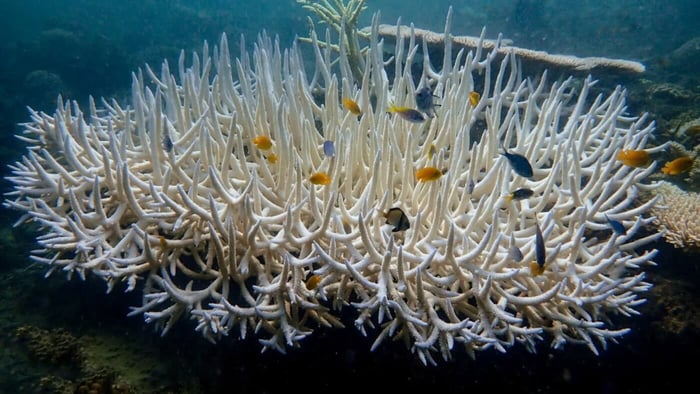
It's worth being direct about this, because the consequences are gradual enough that they're frequently attributed to other causes. When reef tank water changes are skipped or scaled back significantly over several weeks, the changes you'll see are a slow yellowing of the water, a rise in nitrates that begins to show in algae growth before it shows on a test kit, coral colouration that fades rather than bleaches, a subtle dulling that's easy to dismiss as lighting variance. Fish may show slightly increased susceptibility to minor infections. LPS corals retract more readily and extend less fully. The tank still looks like a reef tank, but it looks like a tired one.
None of these changes is dramatic in isolation. That's exactly what makes neglected water changes one of the most common contributors to long-term reef decline, the signal is quiet until it isn't, and by the time it's obvious something is wrong, weeks of accumulated imbalance need correcting.
Are Automatic Water-Change Systems Worth It?
For many reef keepers, the biggest barrier to consistent reef tank water changes isn't knowledge, it's time and inertia. Automatic water-change systems eliminate both by running small, continuous exchanges without any manual intervention required. They deliver the stability benefits of frequent small changes without adding to your maintenance schedule, and they're particularly well-suited to nano and pico reef tanks where the margin for parameter drift is smallest.
Whether you automate or do it manually, the principle is the same: small and consistent beats large and infrequent every time. Pair a regular water change schedule with a sand-sifting clean-up crew gobies, conches, turbo snails and your substrate stays turned over and your detritus doesn't accumulate into a nitrate source between changes.
Copepod Culture Kit

£34.99
Copepod Culture Kit: Grow Live Copepods at Home Buying live copepods every few weeks works, but it adds up. And every time there's a gap in delivery, your mandarin gets stressed, your corals stop extending, and you're back to square… read more
A Note from Darren
Reef tank water changes are the maintenance task that's easiest to deprioritise when life gets busy, and the one whose absence shows up most reliably in how a reef looks and performs over time. Sixteen years of running live marine cultures and watching reef systems thrive and struggle has reinforced one thing consistently: the tanks that do best are the ones maintained by people who've built reliable routines around the fundamentals. Water changes are the most fundamental of all of them.
If your reef is looking tired and you're not sure where to start, a good water change is almost always the right first step. If you want to talk through your system's specific needs, or if you're looking to add live foods to support a reef you're working to improve, call us on 01267 611533 or drop a message through the contact page. I'm always happy to help.
FAQs
How often should I change the water in my reef tank?
Most reef tanks do well with a 10–15% water change every week. Heavily stocked or fast-growing coral systems may benefit from slightly more frequent or larger changes.
Are small water changes better than big ones?
Yes. Smaller, consistent water changes create fewer parameter swings and provide more stable chemistry than large, infrequent changes.
Can water changes replace dosing?
Not for most modern reef tanks. While water changes help refresh trace elements, corals typically consume alkalinity, calcium, and magnesium faster than water changes alone can replenish them. Dosing gives better long-term control.
Do water changes help with nitrate and phosphate?
Absolutely. Water changes physically remove nitrates, phosphates, dissolved organics, and other waste compounds that filtration can’t export efficiently.
Why does my reef tank water look yellow or cloudy?
Yellowing or dingy water usually comes from dissolved organics and natural waste buildup. Regular water changes and good carbon help restore clarity and light penetration.
Are automatic water-change systems worth it?
For many reefers, yes. Auto-water-change systems provide exceptional stability, reduce workload, and allow micro-changes that keep parameters steady throughout the week.
How do I know if I’m changing too much water?
If your corals or fish look stressed right after water changes or your parameters swing dramatically, your water changes may be too large or inconsistent. Aim for smaller, stable changes.
Can I skip water changes if I run carbon, GFO, or a refugium?
No. These tools reduce nutrient buildup but do not remove all waste products or replenish essential trace minerals. Water changes remain an important part of system health.
Do water changes help stabilise pH?
Yes. Fresh saltwater brings higher oxygen levels and balanced alkalinity, which support a more stable pH environment.
Should I vacuum the sand during water changes?
Light sand cleaning is beneficial, but deep vacuuming can disturb beneficial bacteria. Many reefers use sand-sifting gobies, snails, or conches to keep the substrate naturally clean.