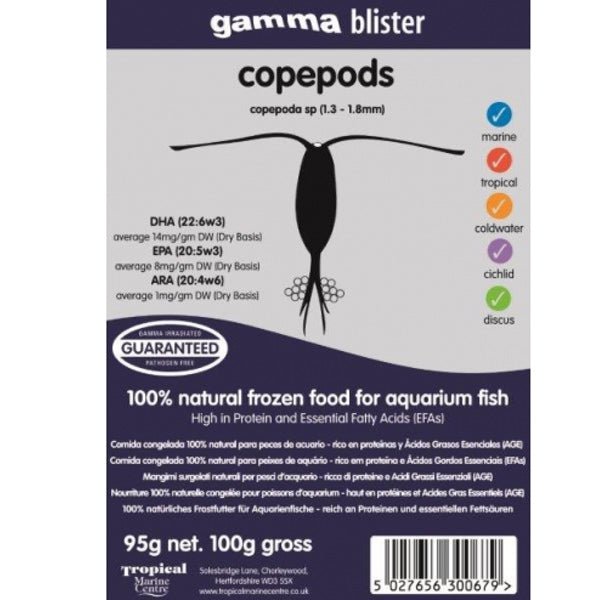
These frozen gamma copepods are flash-frozen and gamma-irradiated, a sterilisation process that eliminates pathogens and parasites while preserving the natural shape, texture, and nutritional content of the copepod. Each pack contains five 100g blister packs. Rich in omega-3 fatty acids and marine protein, they trigger strong feeding responses in finicky species and provide the nutritional profile that supports colour, immunity, and condition in copepod-dependent fish. They are also an effective food for LPS and SPS corals, gorgonians, feather dusters, and filter-feeding invertebrates that benefit from small particulate prey in the water column.
Fish that were previously reluctant to accept prepared foods often respond well to frozen copepods as a stepping stone, and the natural copepod shape and movement cues in the water column make them far more stimulating than flake or pellet alternatives for species that hunt by sight and instinct.
Reefphyto has been working with live copepod nutrition since 2008 and we stock frozen gamma copepods as an honest complement to our live range. If you are unsure whether frozen or live copepods are the right fit for your specific fish and setup, contact us directly and we will give you a straightforward answer based on what you are keeping.
Frozen Gamma Copepods Pathogen Free
Copepods are the single most important prey item in the marine food chain. Every reef fish species that proves difficult to feed in captivity, mandarins, seahorses, pipefish, scooter blennies, anthias, evolved in an environment where copepods were available in enormous quantities throughout the day. The captive reef tank cannot replicate that abundance automatically, and the result is fish that are nutritionally compromised even when water quality is excellent and the keeper is attentive.
Frozen gamma copepods address this gap directly. They are not a complete substitute for a live copepod population in a well-established refugium, but they are a genuinely nutritious, practical, and pathogen-free way to deliver copepod-based nutrition to fish and corals that need it, on a schedule that suits the keeper rather than depending on live culture management.
What Gamma Irradiation Does and Why It Matters
Gamma irradiation is a sterilisation process that exposes the frozen product to ionising radiation, eliminating bacteria, parasites, and pathogens without the use of heat or chemicals. The result is a frozen food that is safe to introduce to a closed reef system without the disease risk that can accompany some other frozen or fresh marine foods.
For reef keepers, this matters particularly when feeding fish that are already under stress, new arrivals being quarantined, or sensitive species like seahorses and pipefish that are susceptible to bacterial infection. The gamma process also preserves the physical structure of the copepod intact, so the natural shape and size that triggers the hunting response in obligate copepod feeders is maintained in the thawed product.
Nutritional Profile and Who Benefits
Copepods are rich in long-chain omega-3 fatty acids including EPA and DHA, marine proteins, and natural carotenoids including astaxanthin, which is responsible for the vivid red, orange, and yellow colouration seen in reef fish. A diet with consistent copepod inclusion supports immune function, reproductive condition, and the colour saturation that makes reef fish visually striking.
The fish that benefit most are those with the strongest evolutionary dependence on copepod prey. Mandarin dragonets and scooter blennies are obligate live feeders in the wild and respond to frozen copepods thawed in tank water, which releases movement cues and scent into the water column. Anthias are high-metabolism planktivores that benefit from small prey items fed frequently. Seahorses and pipefish are slow, deliberate hunters that need prey at the right particle size and in sufficient density to feed effectively. Frozen copepods delivered into a low-flow area allow these fish to hunt in the way they are built for.
For corals, frozen copepods thawed and target-fed directly to LPS polyps, gorgonians, and NPS corals provide the particulate prey these animals rely on for heterotrophic nutrition. Filter feeders including feather duster worms and bivalves also benefit from the fine particles released into the water column during and after feeding.
Frozen Copepods vs Live Copepods - An Honest Comparison
At Reefphyto we culture and sell live copepods as our core product, so we have no reason to overstate what frozen copepods can do. The honest comparison is this.
Live copepods are nutritionally superior because they are actively metabolising, carrying the full lipid and fatty acid content of a living animal, and they can colonise a refugium to establish a self-sustaining population. For mandarin dragonets and other obligate live feeders kept long-term, a healthy live copepod population in a refugium is the most reliable nutritional foundation.
Frozen copepods cannot colonise a refugium and do not provide the same colonisation and population benefits. What they offer is convenience, pathogen safety, a long freezer shelf life, and a consistent supply that does not depend on live delivery logistics. They are an excellent daily supplement to a live food programme, a practical sole option for keepers who cannot manage live deliveries regularly, and a useful transition food for fish being trained onto prepared foods from a live diet.
Many keepers use both: live copepods added monthly to maintain refugium population density, and frozen copepods fed two to three times per week as a daily nutritional supplement. This combination delivers the benefits of both without the full management commitment of relying on live food alone.
How to Feed Frozen Gamma Copepods
Remove one blister from the freezer and allow it to thaw in a small container of tank water for a few minutes. Do not use hot water or microwave, as heat degrades the nutritional content. Once thawed, pour the contents into a low to moderate flow area of the tank where target fish are active. For corals and filter feeders, turning off the skimmer for 30 to 60 minutes after dosing allows the fine particles to remain in the water column long enough to be captured.
For species such as seahorses and pipefish that feed more slowly, target feeding with a pipette or turkey baster directly in front of the animal gives the best results. Feed two to three times per week as part of a varied marine diet, or more frequently for high-demand species.
Pairing Frozen Copepods with Reefphyto Live Products
For keepers who want to build the most complete copepod feeding programme, frozen gamma copepods work well alongside Reefphyto's live copepods and Pod-Shot for day-to-day supplementation between live deliveries. Live phytoplankton dosed alongside frozen copepod feeding sessions provides the planktonic environment that reef fish and corals associate with natural feeding conditions, enhancing feeding response across the tank. For fish being transitioned from live to frozen prey, alternating between the two in the same feeding session can help make frozen copepods more acceptable to fish that are initially reluctant.

 Roll over image to zoom in


 Darren Wordley
18 years culturing live phytoplankton in Wales
Darren Wordley
18 years culturing live phytoplankton in Wales
 Cultured in Wales, shipped live.