Coral Grow Out Discs – 3D Printed for Secure Propagation
Fragging a coral is the easy part. What happens next depends almost entirely on what you mount it on. A frag that topples off a narrow plug within the first week, or fails to encrust cleanly onto a smooth surface before it needs to be handled again, is a setback that compounds when you are managing a rack of twenty or managing a grow-out table for a frag swap. The base is not an afterthought. It is the foundation the whole propagation process rests on.
The two failure points that matter most are stability and surface adhesion. A base that tips under flow or when a fish brushes past it stresses the frag during the critical early attachment period. A surface that is too smooth gives the coral tissue nothing to grip, slowing encrustation and extending the time before the frag is secure enough to be confidently moved, traded, or placed in its permanent position.
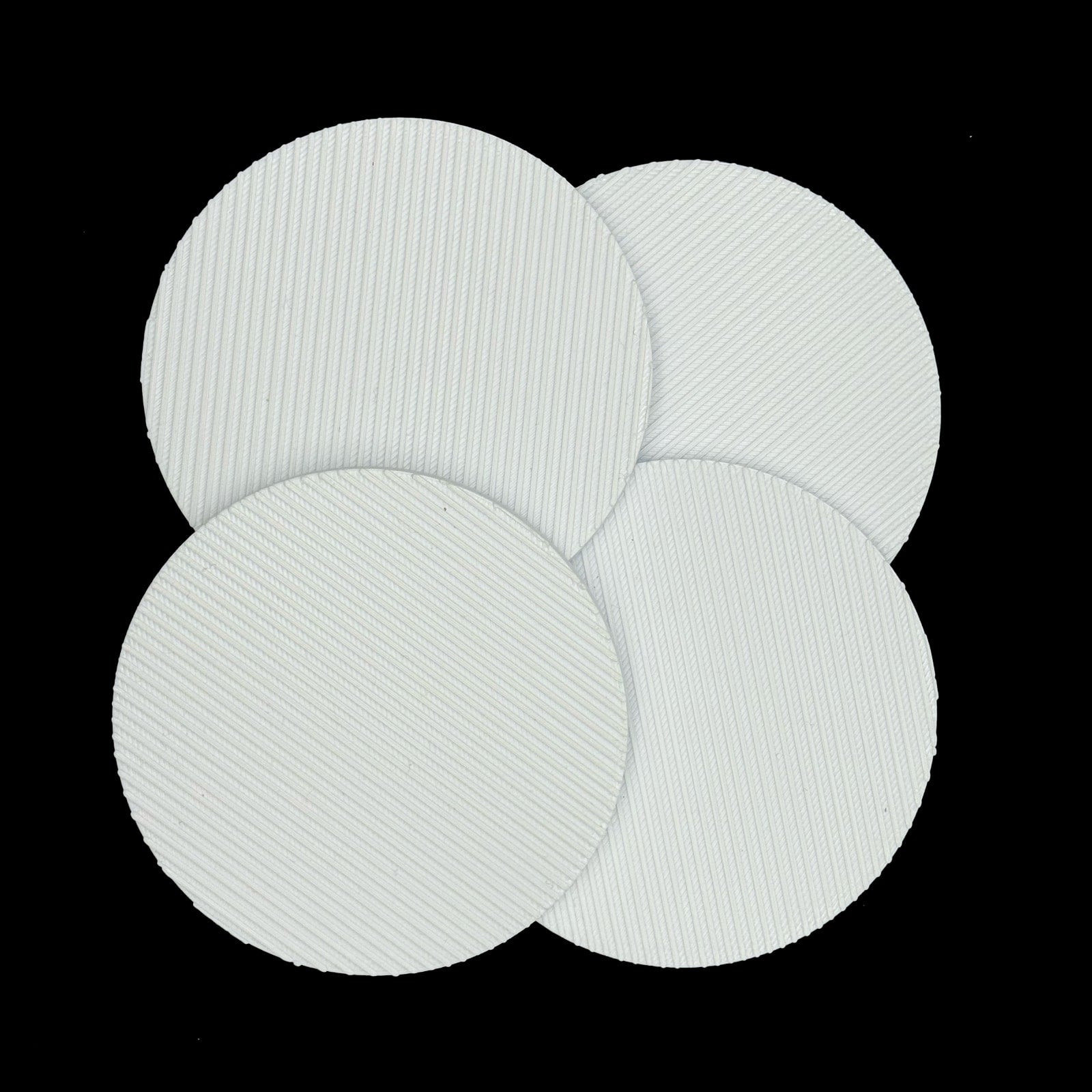
Reefphyto Coral Grow Out Discs are 3D printed in-house from reef-safe PETG at 60mm diameter and 4.3mm thickness. The wide footprint provides stability on frag racks, sand beds, and rock shelves without tipping under normal tank flow. The textured surface gives coral tissue an immediate grip point, encouraging faster encrustation across the full disc face and producing frags that are securely attached and presentable sooner. PETG is chemically inert in saltwater, durable across repeated frag cycles, and straightforward to clean between uses. Available in black or white to suit the visual preference of the tank or grow-out system.
The frag that attaches cleanly and stays put through the grow-out period is the one that arrives at the swap table looking the part. A well-encrusted coral on a stable, presentable base commands attention and confidence from other hobbyists in a way that a toppled or partially attached frag on a generic plug does not.
These discs are designed and printed by the same team that cultures copepods, phytoplankton, and rotifers in Wales, built for practical reef use by people who keep and propagate corals themselves. If you have questions about quantities for a larger grow-out setup or frag swap order, contact us directly.
Give your frags the foundation they need to grow out right.
Why the Base Matters in Coral Fragmentation
Coral fragmentation is one of the most rewarding aspects of advanced reef keeping. A single colony, carefully cut and mounted, becomes two, then four, then a rack of growing frags that represent months of patient husbandry, tradeable at swaps or given to fellow hobbyists who could not otherwise access that coral. But the success of a fragmentation programme is not determined only by the quality of the cut or the health of the parent colony. It is determined in large part by what the frag is mounted on and how well it stays there during the first two to six weeks of encrustation.
The base has to do several things simultaneously. It has to provide a stable platform that resists the flow and incidental contact of a busy reef tank without tipping. It has to offer a surface the coral tissue wants to encrust onto rather than avoid. It has to be inert in saltwater without leaching compounds that could stress the frag or the surrounding tank chemistry. And it has to be practical to handle, stack, label, and clean across the repeated cycles of a working grow-out system.
Cheap or poorly designed frag plugs fail at one or more of these requirements. The narrow stems tip. The smooth surfaces delay encrustation. The materials degrade or discolour in saltwater. The Reefphyto Coral Grow Out Discs were designed to address all of these at once.
Design and Materials
The discs are 3D printed in-house by Reefphyto using PETG filament. PETG, polyethylene terephthalate glycol, is a thermoplastic well established in reef keeping applications for its combination of chemical resistance, durability, and biological inertness in saltwater. It does not leach plasticisers, does not degrade meaningfully over time in a saltwater environment, and does not affect tank chemistry. The same material is used in the PodHide copepod shelter products, and its reef-safe credentials are well established across hobbyist and commercial reef applications.
At 60mm diameter and 4.3mm thickness, the disc provides a wide, flat footprint that sits stably on frag racks, sand beds, and rock shelves without the tipping tendency of narrower plug formats. The wide base also distributes the weight of encrusting coral growth evenly as the colony expands outward, rather than concentrating it at a central point that can unbalance a narrow stem plug over time.
The textured surface is one of the most important design elements. Coral tissue encrustment begins at microscopic contact points between the coral's basal plate and the substrate surface. A smooth surface offers fewer of these contact points and slows the initial attachment. The textured surface of the grow out disc provides immediate mechanical grip for coral tissue and increases the surface area available for early attachment, accelerating the encrustation timeline and producing a more secure frag sooner.
Available in black and white to suit different tank aesthetics and grow-out system preferences. Black discs are less visually prominent against dark sand beds and rock. White discs sit more neutrally in brighter systems or against white sand.
What These Discs Are Suitable For
The 60mm diameter and stable flat format make these discs appropriate across all major fragmentation categories.
SPS corals including Acropora, Montipora, and Stylophora encrust effectively onto the textured surface and benefit from the stable base during the critical early weeks when the frag is establishing its holdfast. The wide disc surface gives spreading Montipora species in particular the room to encrust outward without reaching the edge of a narrower plug.
LPS corals including Acanthastrea, Favia, Favites, and Chalice fragments glue cleanly to the disc surface and sit stably through the encrustation period. The flat format is preferable to a raised plug for many LPS frags, which benefit from sitting close to the disc surface rather than being elevated on a stem.
Soft corals including Zoanthids, Palythoa, and Mushroom corals are among the most commonly fragged and traded species in the hobby. Their tendency to extend beyond the original mount and encrust onto surrounding substrate makes a wide, stable disc base preferable to a narrow plug, and the textured PETG surface gives them effective early adhesion.
Using Grow Out Discs in Practice
Apply coral frag adhesive, cyanoacrylate gel or two-part epoxy, to the centre of the disc surface and mount the frag before the adhesive sets. For most SPS frags a small amount of cyanoacrylate gel with a brief saltwater cure provides immediate mechanical hold while the coral begins its natural encrustation process. For LPS and soft coral frags, two-part epoxy is often preferable as it allows slight repositioning before setting and provides a stable bed for irregularly shaped frag bases.
Once mounted, place the disc on a frag rack, sand bed, or sheltered position in the grow-out system. The 60mm base sits stably across standard egg crate frag racks and flat sand surfaces. Allow flow but avoid direct high-velocity flow onto the frag during the first week of attachment.
The discs are reusable. Once the coral has been removed for transfer or sale, clean the disc with a soft brush under running water or a brief fresh water rinse to remove encrusted coralline algae and debris. PETG withstands cleaning agents and repeated use without degrading.
Frag Swaps and Grow-Out Programmes
For hobbyists running frags specifically for swap events or trading, presentation matters. A coral mounted on a stable, clean, wide-format disc arrives at the swap table looking like it was managed with care, which it was. Frags that have fully encrusted onto the disc surface, with clean coral growth extending to the disc edge, are visibly more appealing to prospective traders than frags perched on thin plugs or showing signs of topple stress.
For commercial coral growers managing larger grow-out tables, the reusability and durability of PETG discs reduces the per-frag substrate cost over time compared to single-use alternatives. The consistent 60mm format also standardises rack layout and makes frag labelling and tracking more straightforward across a larger operation.
Frequently Asked Questions
How many discs come in a pack?
The current listing is priced per disc at £5.95. For larger quantity orders for frag swap preparation or commercial grow-out setups, contact us directly to discuss availability.
Can I use both black and white discs in the same tank?
Yes. The colour choice is purely aesthetic and has no effect on the coral or tank chemistry. Some hobbyists use different colours to identify different coral species or grow-out batches, which is a practical labelling approach for managing larger frag collections.
What adhesive works best with these discs?
Cyanoacrylate gel is the most widely used frag adhesive and works well on PETG. Apply a small amount to the disc, mount the frag, and briefly expose to air or mist with saltwater to accelerate the cure. Two-part epoxy is the preferred choice for heavier LPS frags or when a longer working time is needed before the adhesive sets.
Are these suitable for use in a frag tank with high flow?
Yes. The 60mm diameter and low profile provide good stability under moderate to high flow on standard frag racks. For very high velocity direct flow, position discs so that the frag faces the flow at an angle rather than receiving it directly, which reduces the tipping moment on any base format.
How do I clean them between uses?
A soft brush under running water removes most encrusted coralline algae and debris. For more stubborn encrustation, a brief soak in a dilute solution of water and white vinegar dissolves calcium carbonate deposits without damaging the PETG material. Rinse thoroughly with fresh water before reuse.
H2: Made by Reefphyto - Designed for Practical Reef Use
Reefphyto designs and prints the Coral Grow Out Discs in-house in Wales, alongside the PodHide copepod shelter range and other 3D reef tools. Every product in the 3D range is designed from practical reef keeping experience rather than from a catalogue. If you have questions about quantities, custom sizing, or how these discs fit into a larger propagation programme, contact us directly. Darren responds personally.



 Roll over image to zoom in



 Darren Wordley
18 years culturing live phytoplankton in Wales
Darren Wordley
18 years culturing live phytoplankton in Wales
 Cultured in Wales, shipped live.