Your nitrates are creeping up and water changes are only doing so much. You know the tank needs better nutrient export but chemical removers feel like a sticking plaster over a problem that a more natural approach would solve properly.
The issue is not effort. It is infrastructure. Growing nutrient-absorbing plants in an aquarium without a stable, secure mounting point is genuinely difficult. Plants drift, roots get disturbed, stems rot at the waterline. The result is a good idea that never quite works in practice, and nutrients that stay in the water.
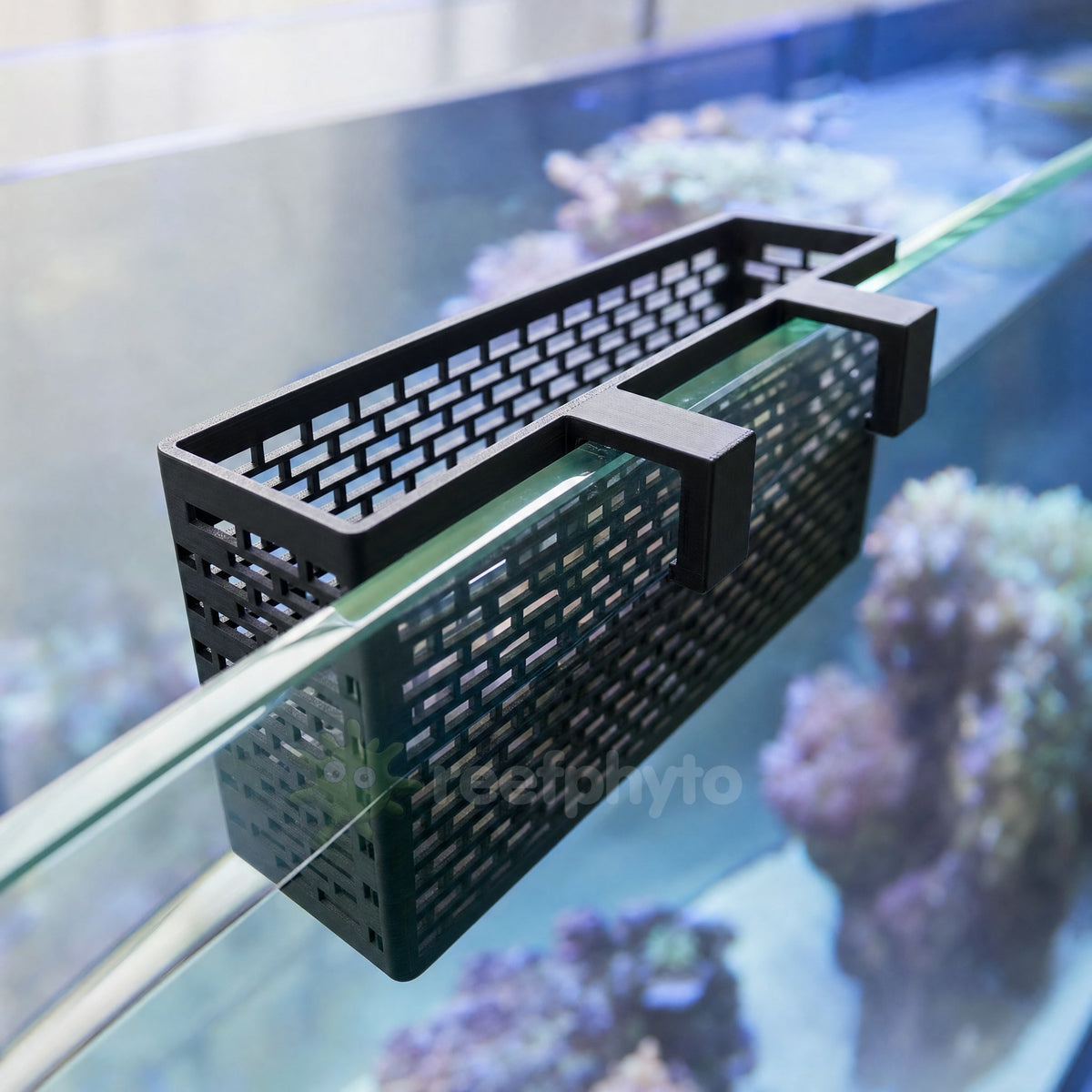
The Reefphyto Aquarium Plant Holder is a 3D printed, reef-safe PETG grow out pot designed to hang securely on tank glass or acrylic up to 12mm thick. It holds mangroves, pothos, spider plants, and macroalgae at the waterline where roots feed in the water column and foliage grows above it. Measuring 160mm wide, 38mm deep and 80mm tall, it fits standard tank trim and frameless glass without tools or adhesive.
A well-established pothos or mangrove in the sump draws nitrates and phosphates directly from the water column around the clock, working continuously between water changes. The difference accumulates over weeks as the plants establish and the biological load on the system reduces in a way that no chemical media can replicate.
Reefphyto has been designing and printing reef tools from our Welsh facility since 2008. Every piece in the range is built around a practical problem that reef keepers actually face, with the same attention to material quality and reef safety we bring to our live cultures. Darren is available directly if you have questions about plant selection or placement for your specific setup.
If you want cleaner water without the chemistry, this is where that begins.
Every reef keeper eventually hits the same plateau. The tank looks good. Parameters are broadly stable. Water changes are happening on schedule. But nitrates creep back up within days of a change, phosphates sit persistently above where you want them, and the biological export system is not keeping pace with the biological load. More chemical media is an option. A more productive refugium is a better one.
Growing nutrient-absorbing plants in your sump or refugium is one of the most consistently effective approaches available for long-term nitrate and phosphate management. Pothos, mangroves, spider plants, and macroalgae all draw nitrogen compounds directly from the water column as they grow. The problem is the practical side: securing a plant at the waterline in a way that keeps roots submerged, holds the stem stable, and does not require permanent modifications to the tank or sump.
A Purpose-Built Solution for Natural Nutrient Export
The Reefphyto Aquarium Plant Holder is a 3D printed PETG grow out pot designed specifically for this application. Two arms hook over the rim of tank glass or acrylic, holding the pot securely at the waterline without adhesive, drilling, or modification. The mounting fits standard tank trim and frameless glass up to 12mm thick.
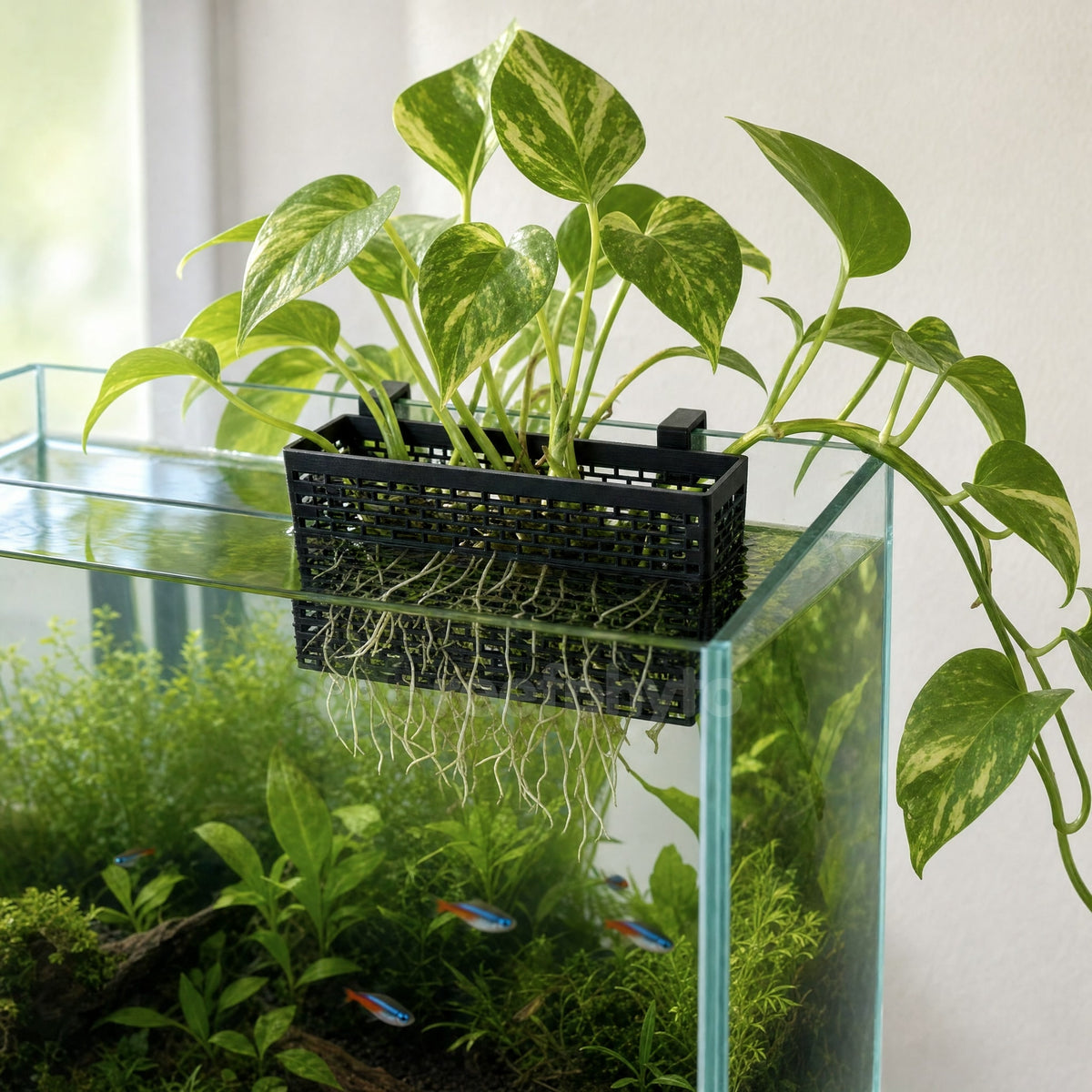
The pot holds the plant stem at the correct position with roots trailing into the water column below and foliage growing above the surface. This is the configuration that produces the most effective nutrient uptake. Roots that are submerged draw nitrates and phosphates directly from the surrounding water. Foliage that grows in open air develops the surface area needed for the plant to process what the roots are absorbing.
Printed in PETG, the material used across the full Reefphyto 3D reef tools range, the plant holder is non-toxic, saltwater stable, and safe for use in marine and freshwater systems without leaching or degradation over time.
Which Plants Work Best in an Aquarium Plant Holder
Pothos is the most commonly used species for aquarium nutrient export and for good reason. It is fast growing, extremely tolerant of the humidity and temperature conditions around an aquarium, and highly effective at nitrogen uptake. A single pothos stem placed in a sump can produce visible root growth within weeks and measurable nitrate reduction within a month of establishment.
Mangroves are slower to establish but provide exceptional long-term nutrient export and a distinctive visual element for display sumps and dedicated refugiums. The plant holder provides the stem support that mangrove propagules need during their early growth phase.
Spider plants and other trailing species with robust root systems work well in the same configuration. The key requirement is a species that tolerates root submersion and high humidity rather than full aquatic growth.
For marine systems, macroalgae such as Chaeto can also be positioned using the holder in areas of the sump where it benefits from light exposure, though a dedicated refugium section is typically more productive for macroalgae cultivation at volume.
Natural Filtration That Works Around the Clock
The practical advantage of plant-based nutrient export over chemical media is continuity. A bag of phosphate resin removes phosphate until it is saturated and then stops working. A healthy plant removes phosphate every hour of every day as long as it continues to grow. The biological process does not exhaust itself the way a chemical medium does.
In a well-managed sump with a pothos or mangrove growing consistently, the nitrate curve between water changes flattens measurably over time. Keepers who establish plant export alongside their regular water change schedule consistently report that nitrates stabilise at lower baseline levels than they maintained with water changes alone.
This is not a replacement for good husbandry. It is an addition to it that compounds in effectiveness as the plants mature and the root mass develops.
Designed and Printed at the Reefphyto Facility in Wales
The Aquarium Plant Holder is designed and produced in-house at our Welsh facility using the same PETG material and quality standards applied across the full 3D reef tools range. Every dimension has been chosen with practical function in mind: the arm geometry fits securely without damaging tank trim, the pot dimensions accommodate a wide range of stem sizes, and the overall profile keeps the unit discreet against the tank glass.
Reefphyto has been producing reef-safe equipment and live marine foods from Wales since 2008. Darren is available directly if you have questions about


 Roll over image to zoom in



 Darren Wordley
18 years culturing live phytoplankton in Wales
Darren Wordley
18 years culturing live phytoplankton in Wales
 Cultured in Wales, shipped live.