
Quick Navigation
pH is one of those parameters that experienced reef keepers watch carefully and newer ones often underestimate, right up until the moment something goes wrong. Addressing pH fluctuations in marine tanks isn't complicated once you understand what's driving them, but the consequences of persistent instability accumulate quietly: stressed fish, weakened coral tissue, reduced biological filtration efficiency, and a tank that looks and performs below its potential despite everything else appearing in order.
The target range for a marine tank is 8.1–8.3, but the number itself matters less than how stable it is across a 24-hour period. A tank that holds steady at 8.1 all day is in better shape than one that swings between 7.9 at night and 8.4 in the afternoon even though the average looks acceptable. It's the movement that causes stress, not a slightly imperfect baseline.
This guide covers the most common causes of pH instability in UK home reef tanks and the practical steps to address each one.
- Darren, Reefphyto
Why pH Fluctuates in Reef Tanks
pH in a closed reef system is primarily governed by the balance between CO2 and oxygen in the water. During the day, when corals and macroalgae are photosynthesising, they consume CO2 which drives pH upward. At night, photosynthesis stops but respiration continues across all tank inhabitants, releasing CO2 back into the water and pulling pH down. This diel swing is natural and unavoidable to some degree, but in a well-managed system it should be narrow typically no more than 0.2–0.3 pH units between the daily high and low.
When the swing is larger than this, or when pH is trending consistently low regardless of time of day, there's an underlying cause worth identifying. The most common drivers of addressing pH fluctuations in marine tanks are poor gas exchange, low alkalinity, high indoor CO2, and accumulating organic waste, often in combination.
CO2: The Most Overlooked Factor in UK Homes
This is the cause that surprises people most, and it's particularly relevant in the UK. Modern well-insulated homes accumulate CO2 from human respiration, cooking, and heating at levels significantly above outdoor ambient often 1,000–2,000 ppm indoors versus 420 ppm outside. Your protein skimmer draws air from the room and introduces that elevated CO2 directly into the tank's gas exchange, suppressing pH consistently regardless of what you dose or adjust.
The simplest test: open a window near the tank for 30 minutes and monitor pH. If it rises noticeably, indoor CO2 is a significant factor in your system. Permanent solutions include a CO2 scrubber on the skimmer air intake, improved room ventilation, or routing the skimmer air intake to draw from outside. This single change can raise a chronically low pH by 0.1–0.2 units and dramatically reduces the diel swing in poorly ventilated spaces.
Live Copepods
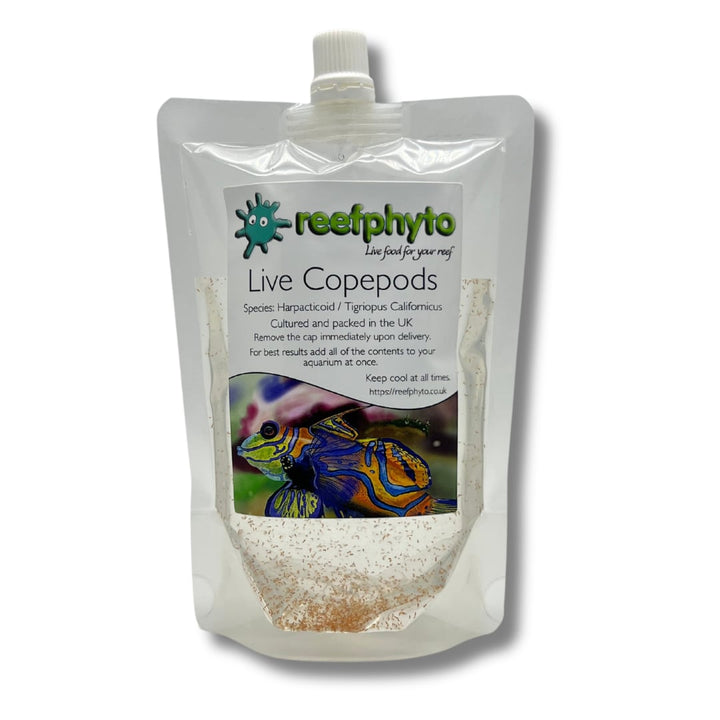
£11.99
Live Copepods UK: Tigriopus californicus, Cultured Fresh in Wales by Reefphyto Your reef looks right on paper. Clean water, stable parameters, good equipment. But something is still off. Your fish are pale, your mandarin is wasting, your corals are feeding… read more
Alkalinity: Your Tank's pH Buffer
Alkalinity typically measured in dKH, is the parameter most directly responsible for your tank's ability to resist pH swings. It functions as a chemical buffer, absorbing the acids produced by respiration and organic breakdown before they can move pH significantly. A tank with alkalinity below 7 dKH has very little buffering capacity and will show large pH swings in response to normal biological activity. Maintaining alkalinity consistently at 8–9 dKH is one of the most effective things you can do for pH stability.
The challenge in tanks with actively growing SPS corals is that alkalinity consumption can outpace what water changes alone can replace. Regular testing at minimum weekly, ideally every few days in a mature coral system lets you catch downward drift before it affects pH. Two-part dosing or a calcium reactor provides controlled, continuous replenishment that maintains alkalinity without the spike risk of large buffer additions.
Refugium Macroalgae and Reverse Photoperiod
A refugium growing chaetomorpha or other fast-growing macroalgae is one of the most effective passive tools for addressing pH fluctuations in marine tanks. During the day, the macroalgae photosynthesises alongside your display corals, consuming CO2. Run on a reverse photoperiod lights on in the refugium while the display tank lights are off and the algae continues consuming CO2 through the night, counteracting the respiration-driven pH drop that would otherwise occur. In practice, a well-established chaeto refugium on a reverse photoperiod can reduce the diel pH swing by 0.1–0.15 units and raise the overnight minimum significantly.
The additional benefits nitrate and phosphate reduction, copepod population support, improved water clarity make a refugium one of the highest-return investments in a reef system's overall stability.
Gas Exchange and Surface Agitation
CO2 leaves the water column through surface agitation, the more turbulent the surface, the more efficiently dissolved CO2 is off-gassed. A calm, glassy surface is aesthetically appealing but chemically counterproductive for pH stability. Ensuring your return pump, wavemaker, or powerheads create visible surface movement improves CO2 export continuously, without any dosing or equipment addition.
A protein skimmer running efficiently contributes to the same effect, the air-water contact inside the skimmer column promotes gas exchange as a secondary function beyond its primary role in organic export. If your skimmer has been running below capacity due to a dirty neck or incorrect water level, cleaning and recalibrating it often produces a small but measurable pH improvement.
Organic Accumulation and Maintenance
Decomposing organic matter, uneaten food, fish waste, detritus in the substrate releases carbonic and organic acids that persistently pull pH downward. This is the form of pH instability most directly addressed by maintenance discipline. Consistent weekly water changes of 10–15%, siphoning detritus from accessible substrate areas, and keeping skimmer, filter socks, and sump components clean reduces the organic acid load that your alkalinity buffer has to work against.
Overfeeding is a particularly common contributor in reef tanks where keepers are rightly focused on feeding corals and invertebrates well. The nutritional benefits of regular live food additions are real but uneaten food that settles in the substrate and decomposes creates a consistent organic acid source. Small, targeted additions of live food that are consumed quickly produce far less waste than large doses that settle before being eaten.
Zooplankton Multipack
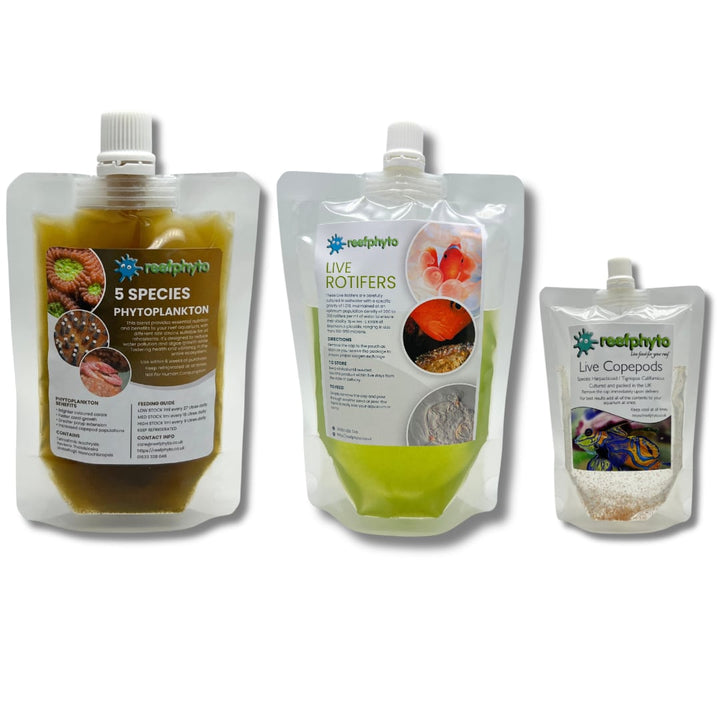
£23.72
Zooplankton Multipack: Live Copepods, Rotifers and Phytoplankton You have been buying live food one bottle at a time. Copepods this week, rotifers the next, phytoplankton when you remember. But your reef does not feed in rotation. Every level of the… read more
Calcium, Magnesium, and Kalkwasser
Calcium at 400–450 ppm and magnesium at 1,250–1,350 ppm contribute to overall chemical balance and support the alkalinity system that buffers pH. These parameters interact, low magnesium makes alkalinity harder to maintain, which makes pH harder to stabilise. Testing all three together gives you the complete picture of your system's buffering capacity.
Kalkwasser (calcium hydroxide) is worth considering for tanks where pH trends consistently low despite adequate alkalinity and good gas exchange. Dosed as a slow drip top-off replacement, kalkwasser raises pH as it enters the water, supplements calcium and alkalinity simultaneously, and precipitates phosphate. It requires careful dosing, too rapid an addition causes a pH spike but a slow, continuous drip timed to match evaporation is one of the most effective single interventions for addressing pH fluctuations in marine tanks where indoor CO2 cannot be easily managed.
How Often to Test pH
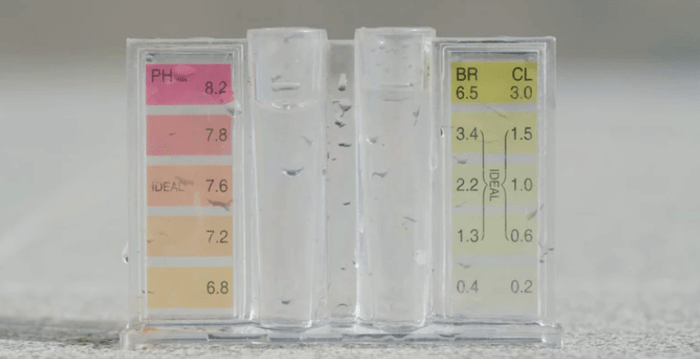
A single daily test gives you a snapshot but tells you nothing about the range of pH your tank experiences over 24 hours. Testing at the daily low typically 30–60 minutes before display lights come on and the daily high typically 1–2 hours before lights off gives you the full diel swing. This is the number that matters for livestock welfare, not the midpoint. A swing of more than 0.3 units warrants investigation. A swing of more than 0.5 units is causing measurable stress regardless of where the absolute values sit.
If you're actively working through addressing pH fluctuations in marine tanks, daily testing at both points for two weeks gives you enough data to assess whether interventions are working. Once stable, weekly monitoring at both endpoints is sufficient for ongoing management.
A Note from Darren
pH instability is one of those reef keeping problems that tends to have a straightforward cause once you look at the system as a whole but it's easy to chase the wrong solution when you're only looking at one parameter in isolation. The most common scenario I encounter is a keeper who's been dosing buffers to raise pH without addressing the indoor CO2 issue that's suppressing it in the first place. The buffer dose raises pH temporarily, then it falls back, and the cycle repeats while the underlying cause continues.
If you're struggling with persistent pH instability and want to talk through your specific setup, call us on 01267 611533 or use the contact page. I'm happy to help you work through it.