
Quick Navigation
Live copepods are tiny crustaceans that form the foundation of the marine food chain and one of the most important live food sources available to reef keepers. In the wild, they are present in the water column and on reef substrates in enormous numbers, and virtually every fish and coral species in a natural reef depends on them directly or indirectly. In a home reef aquarium, live copepods are almost entirely absent unless deliberately introduced, and that absence is one of the most consistently underestimated causes of fish that decline despite otherwise excellent care.
Darren, Reefphyto
What Are Harpacticoid Copepods Specifically
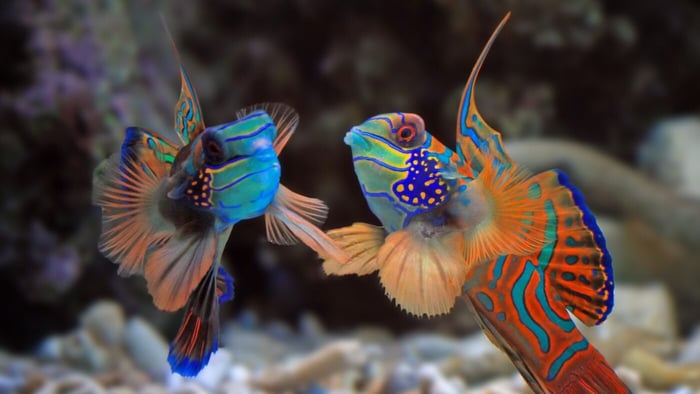
Copepods belong to the subclass Copepoda and encompass thousands of species across marine and freshwater environments. For reef aquaculture purposes, harpacticoid copepods are the group of greatest relevance. Harpacticoids are benthic, meaning they live on and around substrates rather than in the open water column. This makes them the copepods that mandarin dragonets, seahorses, pipefish, and substrate-hunting wrasses are naturally adapted to prey upon.
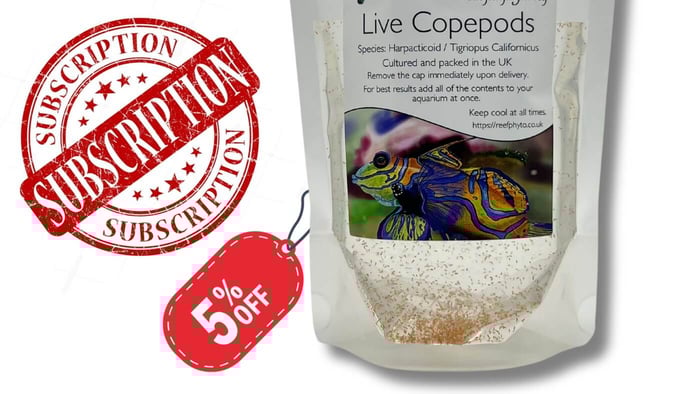
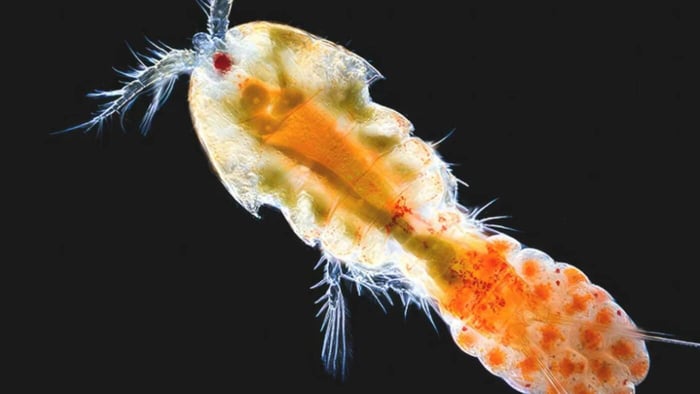
Tigriopus californicus is the harpacticoid species we culture at Reefphyto. It is one of the most widely used copepods in marine aquaculture globally because of its hardiness, its fast reproduction rate, and its exceptional nutritional profile. Tigriopus californicus accumulates EPA, DHA, and astaxanthin from its phytoplankton diet into its own tissue. When a mandarin dragonet or coral consumes a Tigriopus copepod, it receives these fatty acids and carotenoids directly, supporting colouration, immune function, and reproductive condition in ways no dried food can replicate.
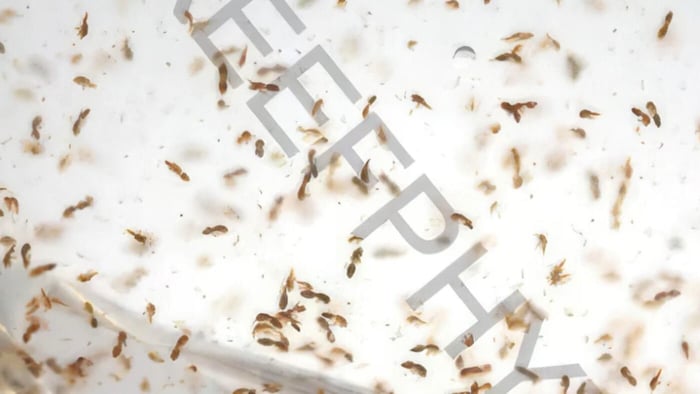
Adult Tigriopus californicus measure between 1 and 3 millimetres. Their nauplii, the larval stage produced continuously in a healthy culture or refugium, are significantly smaller and serve as a fine-particle food source for SPS corals and filter-feeding invertebrates.
What Live Copepods Do in a Reef Tank
Live copepods serve multiple functions simultaneously in a reef aquarium, which is what makes them one of the most efficient investments a reef keeper can make in their tank's overall health.
As a food source, live copepods provide the continuous, moving prey that obligate live feeders like mandarin dragonets require to survive. They also provide supplemental nutrition for every other fish in the tank, triggering natural hunting behaviour and delivering better nutritional content than frozen alternatives. The difference in colouration between a fish fed regularly on live copepods and one fed on frozen food is visible within weeks as astaxanthin builds up in the tissue.
As substrate inhabitants, harpacticoid copepods contribute to the biological activity of the rockwork and sand bed. They graze on microalgae, consume detritus, and process organic waste in the substrate, contributing to nutrient cycling and the breakdown of material that would otherwise accumulate and decompose. This is a genuine clean-up crew function that differs from their role as prey, and it makes a well-stocked copepod population valuable even in tanks without specialist live-feeding fish.
As producers of nauplii, established copepod populations in a refugium generate a continuous supply of larval copepods that enter the display tank through the return flow. These nauplii are present in the water column around the clock and provide fine-particle nutrition for SPS corals, soft corals, and filter feeders that no scheduled feeding event can replicate.
How to Introduce Live Copepods Effectively
Live copepods added directly to a display tank with active predators will be consumed quickly. This is not a wasted addition. The direct feeding benefit is real, and for tanks with mandarin dragonets or other obligate live feeders, direct display addition provides an immediate food pulse that matters. For longer-term establishment, however, the refugium is the right destination.
Add live copepods directly to the refugium after lights-out in the display, when predator fish are less active and the return pump flow is the primary route between refugium and display. This gives the copepods time to find substrate and begin establishing themselves before significant predation pressure reaches them. Start phytoplankton dosing into the refugium at the same time to provide the food source that sustains reproduction.
In a newly set up refugium, allow four to six weeks for the copepod population to build before introducing a mandarin dragonet. The early population growth is exponential under good conditions, and a refugium that has been running with regular phytoplankton dosing for six weeks will be producing nauplii at a rate that a display tank's fish population can graze from sustainably.
A Note from Darren
Live copepods are the product I have cultured and shipped for longer than anything else at Reefphyto, and the one I am most confident recommends itself through results rather than claims. Reef keepers who introduce live copepods to a functioning refugium and support them with regular phytoplankton dosing consistently report the kind of improvements in fish behaviour and colouration that no other single change produces. If you want advice on which copepod product suits your setup and how to get a refugium population established, call us on 01267 611533 or use the contact page.